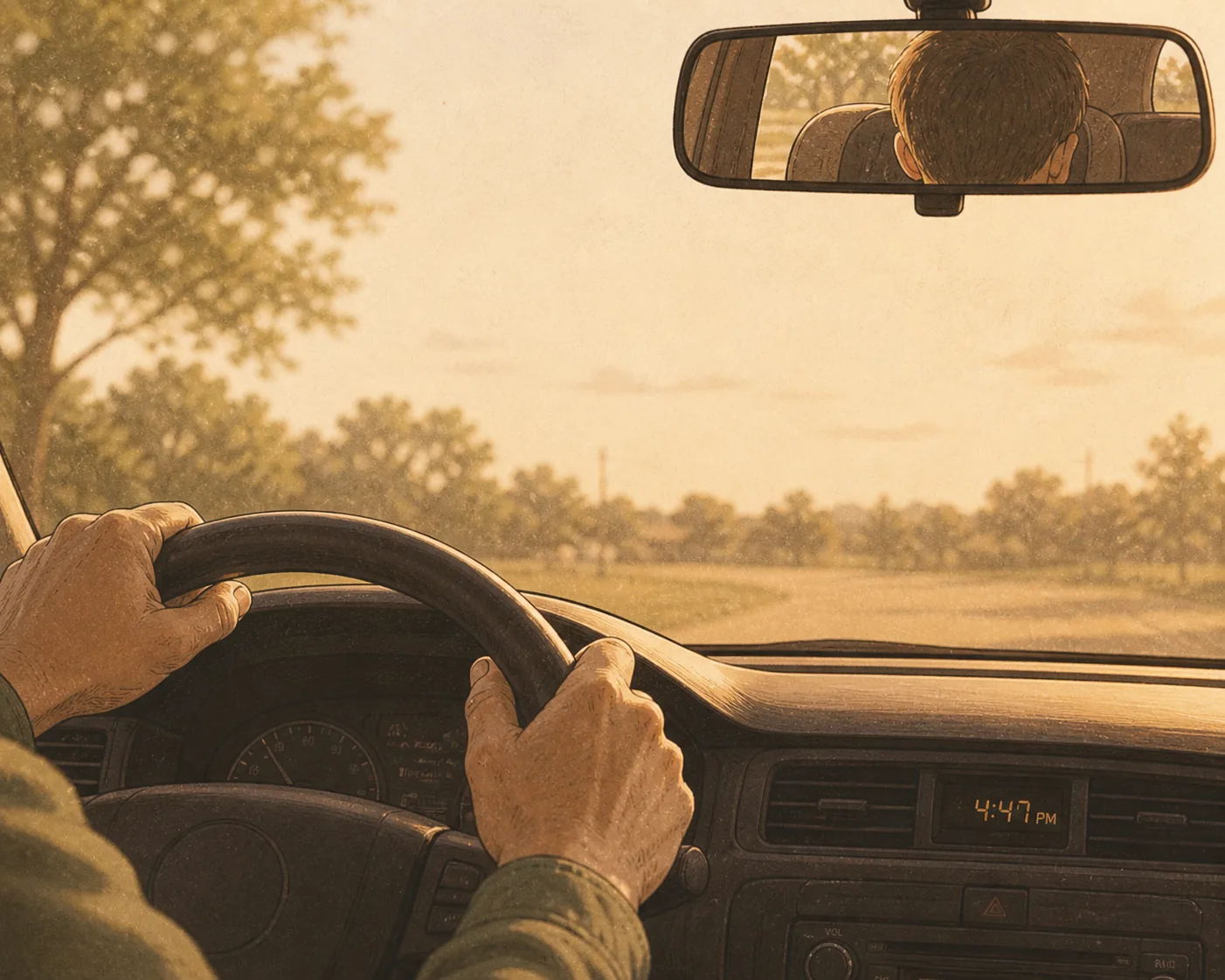
We have blown this ride home more than once.
The kid gets in the car after a rough game. We open with a sentence we think is helpful. By the second traffic light, the car has gone quiet and the sentence is sitting between the seats with us.
The 90-second rule is our reset: no review in the first minute and a half. It is not a clinical finding or a magic number. It is long enough to remember that the player who got in the car is your kid again.
Start with rejoining
Use the first sentence to tell them the relationship is intact.
Good to see you.
You want water or a snack?
I love watching you play.
Pick one. Do not attach a correction to it. “I love watching you play, but on that last possession” is a review wearing a fake mustache.
If your kid is upset, you do not have to cheer them up on the walk to the car. Walk with them. Carry something if they let you.
Get out of the parking lot.
Use the rule after a great game too. Praise can turn into a recap as quickly as criticism can. A kid who hit the winning shot still gets to be hungry, tired, or quiet.
If you coached the game, mark the role change out loud:
Coach is done. Parent is back.
It may sound corny. It also stops you from carrying the bench into the passenger seat.
Skip the disguised film session
The dangerous sentences sound reasonable:
- What happened on that play?
- You knew that pitch was coming, right?
- Why didn’t you shoot?
- The coach should have kept you in.
Each one asks a kid who just finished performing to perform one more time for the parent. Save a real coaching conversation for later, if your kid wants it and if you are the person who should be having it.
The after-a-bad-game script gives you exact language for silence, tears, anger, and the kid who wants to talk immediately. For the wider pattern, read what parents should avoid at youth sports games.
Let your kid set the second minute
Some kids start talking before the seat belt clicks. Some need the whole ride. Both are answers.
If they talk, follow their subject. If they say the official was terrible, you can say, That was frustrating. You do not need to build a case or correct their account before leaving the parking lot.
If they ask for feedback, give one observation and ask whether they want more. I saw you keep moving after the mistake. Want to talk about the play now or tomorrow?
That small permission question changes the ride. Advice lands differently when the kid asked for it.
Do not make silence carry a hidden test. A quiet ride is not proof that your kid is angry, ashamed, or done with the sport. It may mean they are tired.
Put on the music and let the car be a car.
Come back to the game later, or do not
A teachable moment does not expire at the first stop sign. If something matters, bring it up after food, a shower, and a return to ordinary life.
Try: You mentioned the last inning in the car. Do you want to look at it together, or are you done with it?
If they are done, let the game be done. A parent does not have to extract a lesson from every loss.
When you return to it, stay with one moment. Do not stack three corrections because you waited overnight. One useful conversation is still one conversation.
Our longer car ride home guide covers wins, losses, playing time, and the kid who says nothing. The short version fits on the dashboard: warmth first, review later, mostly less talking.