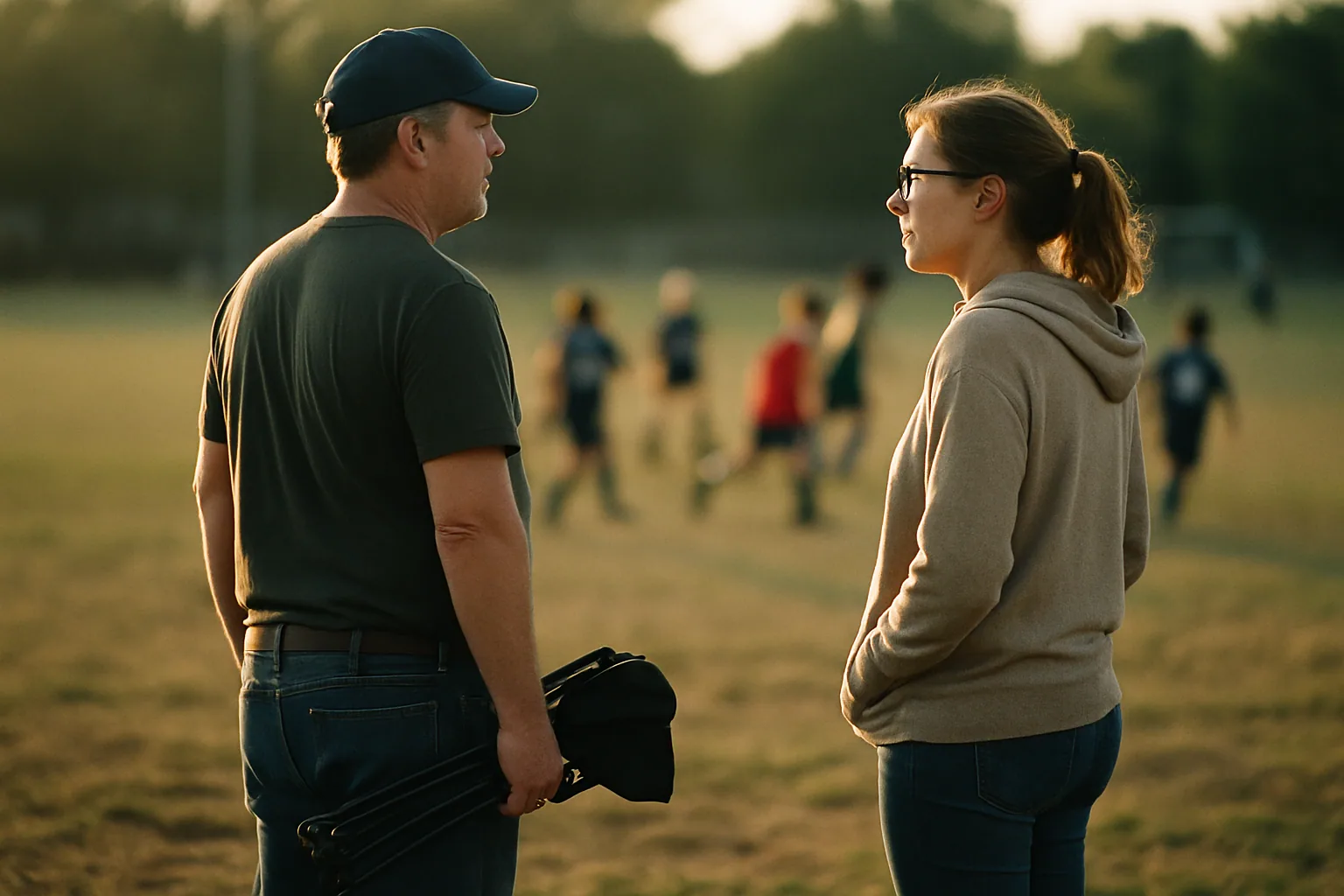
Your athlete can start rebuilding confidence right away with a simple reset: pause, breathe, and pick one process goal for the next practice. This is consistent with USOPC mental performance guidance and the AAP’s advice on protecting a child’s confidence. A bad game is temporary. Confidence is a skill you can train.
TL;DR:
- Parents should keep postgame conversation low pressure: offer water or a hug, let the athlete choose whether to talk, and revisit later.
- Practice mental skills during ordinary training, including visualization and rehearsing a reset after a deliberate mistake, so athletes can use them under competition pressure.
- Poor sleep and heavy training can magnify mistakes; prioritize meals, easy activity, and a steady bedtime over extra drills before the next game.
- Persistent low mood, irritability, avoidance, or ongoing sleep and appetite changes warrant contacting a pediatrician or school counselor for support.
Table of Contents
- What can an athlete do in five minutes to stop the spiral?
- What should we do in the first 72 hours?
- How do we make mental skills available when it counts?
- Why does sleep matter after a bad performance?
- What should parents say, and what should they skip?
- When is low confidence a sign your athlete needs more help?
- How can you decide what to do, and when?
- Why do simple scripts work so well?
- Where can you find ready-made tools to put this into practice?
- FAQ
- Sources
What can an athlete do in five minutes to stop the spiral?
The first few minutes decide whether a rough game turns into a rough week. The goal is not to feel great. It is to interrupt the replay loop before it hardens into a story about who your player is.
Try this reset on the bench, in the locker room, or in the car:
- Pause. Take a moment of silence. No analysis, no post-mortem.
- Breathe. Take a few slow breaths and feel your feet on the floor.
- Name one thing you controlled. A hustle play, a good serve, a teammate you encouraged.
- Swap the script. Use one line: “That one’s done. Next thing I can control is ___.”
- Picture the next play. Imagine it going the way you want it to.
Pro Tip: Try saying the self-talk line out loud. Hearing it can make it feel more real than silently arguing with your own head.
Why does this work? USOPC guidance says athletes can use breathing and present-moment focus to calm the nervous system, and that worrying about a bad performance often does more damage to later play than the performance itself. You are not erasing the game. You are cutting off the worry.
Our mental skills hub has short drills that build on these steps.
What should we do in the first 72 hours?
Parents often ask for a plan they can follow when everyone is tired and emotional. Save this one.
- Right after the game: Say less than you want to. Offer water, a snack, and a hug or a nod.
- When you get a chance to talk: Let your athlete lead. If they want quiet, give quiet.
- Later: Try the reset together, then move on to something unrelated to sports.
- As you settle back into routine: Protect sleep and ask one low-pressure question.
- Before the next practice: Agree on one process goal, such as “tracking the ball early on every serve receive.”
Two car-ride scripts to borrow:
- Younger player: “I loved watching you keep trying. Want to pick a song or get a smoothie?”
- Teen: “Rough one. I’m here if you want to talk, and I’m good if you don’t.”
For more language, see how to talk to your kid after a bad game.
| Window | Parent focus | Athlete focus |
|---|---|---|
| Right after the game | Stay calm, say little | Pause and breathe |
| Between games | Keep routines normal and protect sleep | Focus on one controllable thing |
| Next practice | Ask about the process goal | Practice that one goal |
How do we make mental skills available when it counts?
Mental skills work like a serve or a free throw. You do not learn them mid-crisis. USOPC emphasizes that these skills are trainable and should be practiced during training weeks so they are ready in competition.
Build a simple weekly rhythm:
- Self-talk check: Write one sentence the athlete would say to a teammate who just made an error, then say it to themselves.
- Visualization (before practice, before a game, or at halftime): Picture one specific action done well, from start to finish.
- Recovery drill: In practice, make a deliberate “mistake” (a missed shot, a dropped pass), then run the pause, breathe, next-play routine.
- Pressure drill: Add a mild consequence to a simple game, like a score to beat, and practice the reset when it slips.
Pro Tip: Let your athlete design the cue word. A word they chose sticks far better than one a parent handed them.
Sport-specific prep helps too. This mental game prep routine for basketball shows how one sport builds a pre-game routine, and the idea transfers to almost any sport. For the longer view, read how to build confidence in young athletes.
Why does sleep matter after a bad performance?
Tired brains are harsh critics. When your athlete is short on sleep or worn down from training load, small mistakes feel huge. USOPC notes that physiological factors like sleep quality and recovery shape how well athletes regulate emotion after a loss, so recovery often beats an immediate technical fix.
Three simple actions to support recovery:
- Eat a real meal with protein and carbs after the game, if appetite allows.
- Choose active rest: a walk, a bike ride, or easy stretching instead of extra drills.
- Keep bedtime steady, and if a nap helps, keep it short and early enough that it does not push bedtime back.
If sleep has been thin, prioritize rest ahead of the next game. A flat mood after a loss is normal and usually lifts with rest. For gear that supports recovery, our recovery gear guide covers what is worth buying and when.
What should parents say, and what should they skip?
Words can land hard right after a game. The AAP advises decoupling a child’s self-worth from performance and emphasizing effort, fun, and participation over winning. That should shape every sentence you choose.
Scripts by age:
- Elementary: “I love how hard you kept working. What was the most fun part?”
- Middle school: “That looked frustrating. What’s one thing you want to try next time?”
- High school: “I saw how you kept competing. Want to talk now, or after dinner?”
Phrases to avoid, and why:
- “What happened out there?” It sounds like an interrogation.
- “You should have…” It turns a parent into a second coach.
- “It’s okay, it’s just a game.” It can feel dismissive when your athlete cares deeply.
Run a brief debrief when your athlete is ready:
- Ask what felt best.
- Ask what one detail they would adjust.
- Offer one specific praise, tied to effort.
- End the conversation and change the subject.
Praising resilience and work rather than outcomes also helps children see mistakes as temporary setbacks rather than threats to identity. Browse our full scripts library to keep more language handy.
When is low confidence a sign your athlete needs more help?
A low mood after a game can have different causes. Look for patterns that concern you.
- Mood stays low, irritable, or tearful
- Your athlete avoids practice, games, or talking about the sport
- Sleep or appetite changes continue
- Perfectionism shows up everywhere, not just in sports
The AAP links performance-based pressure to anxiety and burnout in youth sports. If you see these signs, start with your pediatrician or a school counselor, and say plainly what you have noticed and for how long. A sports psychologist can add tools teammates cannot. Former NCAA athletes describe how a sports psychologist helped when mental fitness fell behind physical fitness.
For readers who want broader context on perfectionism and coping, this therapy-focused overview is a useful read.
Pro Tip: Start with a calm check-in: “I’ve noticed you seem down lately. Want to talk about it, or should we ask someone to help?” Getting support early is a strength, not an alarm.
How can you decide what to do, and when?
Use this one-page flow during busy weeks and keep an eye on three simple signals: sleep, mood, and willingness to play.
Jot your three signals on the fridge calendar each night. Patterns show up faster on paper than in memory.
Why do simple scripts work so well?
Every parent who has coached a team and then driven home with the same kid knows the moment: you have the right words in your head and the wrong ones in your mouth. A short, rehearsed script can be more useful than a brilliant speech because it keeps you calm and keeps the focus on the child. Confidence is not a trait your athlete either has or lacks. It is a skill, and small, repeated habits build it. Try the checklist consistently and see what changes. Start with our confidence for youth athletes postgame script.
Where can you find ready-made tools to put this into practice?
We built these pages so you do not have to start from scratch:
- Mental skills hub: short drills your athlete can practice at home.
- Scripts library: copy-ready language for car rides and postgame moments.
- How to build confidence in young athletes: age-aware strategies for the long haul.
- What to buy: practical gear for the bench, for recovery, and for training at home.
Print the decision flow above or sign up for our newsletter to get new scripts as we publish them.
This article is general information, not a substitute for advice from a qualified doctor. Consult a qualified healthcare professional about your own circumstances before acting on anything here.
FAQ
How do you mentally reset after a bad game?
Pause for a minute, take slow breaths, and name one thing you controlled. Then choose one process goal for the next practice. This follows USOPC guidance on present-moment focus, which says worrying about a bad performance often hurts more than the performance itself.
What do you say to someone after a bad game?
Keep it short and focused on effort: “I loved watching you compete. I’m here if you want to talk.” Skip the play-by-play and the “you should have” comments. The AAP recommends separating self-worth from performance.
Why am I suddenly bad at a game I was good at?
Stress, fatigue, and poor sleep can all pull performance down, and worrying about it makes it worse. Rest, a steady routine, and one clear process goal usually help. If the slump comes with a low mood or avoidance that lingers, talk with a pediatrician or counselor.
How long should it take to get confidence back?
There is no fixed timeline. Many athletes feel better within a few days when they rest and return to practice with a small goal. USOPC treats mental skills as trainable, so steady practice matters more than a quick fix.