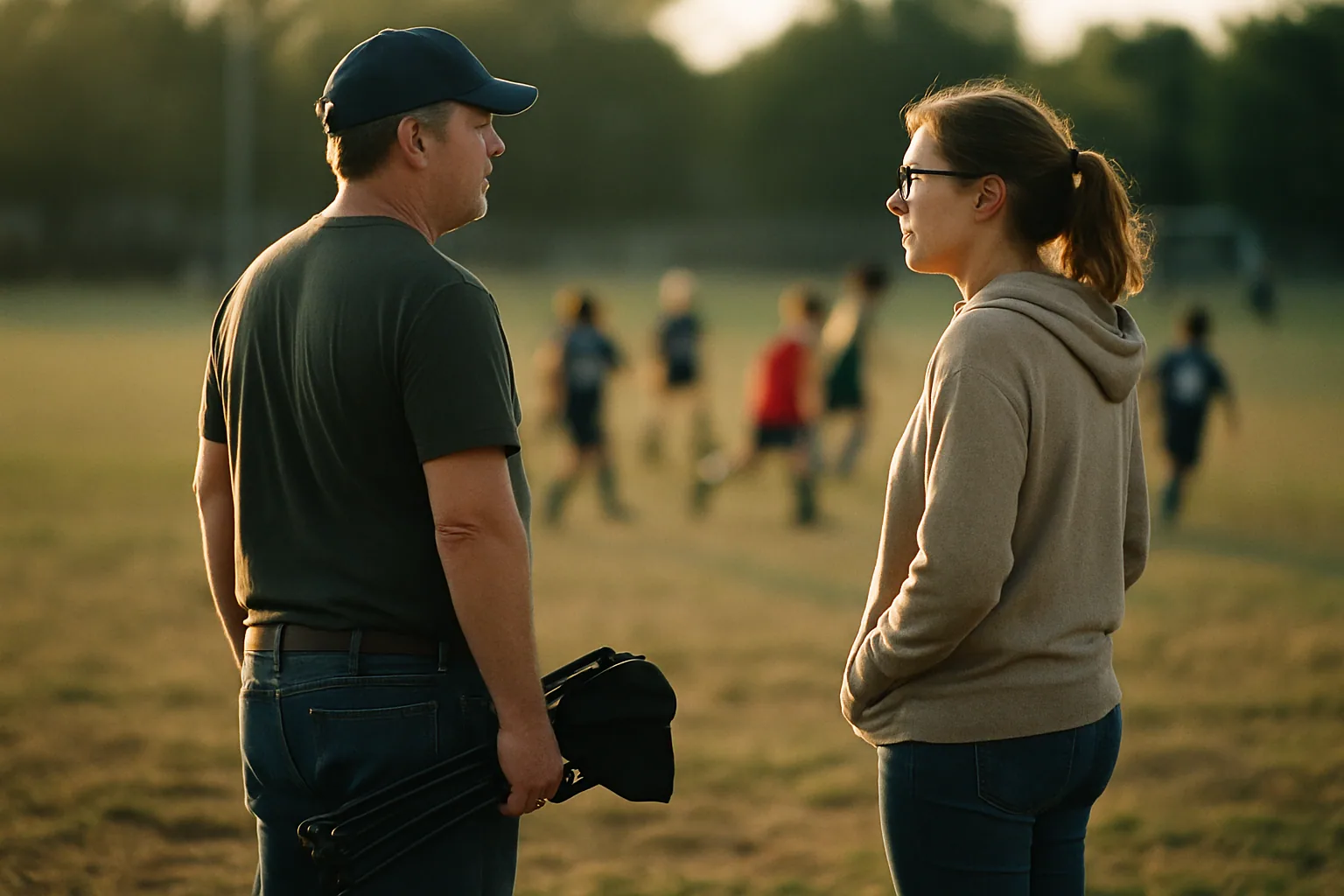
Confidence for youth athletes grows from one consistent source: effort focused coaching paired with parent support that emphasizes progress, autonomy, and belonging over outcomes. Start this week with a single postgame script. Ask, “What was one thing you got better at today?” and let your child answer before you say anything else. The research backing this, including the 5Cs framework and peer reviewed coaching studies, is more specific than most parenting advice you’ve heard. Scripts built around exactly this approach are available online.
TL;DR:
- Effort-focused coaching and parent support that emphasize progress and autonomy significantly boost confidence, as shown by research and a 10-week controlled study.
- Coaches should prioritize process-based praise, small decision-making, and specific correction plus encouragement during practice to build resilience and self-efficacy.
- Parents can foster confidence by asking age-appropriate, reflective questions after games, avoiding criticism, and maintaining calm, supportive sideline behavior.
- Confidence development varies by age, requiring playful effort-centered language for younger kids, process questions for preteens, and honest feedback for teens.
- Recognizing environmental red flags like public criticism or overemphasis on results helps prevent damage to young athletes’ self-esteem, prompting private discussions or program changes if necessary.
Table of Contents
- What Builds Confidence for Youth Athletes, According to the Research?
- Which Coach Behaviors Reliably Build Confidence?
- What Should Parents Say Before and After Games?
- How Does Confidence-Building Change by Age?
- Is Your Athlete’s Environment Building or Undermining Confidence?
- How Can Parent Coach Desk Help You Put This Into Practice?
- A Practical Parent Coach Approach
- Get Started With Practical Tools From Parent Coach Desk
- Sources
- FAQ
What Builds Confidence for Youth Athletes, According to the Research?
Confidence in young athletes isn’t a personality trait some kids have and others lack. It’s built through repeated experiences of competence, autonomy, connection, and belonging, structured over a season rather than delivered in a single pep talk.
The 5Cs model—competence, confidence, connection, caring, and character—treats confidence as one output of a larger system. A kid who feels physically capable (competence), has some say in how they train (connection to autonomy), and feels liked by teammates regardless of stats (connection) ends up with sturdier self-belief than a kid who just wins a lot. That distinction explains why some talented athletes quit and some average ones stay in the game for years.
Motivational climate matters just as much as any individual conversation. Sport psychology research consistently separates two climate types: task-involving climates, where effort and improvement get praised, and ego-involving climates, where winning and comparison to teammates dominate feedback. Climate research tied to periodized confidence building shows task-involving environments raise perceived competence and keep kids enrolled longer, while ego-involving ones raise anxiety and push kids toward the exit.
Confidence also has a rhythm across a season. Sport psychologists describe a periodized cycle: a developmental phase for building raw skill, a preparatory phase for practicing under mild pressure, a performance phase for competition, and an evaluation phase for reflection. Confidence-building activities should shift with each phase, since a mistake during skill-building means something different than the same mistake in a championship game.
Three things to apply this week:
- Praise the process out loud, not just the scoreboard.
- Ask your athlete for one training choice each week (which drill, which position to practice).
- Notice which phase of the season you’re in before deciding how hard to push.
A 10-week controlled study of 224 school-aged athletes found that coaching built around effort-focused feedback, autonomy-supportive questions, and encouragement after mistakes produced significantly larger gains in self-efficacy and competitive performance than standard coaching, with results strong enough to rule out chance (p — Jeff
Get Started With Practical Tools From Parent Coach Desk
This resource exists for the moment when you know the research and the scripts but are wondering what to actually do next. Unlike a general parenting site, this resource focuses on the specific job of coaching your own kid while still being their parent, without ads or sponsored content.
If part of building your athlete’s confidence involves showing up prepared on the bench or setting up practice at home, the what to buy hub covers parent-coach gear, video and tracking tools, and at-home training equipment without the guesswork of comparing twenty options yourself. Start there, pick the one or two items that match what your season actually needs, and pair it with one script from this article. That combination, the right tool and the right words, is what makes confidence work stick past the first week.
Sources
- Impact of Positive Coaching Strategies on Self-Efficacy and Competitive Performance in School-Aged Athletes
- Final Report v3 04.10.26
- 5C’s of Positive Youth Development in Sports Battery: Short versions and acquiescence control
FAQ
What Are the 5Cs in Sports Psychology?
The 5Cs are competence, confidence, connection, caring, and character, a validated framework used to structure youth sport development programs. Confidence is treated as one piece of a larger system rather than a standalone trait to fix in isolation.
Why Do Kids Quit Youth Sports?
The leading reasons are poor coaching, lack of enjoyment, and pressure, not lack of talent. An Aspen Institute study found bad coaching cited by 22.9% of kids who quit, ahead of fear of injury and time conflicts.
What Are Five Ways to Boost Confidence for Youth Athletes?
Use effort-focused feedback instead of outcome praise, offer small autonomy-supported choices, respond to mistakes with a correction plus encouragement, keep sideline comments calm and quiet, and ask reflective questions after games instead of giving instant assessments. These behaviors are backed by a controlled coaching study showing measurable gains in self-efficacy.
What Are the Three Cs of Self-Esteem in Youth Sports?
Definitions vary depending on the source, but within the 5Cs framework, competence, connection, and character are often the three most directly tied to self-esteem outcomes, alongside confidence itself and caring. There isn’t one universally agreed three-part version outside that larger model.
Does Parent Coach Desk Have Scripts for This?
Yes. Parent Coach Desk publishes scenario-based scripts for before, during, and after games, including the postgame conversation guide referenced throughout this article. Current pricing and product details for gear guides are listed directly on the site.