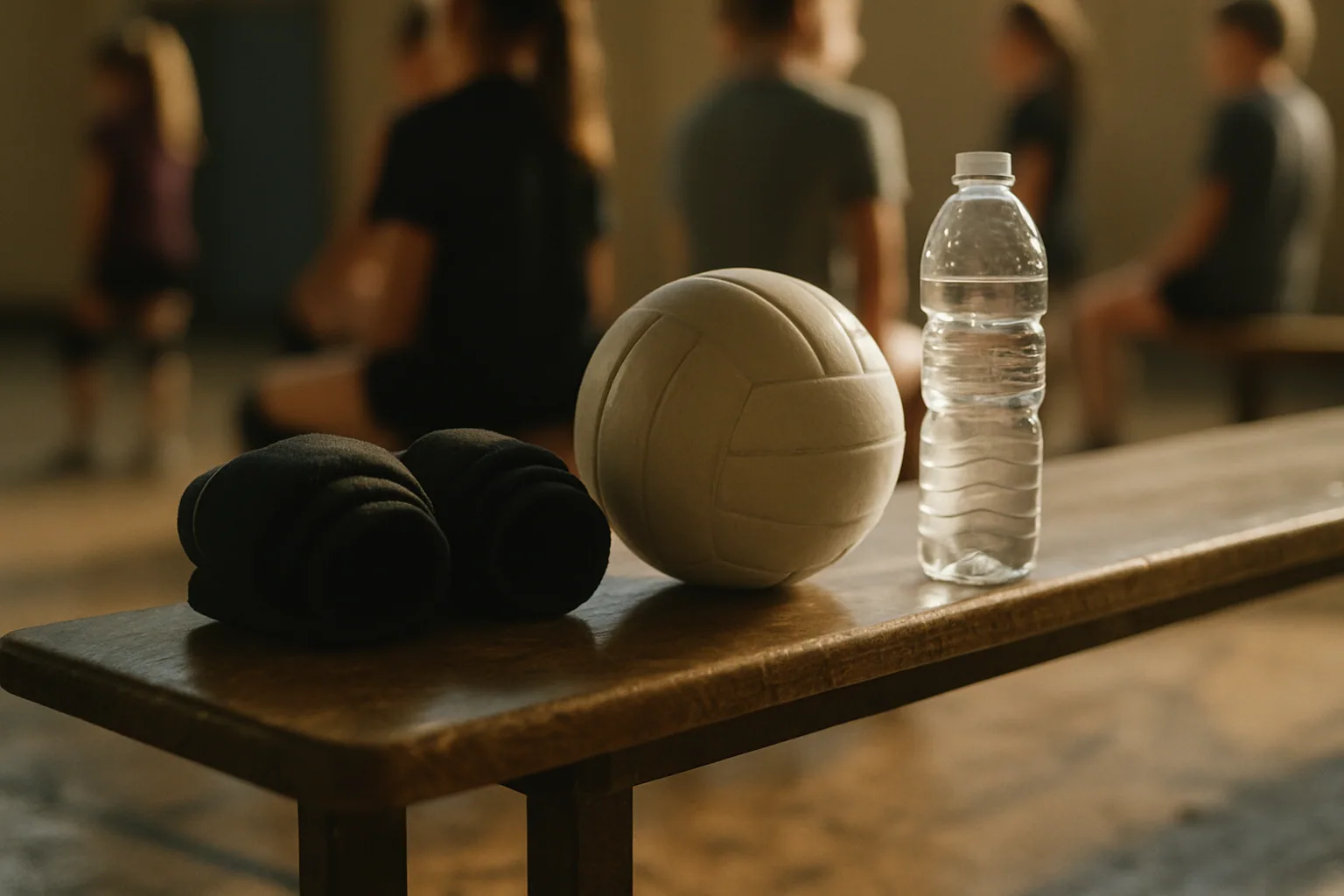
If you have to cut a child from a youth team, do three things. Decide your criteria before tryouts. Tell each family yourself, privately and quickly. Give the child one honest strength and one next step. Skip those and the cut feels like a verdict on the kid. Do them and it can still hurt, but the child leaves with their dignity and a way forward.
This guide is for the parent-coach, the volunteer who runs tryouts, and the parent on the other side of the conversation whose child just heard “not this time.” We use youth volleyball in most of our examples, because roster limits, age groups and club tryouts make cuts common there. The same principles hold in any sport.
TL;DR
- Cutting is a last resort at younger ages. Ask first whether you can add a team, split into levels, or use a roster that fits your court time and coaching help.
- Set criteria and share them before tryouts. Nobody should learn the rules after the cut.
- Tell families one on one, quickly and privately. Never post a list that a child discovers in front of friends.
- Say what you saw, never compare the child to a teammate, and point to somewhere they can keep playing.
- If your child was cut: let them feel it first, listen before you fix, and resist lobbying the coach.
Table of Contents
- Why this is so hard on a parent-coach
- Before you cut anyone: can you avoid it?
- Set the rules before tryouts
- How to tell a child and a family
- A decision framework for the close calls
- Our perspective: three drives, one relationship
- If your child was the one who got cut
- Where a cut player can keep playing
- Keeping the fun at the center
- Helpful gear for parent-coaches
- FAQ
- Sources
Why this is so hard on a parent-coach
The NFHS makes a plain point: rosters are limited by how many athletes a coach can actually teach well. Cuts are sometimes the necessary result. That is true, and it does not make the conversation easier.
When you are also a parent, it gets heavier. You know these kids. You know their parents from the sideline and the carpool. Your own child is usually standing right there at tryouts, watching you do it.
So be kind to yourself and be clear about what you are doing. You are not deciding how much a child matters. You are deciding who fits a roster of a certain size, at a certain level, with the coaching time you have. Keep those two things separate in your head and in your words.
Before you cut anyone: can you avoid it?
Ask these questions first. The answer is sometimes yes, and then there is nothing to dread.
- Can you add a team? Two teams of eight can serve more kids than one team of twelve. This often depends on whether you can find another volunteer.
- Is this a recreational or a select program? Recreational leagues usually exist so everyone plays. If your league says it places every child, a cut may not be yours to make.
- Can you split by level instead of cutting? A “developing” team and a “competitive” team keeps kids in the sport.
- Is the real issue court time, uniforms or travel budget? Costs and logistics sometimes force a smaller roster. If so, say that honestly, because it is not about the child’s worth. Our youth sports cost breakdown can help you explain where the money goes.
- Can a child stay in another role or practice group? Some programs offer open gyms, clinics or a training squad. Only offer what your program can really deliver.
Why does it matter so much at young ages? HealthyChildren.org, the American Academy of Pediatrics’ parent site, notes that large numbers of kids drop out of sports before their teens, often because the fun disappears. A cut at nine or ten can be the push. That does not mean you can never cut. It means you should weigh it.
Set the rules before tryouts
Most of the pain comes from surprise. Fix that early.
What to put in writing
- How many players you can carry, and why (court time, coaching help, gym availability).
- What you will evaluate: for volleyball, think passing, serving, movement, attitude in drills, coachability. Only list what you really score.
- Who decides, and whether anyone else sits in.
- When and how families will hear the result.
- What happens to kids who are not placed: another team, a waitlist, a different level, or nothing.
USA Volleyball advises families to look for written material on a club’s mission, philosophy and expectations, rather than a verbal promise that a child will “play a lot.” The reverse applies to you as a coach. If you write it down, you are protected and so are the families.
A simple scoring sheet
Keep it boring. Rate each child 1 to 5 on three or four skills you named in advance. Add a line for notes you can read back later. When a parent asks “why?”, you have something real to say instead of a vague feeling.
How to tell a child and a family
The sources behind our guidance agree on the same few principles: prepare players for the possibility, be prompt, be private, be specific, and never compare. Here is how that looks in practice.
The checklist
- Be quick. Do not make families wait days. Waiting is its own hurt.
- Be private. Call, or meet in person. Do not announce it to a group, and avoid a posted list in a hallway.
- Talk to the child, with the parent present for younger kids. For ages 12 and up, offer the child the choice.
- Start with the news. Do not warm up with five compliments before the “no.” Families feel it coming and tense up.
- Give one real strength and one skill to work on. Only what you truly observed.
- Never compare. “Another girl was better at serving” helps no one.
- Point somewhere. A rec league, a clinic, next season’s tryouts, an open gym. Name something real.
- Thank them. They showed up and took a risk.
What to say
To the child:
“I wanted to tell you myself. You did not make the team this season. I know that’s hard to hear. I saw you work hard on your passing in the last drill, and that took guts. The next step I’d work on is your serve. I’d love for you to keep playing, and I can tell you about a few places to do that.”
To the parent, on the phone:
“I’m calling before anyone else hears. We had [number] spots, and your daughter’s name was not on the list this year. I’m happy to share what I saw and what I’d work on. I can’t reopen the roster, but I do want her to keep playing.”
What not to say: “You just weren’t good enough.” “Maybe volleyball isn’t for you.” “It’s nothing personal,” which families hear as the opposite.
The parent who pushes back
Some will. Listen. You do not need to defend yourself in the first minute. Say: “I hear how disappointed you are. I made the decision based on the sheet I shared, and it stands. I’m glad to go through what I saw.” Offer feedback. Don’t reopen the roster in the heat of the call.
A decision framework for the close calls
The hardest cut is the last spot, when two kids are nearly even. Run it in this order:
| Step | Question | Why it helps |
|---|---|---|
| 1 | Which child scored higher on the criteria we shared? | Keeps the call defensible |
| 2 | Does the roster need a specific position or role? | Honest and not personal |
| 3 | Is a sibling, friendship or family relationship making me lean one way? | Names bias, especially for parent-coaches |
| 4 | Would I be comfortable explaining this decision to both families? | A good gut check |
| 5 | Is there a team or role where the other child can still play? | Turns a no into a path |
If your own child is on the bubble, hand the evaluation to a neutral assistant or another coach, and tell families you did. That one step prevents more resentment than any speech. For more on the dual role, see what coaches want from parents at practice for the other side of that relationship.
Our perspective: three drives, one relationship
At Parent Coach Desk we think of youth sports as three drives: the drive there, the game, and the drive home. A cut creates a fourth, and it’s the hardest one: the drive home from the conversation.
We have seen the same pattern from parents who coach. The decision itself is rarely what families remember. They remember the tone. Did the coach call or hide? Did the child feel seen? Did anyone tell them where to go next?
That is why we push parent-coaches toward fewer cuts, earlier clarity and warmer words. We would rather see a coach add a team than make a perfect list. We would rather a nine-year-old leave tryouts with a plan than with a rank.
If you coach your own child, protect that relationship first. Your child’s place on the team should never depend on the way you handle cuts, and the way you handle cuts will shape how they see you.
If your child was the one who got cut
Now the other seat. You may be hurting more than you expect. NFHS writing on this subject notes that parents can feel a cut more sharply than the child does, and may unconsciously read it as a verdict on their parenting. Recognize that feeling, then set it down. Your child’s ability in a sport is not their value as a person.
The first 24 hours
- Let them feel it. Skip “it’s fine” and “you’ll make it next year.”
- Say something short and true. “I’m sorry. I know how much you wanted this.”
- Listen more than you talk. Ask what they’re feeling, not what went wrong.
- Keep routines. Dinner, homework, the usual stuff. Normal is comforting.
- Hold off on texting the coach. Wait until you and your child are calm.
The conversation a few days later
Former pro coach Steve Borelli, writing in USA Today, suggests parents focus on the child’s own view rather than fighting a decision. Does your child really love the game, or did they feel they had to play? The answer shapes the next step.
Try these questions:
- “What did you like most about playing?”
- “What would you want to do differently next time?”
- “Do you want to try again, or try something else for a while?”
Both answers are fine. If it’s “something else,” our guide on why kids quit sports and what parents can do walks through that choice, and so does when your kid wants to switch sports.
Should you lobby the coach?
Usually, no. USA Volleyball’s guidance for families points out that pleading for a spot can strain the family’s relationship with the program, and a coach may remain wary of the child even if a spot opens later. A better move is a calm, short email once the sting has eased: “Thank you for the opportunity. Would you share one or two things my daughter could work on before next season?” That keeps the door open and gives your child a plan.
Helping yourself stay steady matters too. If you notice your own frustration spiking, this practical piece on emotional regulation strategies for parents is a useful read before you talk to your child or the coach.
Where a cut player can keep playing
A cut ends a spot, not a sport. Depending on your area, options may include:
- A recreational or community league, often with no tryouts.
- Club clinics, camps or open gym sessions.
- A different club or a lower-level team in the same club.
- Playing with friends in the backyard or at a park. Pickup play builds skills and fun.
- A different sport for a season, then trying again.
Check what your local clubs and parks department actually offer, because it varies a great deal. If your child is also weighing how much to commit to one sport, we cover that in should my child specialize in one sport.
For home practice, a ball, a net and a wall go a long way. We keep a short list of what’s worth buying in our at-home training gear guide.
Keeping the fun at the center
The AAP’s HealthyChildren.org page reports that kids name fun as their number one reason to play. Parents who shift attention from outcomes toward enjoyment can lower the pressure that feeds burnout. After a cut, that is the compass. Ask “Is volleyball still fun for you?” before you ask “How do we get you on a team?”
Coaches can use the same compass. If you are cutting in order to win more, ask whether that serves the ten-year-olds in front of you. Our piece on why kids quit sports and how coaches can prevent it goes deeper on that.
Helpful gear for parent-coaches
If you run tryouts or practices yourself, a little preparation makes the day smoother: a clipboard, numbered pinnies or bibs, a whistle, a timer, and a way to record drills so you can review fairly. We lay out what’s worth buying, and what to skip, in our parent-coach gear guide and across our what to buy section. Our recommendations are about making your volunteer job easier, not adding to your costs.
For more guidance on moments like this, our decisions parents face page collects the big calls in one place. You can also sign up for the Parent Coach Desk newsletter from our home page at parentcoachdesk.com to get new scripts and guides as we publish them.
FAQ
What should I say to a child I have to cut?
Tell them the news first, kindly and plainly. Then name one thing you honestly saw them do well and one skill to work on, and point to a place they can keep playing. Avoid comparing them to other players.
Should I cut players at all on a youth team?
At young ages and in recreational leagues, try alternatives first: another team, level-based groups or a larger roster if court time allows. When space or coaching limits make cuts unavoidable, clear criteria and respectful delivery matter most.
What should I do when my child gets cut?
Let them feel disappointed before you try to fix anything. A few days later, ask what they enjoyed and whether they want to try again or try something new. If you contact the coach, ask for one or two things to work on rather than for a spot.
Why do so many kids quit sports?
HealthyChildren.org points to burnout and the loss of fun as common reasons, and says many kids leave their sport before their teens. Quitting is often a process rather than a single moment, so it helps to keep talking with your child over time.
Is it okay to cut my own child’s friend?
It can be, if the decision rests on criteria you shared in advance and you handle it as kindly as any other cut. If friendships or family ties make you unsure, ask a neutral assistant to score that child, and say you did so.
Sources
- Making Cuts on Athletic Teams – the Necessary Evil (NFHS)
- You are Paying for Practice, Not Playing (USA Volleyball)
- Burnout in Young Athletes: How to Keep the Fun in Sports (HealthyChildren.org)
- When youth sports athletes want to quit, parents need communication (USA Today)