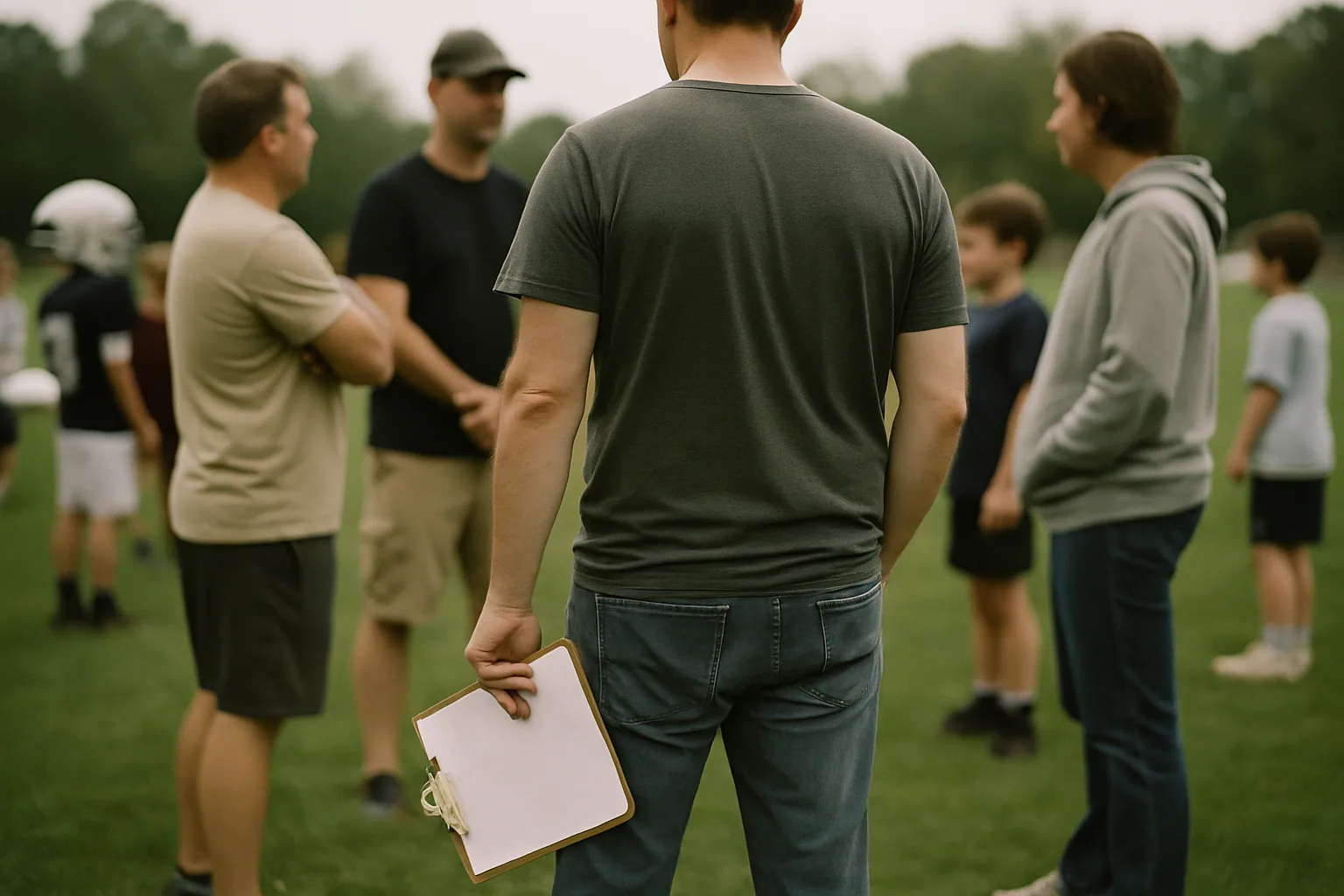
Leadership isn’t a position or a personality type. It’s a behavior: making the people around you better. Every player on your roster can learn it, and your job as a coach is to teach it the same way you teach anything else, through repetition, feedback, and real opportunity.
Most youth teams hand the captain’s armband to the loudest, most confident kid and call it leadership development. That’s not development. That’s a label. The player who already leads everywhere doesn’t need your permission to do it. The twelve other players on that roster do.
Start with self-leadership, because nobody leads a team before they learn to lead themselves. Show up on time. Bring your gear. Listen when someone is talking. Follow through on the thing you said you’d do. These aren’t character slogans, they’re the foundation. Before a player can make their teammates better, they need to be able to make themselves better. That’s the first conversation to have, and the first standard to hold.
Give every player a job. Warm-up leader. Equipment captain. Practice captain. ACE spotter. These aren’t decoration, they’re real roles with real accountability. The warm-up leader runs the group through a structured warm-up you’ve taught them. The equipment captain tracks the gear. The ACE spotter identifies moments of attitude, character, and effort during practice and announces them at the end. Every player gets a rotation through each of these roles across the season. Not just the easy ones, everyone.
The rotation matters more than most coaches think. When the quietest, least confident player runs warm-ups for the first time and the team follows their lead, something shifts. They’ve led. Publicly. In front of the group. You can’t simulate that with a handout or a speech. The experience is the lesson.
Teach it explicitly, because players don’t learn what leadership looks like by osmosis. Talk about it. Use specific moments from practice. “That was leadership, when Marcus stayed late to help his teammate with that move, that’s what we mean.” Most young athletes have a vague idea that leadership is good and that they should want it, but they’ve never had someone name it when it happened right in front of them. Name it. Every time.
Ask the right question at the end of practice. Not “what did we work on today?” but “what did leadership look like today?” Some sessions will have obvious answers. Some will reveal that leadership didn’t show up much, and that’s information too. The question itself teaches players to watch for it, which means they’ll start watching for it during practice, not just when you ask.
Recognize the quiet leaders, because the loud ones will get noticed no matter what you do. Your job is to see the player who shows up early every single time without making a scene, who helps a struggling teammate without being asked, who loses badly and walks back to the huddle like someone who intends to win the next one. That’s leadership. It doesn’t have a megaphone, but it’s real and the team feels it. Say it out loud.
Let players solve small problems instead of solving them for the players. Practice runs long and you’re losing the group’s attention. Instead of announcing what happens next, ask the practice captain: “We’ve got eight minutes, what do we do with it?” They’ll suggest something, possibly something you wouldn’t have chosen. Let it happen. They’re not just learning the sport, they’re learning to make decisions under mild pressure with a group watching. That skill applies everywhere.
The bigger version of this is what happens when conflicts come up inside the team. A player is frustrated with a teammate. There’s some grumbling about playing time. Two athletes aren’t working together well in drills. Don’t rush to fix every one of these. Sometimes the better move is to put the players closest to it in a room, or on a sideline, and ask them to work through it. You’re available if they need you. But they get the first try.
Some of the most important leadership development happens in those small, unglamorous moments, not in the championship game or the motivational speech before the big matchup. It happens when a player sees a teammate struggling and decides to help instead of walking by. When someone takes responsibility for a mistake without being told to. When the group picks up someone who is having a hard day instead of leaving them behind.
The players who get trusted with real responsibility in youth sports are often the ones who become trusted people in adult life. Not because sports is magic, but because repetition is. They practiced accountability. They practiced caring about someone else’s success. They practiced handling things that didn’t go their way. They did it in public, with people watching, with actual stakes on the line, even if those stakes were small by most measures.
Give them the chances. Every player, every role, every season. Some will surprise you. Most of the ones who surprise you will never forget that you gave them the chance.