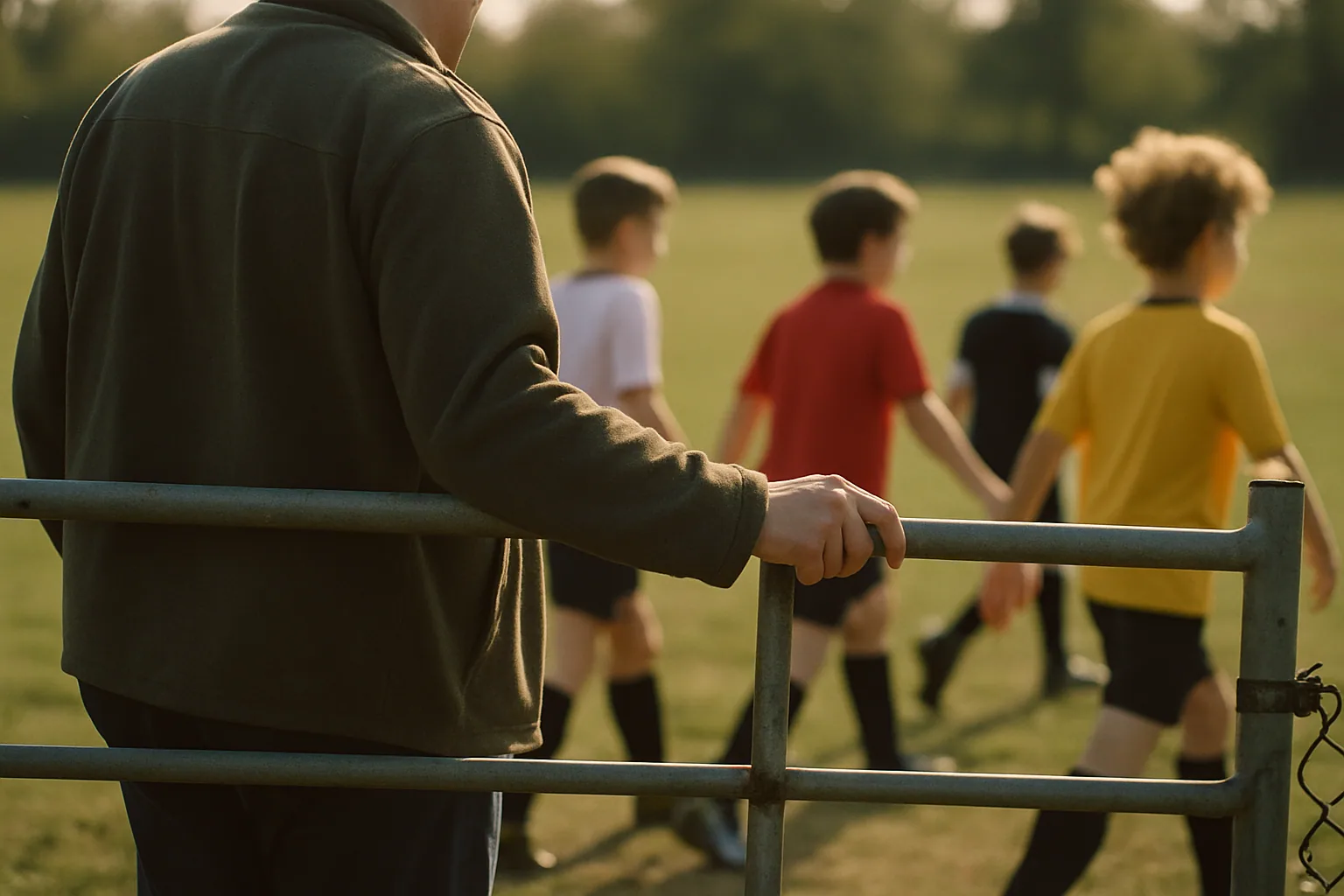
Most coaches will never say this to your face. They’ll be polite. They’ll thank you for coming out. But here is what they are actually thinking.
Stay over there. Stay quiet. Let me do my job.
That is not an insult. That is the whole thing.
What coaches are managing during practice. A coach has a practice plan, a limited window, and twenty kids who all need different things. The moment a parent calls out a correction from the sideline — even a correct correction — the kid has to process two sets of instructions from two different authorities. That split attention costs more than the advice was worth.
It also puts the kid in an impossible spot. Do they listen to you or the coach? There is no good answer to that question during a drill.
The sideline commentary problem. “Keep your elbow up.” “You were open.” “That’s what we practiced.” Parents say these things because they know their kid and they care. Coaches understand that.
But the kid hears it differently. They hear that someone is watching for mistakes. That pressure tends to make athletes tighter, not better. And tight athletes make more mistakes, not fewer.
What actually helps. Show up. Watch. Cheer effort, not outcomes. “Good hustle” after a strikeout is useful. “You should have swung at that” is not.
A parent who sits quietly and watches sends a message: I trust you to handle this. That is a powerful thing for a kid to feel before a hard practice.
After practice is different. If you have something to say, say it in the car on the way home — and lead with a question, not a verdict. “What did you work on today?” is a better start than any correction you held during practice.
And if the coaching is actually wrong — if you disagree with something technical or think your kid is being mishandled — that conversation happens privately with the coach, not in front of the team.
The sideline is not the place for it. It never is.