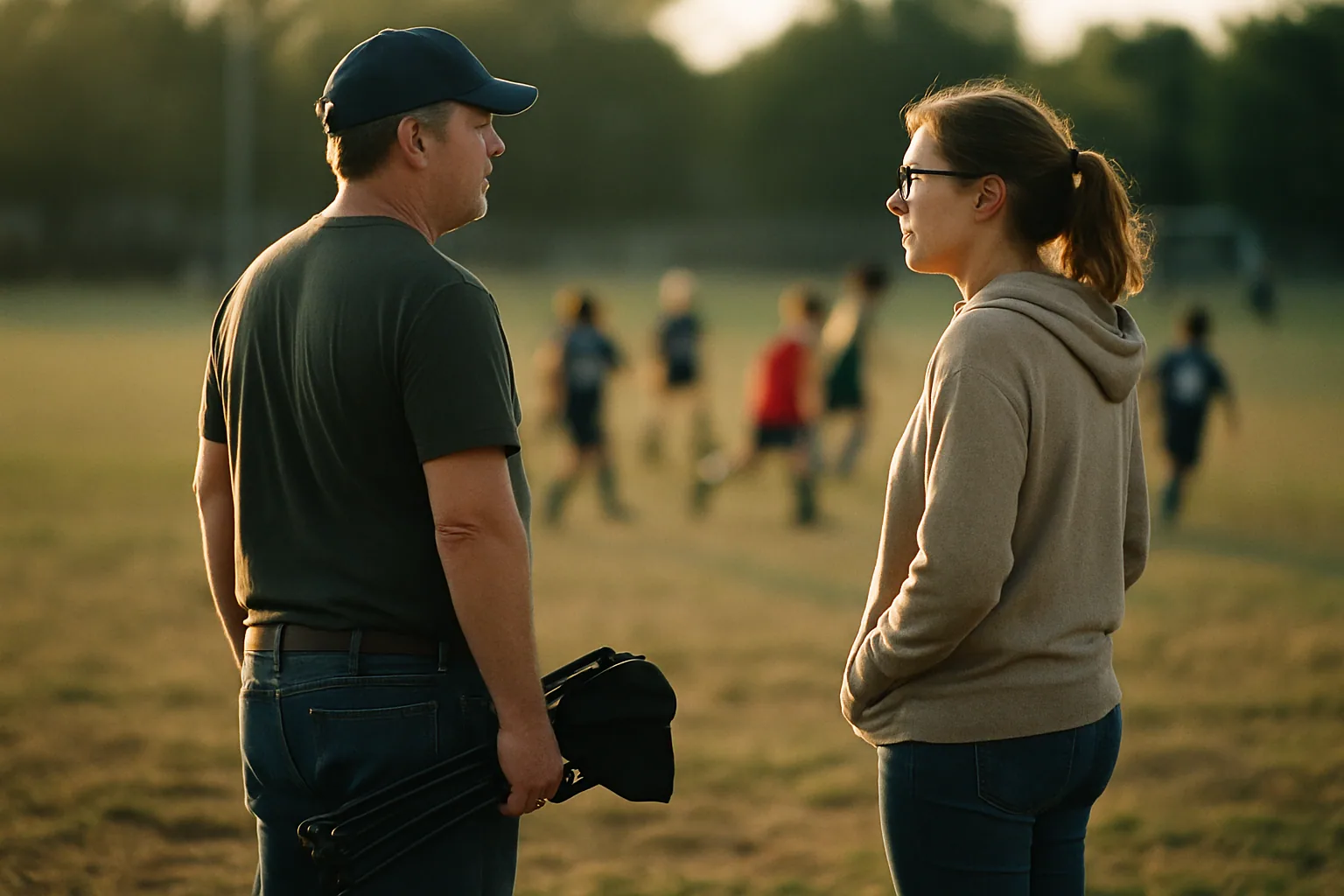
Pick the model that fits the team’s age and purpose, then put it in writing. For younger and developmental teams, we recommend an equitable rotation that gives every player real minutes, while older competitive teams do better with a written earned-time policy tied to specific criteria. Either way, share it at a preseason meeting and follow the athlete, coach, then parent pathway when questions come up, the order NFHS guidance lays out.
TL;DR:
- Younger teams do best with rotation or guaranteed minutes. Older teams can shift to earned time if the criteria are clear.
- A preseason policy should cover minimums, attendance, injuries, roles, and who to talk to.
- The athlete talks to the coach first, and the parent follows after a cooling-off day.
- Coaches blend stats and attendance with judgment, so specific questions work better than fairness complaints.
- Disputes go private conversation, written follow-up, then league officials, with records at each step.
Table of Contents
- 1. Common playing-time models and when each one fits
- 2. How to write a preseason playing-time policy: template and checklist
- 3. Communication rules and scripts for coaches, players, and parents
- 4. How coaches really decide who plays
- 5. Handling disputes: a step-by-step path to resolution
- 6. Parent Coach Desk tools you can download and adapt
- 7. What playing-time policies mean for long-term development
- 8. Building a playing-time policy that includes every player
- 9. Legal and ethical lines coaches and parents should know
- When winning takes a back seat to growing up
- Where to go next for policy tools, gear, and support
- FAQ
- Sources
1. Common playing-time models and when each one fits
Most youth programs run one of three models. Knowing which one your team uses changes how you prepare your child for the season, and how you prepare yourself for the sideline.
Equal rotation gives every player about the same minutes regardless of skill. It fits rec leagues.
Guaranteed minimums set a floor, such as a set number of innings or quarters, and leave the rest to coaching judgment. It splits the difference.
Earned time ties minutes to performance, attendance, and fit, with little or no floor. That’s the norm on varsity teams and in elite club programs built around winning.
Age matters most. Younger players, roughly through middle school, gain from rotation or guaranteed minutes because skills are still forming, and pediatric guidance on overuse and burnout favors broad play over early specialization. Older competitive teams can shift toward earned time as long as the criteria are out in the open.
Each model has tradeoffs:
- Equal rotation keeps kids playing and developing, but families chasing high-level competition may want more.
- Guaranteed minimums keep developing players off the bench all game while coaches still manage key moments.
- Earned time rewards effort and skill, and it needs written standards so it doesn’t look like favoritism.
2. How to write a preseason playing-time policy: template and checklist
A good policy answers three questions before the first game. What is this team here to do, what does a player need to show to earn time, and what happens when plans fall apart?
Start with a one-paragraph purpose statement. A rec team might write: “This team exists to build skills, confidence, and a love of the game, and all rostered players will receive real playing time in every contest.”
A competitive team might write: “This team competes to win league and tournament games. Playing time is earned through attendance, effort in practice, and performance, and is not guaranteed equally.”
Then cover the basics:
- Minimum expectations, either a guaranteed number of innings, quarters, or sets, or a note that minutes vary by matchup.
- Attendance and effort rules, including how missed practices affect game day.
- Injury and emergency exceptions, so families know what happens after a late scratch.
- Role definitions for starters, rotation players, and situational players.
- The communication pathway, naming who to talk to and when.
NFHS recommends sharing the team’s purpose at a preseason meeting instead of waiting for a conflict. The same article suggests explaining later decisions with objective tools like game stats, time trials, or skill rubrics.
A one-page checklist, signed or acknowledged by parents, keeps everyone aligned:
| Checklist item | What it covers |
|---|---|
| Team purpose statement | Developmental or competitive focus |
| Minimum playing-time expectations | Guaranteed minutes or earned criteria |
| Attendance and effort rules | How practice habits affect game time |
| Communication pathway | Who to contact and in what order |
| Preseason meeting date | When expectations were shared |
3. Communication rules and scripts for coaches, players, and parents
The pathway starts with the athlete. NFHS describes it as athlete to coach, then coach to parent, then up the chain if needed, and it suggests keeping playing-time talk off game days.
A player who wants more time should ask the coach first. That builds the kid’s own voice and protects the coach-athlete relationship, and if it doesn’t settle things or the player is too young, the parent follows up later.
Build a 24-hour rule into your family’s habits. Wait at least a day after a game before raising playing time with a coach, because emotions run hot after a loss and a day’s distance makes the talk more useful.
Electronic contact with minors has its own rules. The Center for SafeSport’s MAAPP policies limit private one-on-one electronic contact between adults and minor athletes, so group channels beat private texts as the default. A team app like Athlo can keep those exchanges visible and on record.
A few short scripts for when the moment comes:
- Athlete to coach: “Coach, can I get your feedback on what I should work on to get more time at [position]?”
- Parent email to coach: “Hi Coach, [Player] mentioned wanting more playing time. We would appreciate understanding what you’re looking for so we can support that at home. Would a short conversation work this week?”
- Polite follow-up: “Thanks for your time last week. Just checking in on how things are progressing with [Player]‘s development goals.”
Pro Tip: Keep a simple log of each talk: the date, who was there, and what was said.
For more on framing these conversations, our guide on how to talk to the coach about playing time has full scripts for different situations.
4. How coaches really decide who plays
Playing-time decisions blend objective and subjective factors, and understanding both helps you ask better questions.
Objective factors include attendance, drill results, and basic game stats. Subjective ones include tactical fit, how a player reads the game, and the coach’s sense of matchups, none of which show up on a stat sheet.
NFHS notes that coaches can plan around the schedule. Games against weaker opponents, or contests already decided, are the natural place to give developing players real reps while starters rest.
Reasonable requests from parents:
- Ask whether the coach uses a rubric or set criteria.
- Request a summary of practice attendance if it factors in.
- Ask what your player should work on instead of demanding a minutes count.
Requests about things a player controls, like attendance or a specific skill, land better than complaints about fairness. Our piece on how youth sports teach responsibility goes further into effort and accepting a role.
5. Handling disputes: a step-by-step path to resolution
When a talk with the coach doesn’t settle a concern, a calm written process beats a string of angry emails or a sideline scene.
- Wait 24 hours after the game, then ask for a private conversation in person or by phone.
- If it’s still unresolved, follow up in writing with a short, factual summary and your remaining concern.
- If there’s still no answer, ask for a meeting with the athletic director or league administrator, and bring records instead of frustration.
Useful records include attendance logs, any stats or rubric the coach shared, past messages, and the preseason policy. Our fair rotation plan guide covers this path in more depth.
If a program keeps contradicting its own written policy after all of that, a different team or a rec league may be a better fit for your child. That’s a last resort, not a first move.
6. Parent Coach Desk tools you can download and adapt
We built these for the moment you need them, since reading about a policy differs from holding one.
- A one-page playing-time checklist and acknowledgment form you can hand to a coach or league.
- Conversation scripts for athletes, parents, and follow-up emails.
- Sport-specific guidance through our volleyball hub and related pages, so you can adapt a general template.
- The Youth Sports Cost Calculator, useful when a family is weighing playing time against program costs.
Every template is meant to be adapted. A soccer team’s attendance policy won’t read like a wrestling team’s, so swap in your sport’s language and season before you share it.
7. What playing-time policies mean for long-term development
A clear policy does more than prevent arguments. It shapes how a young athlete experiences the sport for years, not just one season.
Game minutes teach things practice can’t, which is why we push for real playing time early. Pediatric guidance on overuse adds another benefit: kids who rotate positions and sit some minutes get the rest growing bodies need.
Players stuck on the bench for seasons with no path forward tend to drift away. A written policy with clear criteria gives them something to work toward instead of a mystery to resent.
Development isn’t only game minutes. Practice quality, coach feedback, and a player’s effort build over a season, and a policy that names them helps families see the whole picture instead of one stat line.
8. Building a playing-time policy that includes every player
An inclusive policy isn’t the same as equal minutes. It means every player, whatever their skill or background, knows what’s expected and has a real path to time that fits the team’s purpose.
Write the policy in plain language and send it to every family, not just the ones who ask. Apply the same attendance and effort standards to the bench player and the star. Programs serving athletes with different needs should note where accommodations apply, and our adaptive and neurodivergent athletes resource helps coaches and families working through that.
Spell out how mid-season joiners get evaluated, too. Build in a regular check-in so the quiet player who never asks still hears where they stand.
9. Legal and ethical lines coaches and parents should know
Most playing-time disputes are about policy and communication, not law. Coaches have wide discretion over lineups, as long as decisions aren’t based on discrimination.
The clearer duty is transparency. SafeSport’s MAAPP rules on electronic contact exist to protect young players, and programs that ignore them put coaches and kids at risk no matter the intent.
Remember that registration fees pay for practice time, coaching, and facilities, not a promise of game minutes. Setting that expectation early heads off a common fight.
Any policy should apply across the whole roster. Favoritism toward a coach’s own child, a sponsor’s child, or the loudest parent erodes trust fast, and a written, consistent policy is the best protection against that perception.
When winning takes a back seat to growing up
The seasons parents remember fondly are rarely the ones with the most trophies. They’re the ones where the kid kept showing up.
Before you approach a coach, ask yourself honestly whether this is about your child’s growth or your own expectations. Give it the 24 hours, picture the conversation going well, and then go have it. Your relationship with your child matters more than any season’s stat line.
Where to go next for policy tools, gear, and support
Our resources meet you where these conversations happen: the kitchen table before the season, the car after a tough game, or the email draft you can’t quite word.
- Our one-page playing-time checklist and scripts give you the exact language for preseason meetings and follow-ups.
- Our volleyball hub and sport-specific guides help you adapt general policy language to your child’s sport.
- Our gear guide covers what parent-coaches and bench parents need, from sideline organization to practice equipment.
Gearing up? Start with the what-to-buy hub, or dig into the guide for the conversation you’re facing right now with your child’s coach.
FAQ
Why do many kids quit youth sports?
Burnout, lack of fun, and feeling that effort goes unnoticed are among the reasons kids step away. Guidance that favors improvement over outcomes helps.
How long does a youth football game last?
It depends on the league, the age group, and whatever local rules your area follows, so the honest answer varies a lot. Check with your league or governing body for official game lengths.
What are the basic rules for younger grassroots football?
Rules vary by league, and younger levels commonly use smaller fields, shorter periods, and adjusted contact rules. Your local league’s rulebook is the most reliable source.
How long do games run at younger youth levels?
Game length at younger levels depends on the sport and the league. Your league’s schedule or rulebook will give you the exact length for your child’s division.
What is the 24-hour rule in youth sports?
It’s a common practice of waiting at least a day after a game before raising playing-time concerns with a coach. The cooling-off period leads to calmer, more productive conversations.