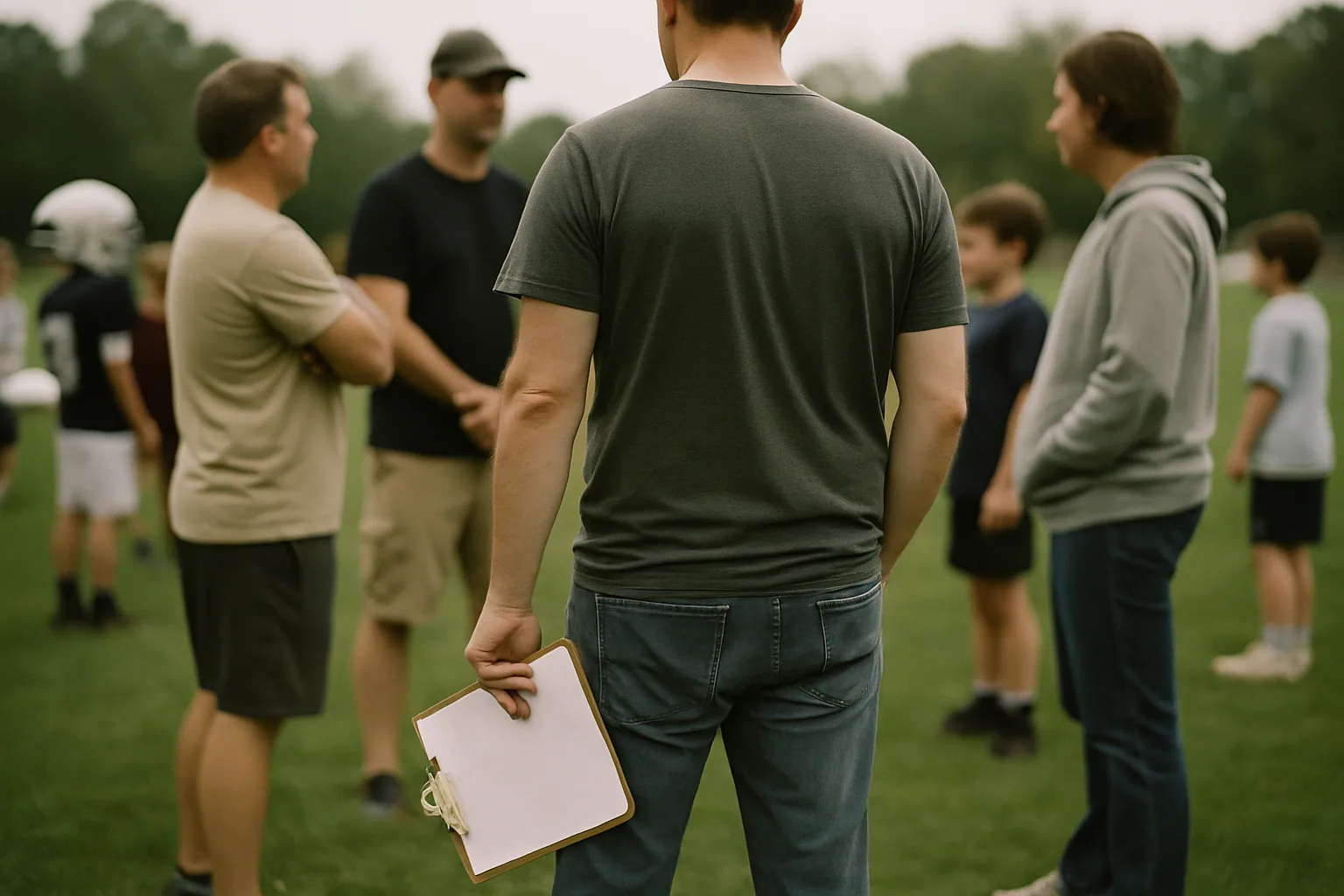
Most parents enroll kids in sports hoping they get better at the sport. The returns that hold up twenty years later are not the sport-specific ones. They are the habits: showing up, following through, being someone people can count on. Those things do not develop through lectures. They develop through repeated experience with real consequences. Sports deliver that experience in a way most other childhood activities do not.
Responsibility starts with showing up. Practice starts at four. Games start at nine. Teammates depend on you being there, and they depend on you being there ready. When a kid is late, drills are delayed. When a kid skips, the team is short. The kid figures out quickly that missing practice affects more than themselves. This is often the first time in a child’s life where their absence has a visible cost to other people. That is a significant developmental threshold.
Team jobs accelerate the lesson. A player who is the Equipment Captain knows that if they do not show up early and set up the cones, practice starts wrong. The team depends on that. The Water Captain knows that if they forget the cooler, players train without water. When a job is real and the team feels the absence of it, the player carrying that job learns what it means to be depended on. That understanding does not come from reading about responsibility. It comes from experiencing what it feels like to be the person other people are waiting on.
Taking care of equipment is a small daily lesson in stewardship. Returning the ball to the bag. Putting cones back in a stack. Keeping pads and uniforms in game-ready condition. None of it is complicated. All of it requires intention. The kid who puts the ball away properly every single time is building a habit. The coach who notices and names it is connecting the behavior to a value. Together, those two things create a standard that follows the kid out of sports.
Keeping commitments is the deeper version of showing up. When you join a team, people plan around you. Your coach built a lineup. Your teammates expect you. Missing practice without notice is not a neutral act. It sends information to everyone depending on you about how much they can rely on you. Kids encounter this rule before they encounter it at a job or in a serious relationship. Youth sports is where many of them learn it for the first time, often because the violation had a visible cost.
Coaches should create responsibility opportunities rather than doing everything themselves. The more athletes own, the more they develop. If the coach sets up all the cones, packs all the bags, manages all the logistics, and cleans everything up, the players are customers. If the players set up the cones, pack their own bags, and know that leaving their gear behind affects the whole team, they are stakeholders. The gap between those two identities is significant.
The payoff is one that does not show up in the stat line but shows up in everything else. Coaches at the next level value it. Teachers notice it. Future employers, long before they know anything about this person’s sports history, are looking for exactly what a well-run youth sports program builds: people who show up, follow through, take care of their responsibilities, and do not make excuses when they fall short. That profile starts taking shape in the years when kids are playing with cones and water jugs and jerseys that need to be folded and returned. The sport is the context. Responsibility is the point.