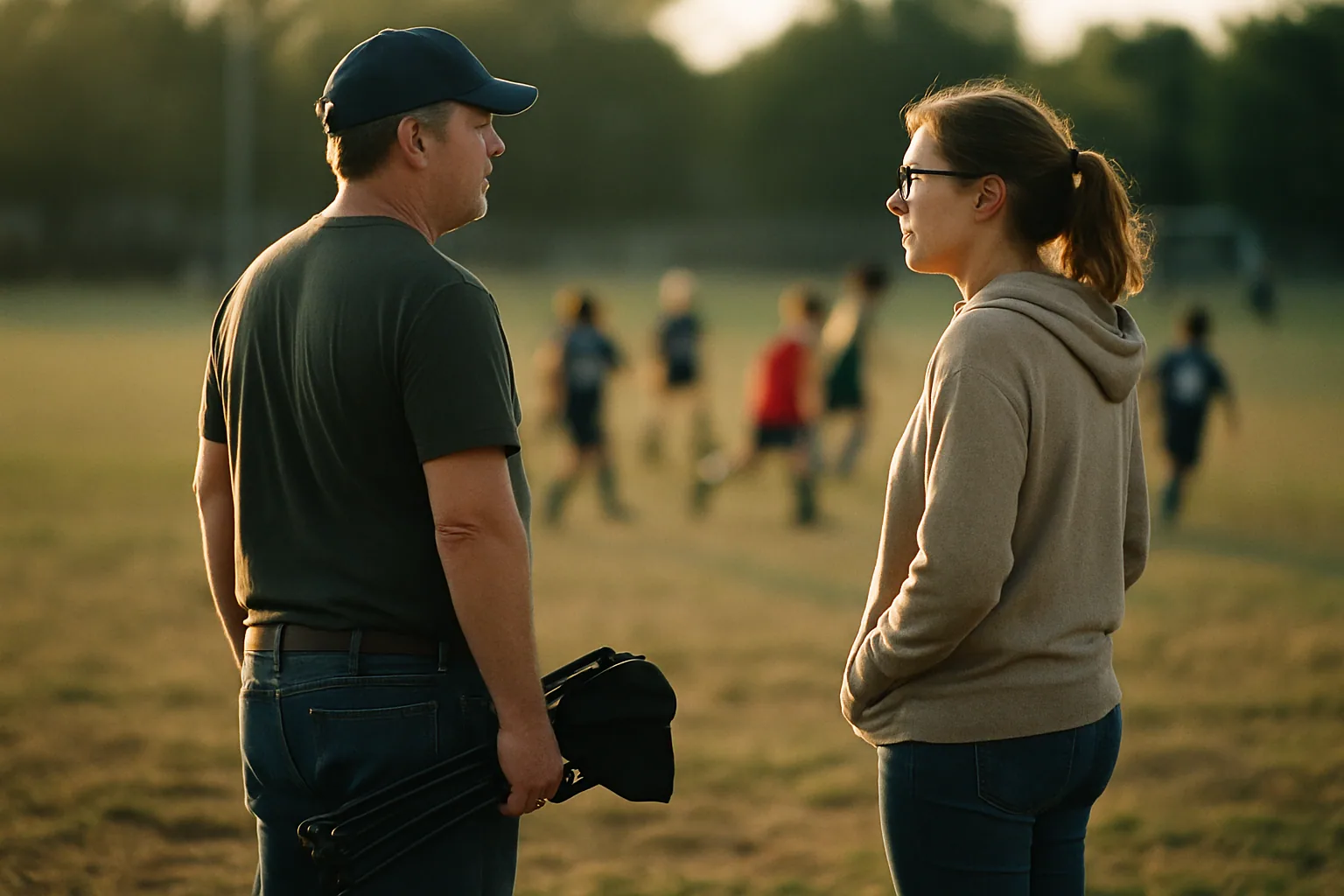
If your child seems stuck on the bench while a teammate with similar skills gets more minutes, that pattern deserves a look, but it doesn’t automatically mean favoritism. The single best move today is to check your team against a written policy, or write one if none exists, and document what you’re seeing before you say anything to the coach. Most disputed lineup decisions trace back to an unclear model rather than a hidden agenda, so start with consistency and transparency before you assume the worst.
TL;DR:
- Coaches’ decisions are often based on observable practice effort and strategic needs rather than favoritism, but patterns of exception behavior should be carefully documented.
- A written team policy detailing playing time, behavior expectations, and complaint procedures helps prevent misunderstandings and provides a clear standard for fairness.
- Identifying signs of favoritism involves noticing inconsistent rule application, secretive decision-making, and defensive responses when questions arise from parents or players.
- Boundary violations and safety concerns like unobserved contacts or secrecy require immediate action and thorough documentation, with reporting to SafeSport if patterns emerge.
- Parents should prepare scripts and keep detailed records to effectively address unfairness with coaches and foster transparency before issues escalate.
Table of Contents
- Quick checklist: 8 immediate steps to manage suspected favoritism
- How to tell if what’s happening is favoritism, coaching judgment, or perception
- Boundary and safety red flags that go beyond favoritism into misconduct
- How to prevent favoritism before it starts with a team policy
- What to say: scripts for your child, the coach, and other parents
- A parent-coach’s short reflection
- How Parent Coach Desk can help
- Sources
- FAQ
Quick checklist: 8 immediate steps to manage suspected favoritism
When you’re in the middle of it, it’s hard to think clearly. This is the order that keeps you steady and keeps your child’s wellbeing at the center.
- Write down what happened: who, when, what was said or done, and who else was there.
- Find or request the team’s written policy on playing time, attendance, and conduct.
- Talk with your child using a calm, wellbeing-first script, not a performance debrief.
- Ask the coach for a short, private, timed conversation, and bring specific examples instead of accusations.
- Skip public confrontations at games and skip social media entirely.
- If you notice boundary or safety concerns, follow SafeSport reporting guidance right away.
- Share a draft policy with other parents and suggest a brief team check-in if the concern is shared.
- Keep emotion out of written messages and ask for a specific follow-up date.
- Document everything in one place, even small moments, so patterns are easy to show later.
- Protect your child’s confidence first; the policy conversation can happen without them in the room.
Pro Tip: Keep a simple log, three columns is enough: date, what happened, who witnessed it. It turns feelings into facts fast.
How to tell if what’s happening is favoritism, coaching judgment, or perception
Not every disappointing lineup call is favoritism. Coaches weigh practice performance, roster needs, and matchups, and those calls will sometimes go against your kid even when nothing unfair is happening. The line moves from judgment to bias when decisions stop tracking the team’s own stated rules.
Favoritism tends to show a pattern: the same child gets exceptions no one else gets, the reasoning stays vague or secret, and questioning it triggers a defensive or punitive response. Legitimate coaching decisions, by contrast, usually connect to something observable, effort in practice, a specific skill gap, or a strategic need for that game.
- One child consistently gets minutes or roles that don’t match recent practice performance.
- Rules that apply to everyone else quietly don’t apply to one player.
- Coaches avoid explaining decisions or become irritated when asked.
- Athletes who raise questions see their own opportunities shrink afterward.
Use what USA Volleyball calls a consistency test. USA Volleyball explains that clubs generally run on one of two models, equal playing time for development-focused teams or performance-based lineups for competitive teams, and the fairness question isn’t whether minutes are identical. It’s whether the coach is following the model the team actually stated.
A team that publishes its model in writing and follows it gives parents a clear standard to check decisions against, rather than relying on memory or gut feeling. Practice attendance records, a coach’s own notes, and observations from an assistant coach all give you something concrete to compare against the stated model, which is far more useful than comparing minutes alone.
Boundary and safety red flags that go beyond favoritism into misconduct
Some behaviors aren’t about fairness at all. They’re safety concerns, and they call for faster, more direct action than a policy conversation.
Watch for private one-on-one sessions with no other adult present, gifts or privileges given outside team norms, texts or emails to a minor that don’t include parents, and a child being pulled away from normal team activities. The U.S. Center for SafeSport recommends that safe coaching practice includes copying parents on any communication with an athlete and avoiding isolated, unobserved contact between an adult and a minor. Special treatment, secrecy, and retaliation when questioned are the signals worth acting on, not any single decision on its own.
- Save copies of messages, note dates and times, and record who else witnessed the behavior.
- Report through your club’s safeguarding lead or directly through SafeSport’s process when a pattern fits these signs.
- If you believe your child is in immediate danger, remove them from the situation and contact local authorities right away.
Pro Tip: Trust the pattern over the single incident. One awkward moment might be nothing; three similar moments with the same child are worth reporting.
How to prevent favoritism before it starts with a team policy
The easiest way to avoid a favoritism dispute is to never let the rules stay unwritten. USA Volleyball’s guidance for parent-coaches recommends publishing a short written policy before the first practice that covers how lineups, playing time, attendance, effort, conduct, and injuries will be handled. When the rules are visible, an unpopular decision reads as a decision, not a secret.
A workable policy fits on one page. Include:
- A short mission statement for the season.
- The playing-time model you’re using and why.
- Consequences for missed practices or games.
- How and when parents can raise questions.
- The steps for a complaint, and who handles it.
- How often lineup rationale gets documented.
Different age groups call for different models. Younger, development-focused teams do best with roughly equal time so every kid keeps building skills and confidence. Older or more competitive teams often shift to performance-based lineups, where practice effort and skill more directly shape playing time. A hybrid model, common in the middle years, keeps development as the priority while being upfront about how merit starts to matter.
| Model | Best fit | Strength | Trade-off |
|---|---|---|---|
| Equal time | Youngest development leagues | Every player builds skills and stays engaged | Doesn’t reward effort or improvement directly |
| Performance based | Older, competitive teams | Rewards practice effort and results | Can widen the gap between top and bottom of the roster |
| Hybrid | Transitional, development-focused teams | Balances growth with transparency about merit | Requires more communication to keep parents aligned |
USA Volleyball notes that consistency with whichever model a club states matters more than whether every player gets identical minutes. Publish the policy before the first practice, hold a brief check-in every couple of weeks, and jot down the reasoning behind lineup calls for close or contested games. It takes ten minutes and saves hours of conflict later.
What to say: scripts for your child, the coach, and other parents
Having the right words ready matters more than having the right intentions. Here’s language that works for real conversations, not just calm ones.
With your child, by age:
- Ages 8 to 11: “I noticed you didn’t get much time on the court today. How did that feel? What did you enjoy about practice this week?”
- Ages 12 to 15: “I want to check in about playing time, not to fix it right now, just to hear how you’re feeling about it.”
- Ages 16 and up: “You’re old enough to weigh in here. Do you want me to say anything to the coach, or would you rather handle it yourself first?”
With the coach:
- “Could we find fifteen minutes to talk? I’ve noticed a few things and want to understand the reasoning behind them.”
- “Here’s what I saw on these three dates. Can you walk me through how the playing-time model applies here?”
- “What I’d like out of this conversation is clarity on the model and how decisions get made going forward.”
If the coach gets defensive, slow down rather than push harder. Ask if an assistant coach can join the conversation, or suggest the whole team discuss the policy together rather than making it about one child. USA Volleyball’s guidance on earning respect from players points out that framing questions around team goals, rather than personal grievances, tends to land better with coaches who feel cornered.
With other parents: stick to shared outcomes rather than rumor. “A few of us have questions about how lineups are decided, would it help to ask for a short team policy meeting?” moves the conversation toward a solution instead of a pile-on.
Pro Tip: Practice your coach script out loud once before the real conversation. It steadies your tone more than you’d expect.
A parent-coach’s short reflection
Coaching your own child means holding power you didn’t fully sign up for. Your kid can’t quit the family the way they could quit a bad club, so the burden of fairness sits more heavily on you than on any other coach on that sideline.
That’s why I’d rather over-communicate than assume goodwill is obvious. Publish the policy even when the season looks calm. Hold the check-ins even when nobody has complained yet. Practice the scripts before you need them, because the version of you reading calmly right now is a much better communicator than the version of you standing in a parking lot after a hard loss.
How Parent Coach Desk can help
Once you’ve got a policy and a few scripts in hand, the next step is making sure you’re set up for the season itself, not just the hard conversations. Parent Coach Desk keeps a full gear guide for parent-coaches covering what actually earns a spot on the bench, along with video and tracking tools if you want lineup decisions backed by footage instead of memory.
Pair that with the coaching-your-own-kid-fairly guide and the playing-time fairness breakdown for deeper scripts by scenario, and sign up for the newsletter for seasonal checklists that land in your inbox right when you need them, before tryouts, before the first practice, before the conversations that matter most.
Sources
None of this is guesswork. It draws on real guidance from the organizations that actually set standards for youth sports.
- U.S. Center for SafeSport guidance — Process Improvement Announcement
- You are paying for practice, not playing — USA Volleyball
FAQ
How to deal with coach favoritism?
Start by checking the coach’s decisions against the team’s stated playing-time model, since consistency with that model matters more than equal minutes for every player. If the pattern still looks unfair, document specific incidents and request a private conversation focused on examples, not accusations, as USA Volleyball recommends.
What are some signs of parental favoritism in childhood?
Common signs include one child getting exceptions to rules that apply to everyone else, decisions that don’t match effort or performance, and a defensive or secretive response when the pattern is questioned. Retaliation after a child or parent raises a concern is one of the clearer signals worth documenting.
What to do when a coach is unfair to your child?
Write down the specifics of what happened, then request a short, private conversation with the coach centered on those examples and on understanding the team’s decision model. If the concern involves boundary or safety issues rather than fairness alone, SafeSport’s reporting guidance applies immediately, without waiting for a scheduled talk.
What is the psychology behind favoritism?
Favoritism in a coaching context often grows out of a parent-coach’s dual role, where the instinct to protect or promote their own child competes with the responsibility to treat the whole team fairly. The American Academy of Pediatrics frames the fix as keeping a child’s emotional wellbeing separate from performance pressure, which helps parent-coaches catch their own bias before it shapes a decision.