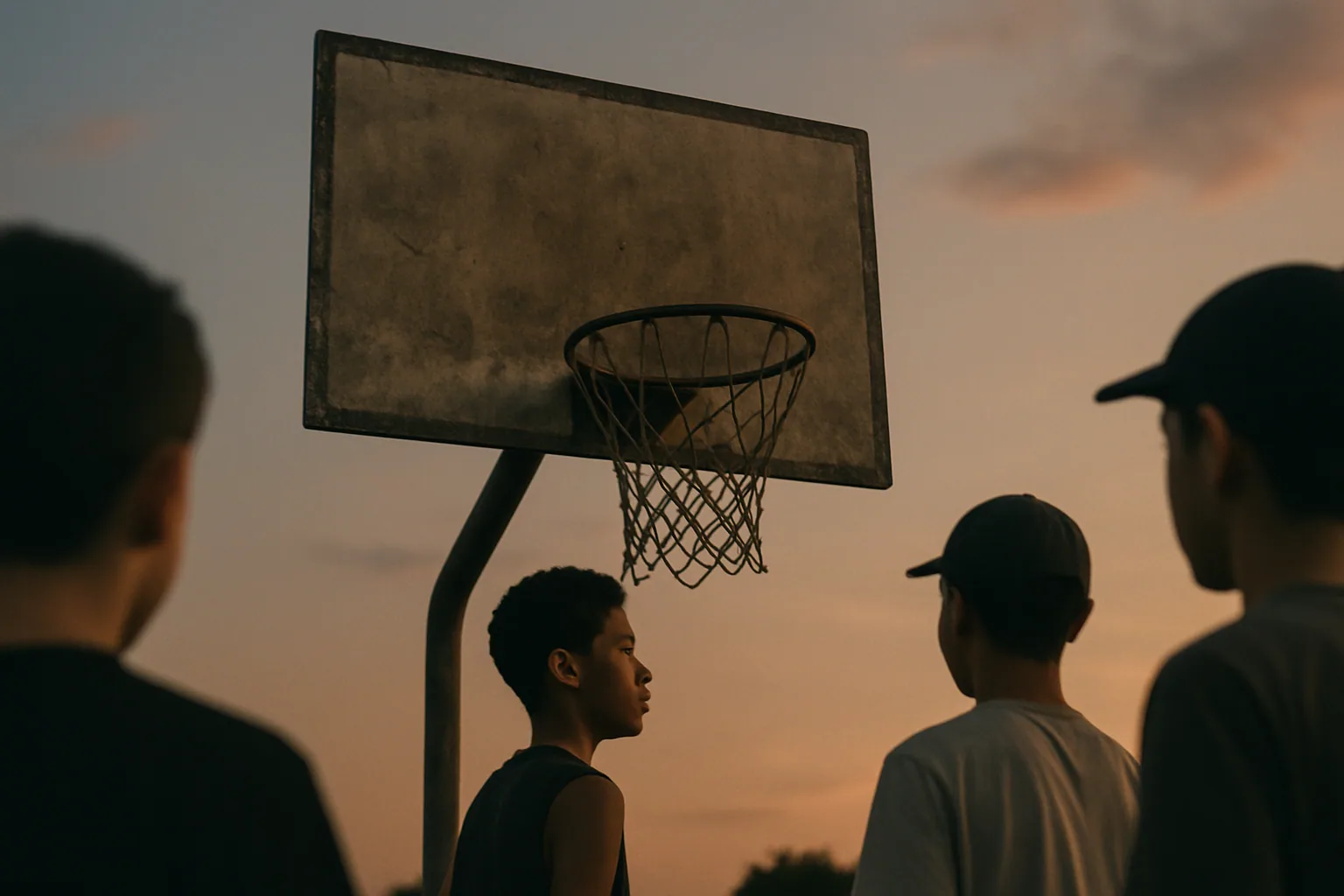
Basketball gyms are loud. That’s fine. But there’s a difference between crowd noise and crowd interference, and most parents who cross the line don’t know they’ve crossed it until their kid walks off the court mortified.
Here’s the honest breakdown of what sideline behavior actually does.
What helps. Genuine encouragement. “Let’s go, Sofia!” after she hustles for a loose ball. “Nice shot!” when she hits one. Clapping when the team makes a good play.
This is why you’re there. Your kid knows you’re in the stands, and hearing your voice say something positive gives them energy. That’s real and it matters.
What does nothing. Tactical instructions from the bleachers. “Move to the wing!” “Set the pick!” “Stay with your man!” Your kid can’t process that in real time during a game, and even if they could, they’re supposed to be responding to their coach’s system. Two competing voices during live action just creates confusion.
What actively hurts. Yelling at referees. Criticizing opposing players. Making comments about other kids on your own team. Audible complaints about the coach’s decisions. Any of this embarrasses your kid and creates an atmosphere that ruins the game for everyone else.
Kids hear everything, including the stuff you think you said quietly.
There is a specific version of this worth calling out. The parent who provides a running commentary on their kid’s mistakes, loud enough to carry, is not coaching their kid. They are criticizing a child in public.
Your kid knows they turned it over. They don’t need it announced to the gym.
The ref issue. Youth basketball referees are often teenagers or young adults working for $15 to $25 a game. They make mistakes. So does every ref at every level. The right response to a bad call is nothing, or a quiet “tough call” to the person next to you.
Yelling at a youth ref teaches your kid that rules are optional when you disagree with enforcement. That’s not the lesson you want.
What coaches notice. Every coach in a youth gym has peripheral awareness of parent behavior in the stands. The kid whose parent is running commentary from the bleachers often becomes the kid the coach worries about, because now coaching decisions have a parent attached to them. That’s not fair to the player, but it’s reality.
The easiest parent to coach for is the one the coach never has to think about.
The rule that works. One sentence in the car before the game: “I’m here to cheer, not coach.” Then do that. Your kid will feel the difference.
Our basketball gear guide covers what’s actually worth bringing to the gym, so game day logistics aren’t part of what you’re managing from the stands.