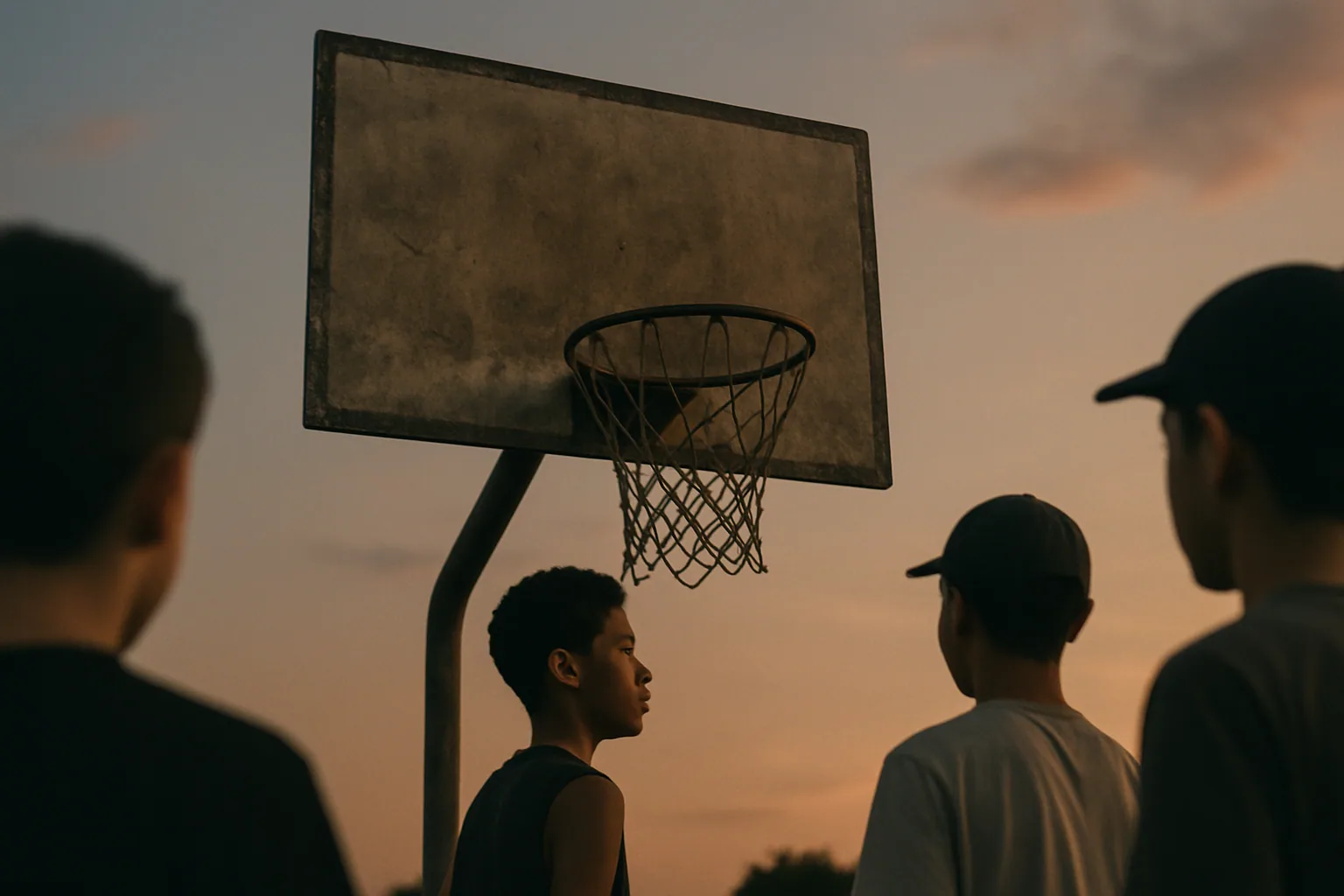
Basketball sells the dream harder than almost any other youth sport. The AAU circuit is enormous, the shoe brands run national tournaments, and every gym has a kid whose family believes he’s the exception. Then senior year arrives and the phone doesn’t ring the way everyone expected.
Start with the actual math. Roughly 540,000 boys play high school basketball each year. About 5,800 Division I men’s roster spots exist across all of college basketball, and turnover each year is small.
NCAA’s own tracking puts the number of high school boys basketball players who go on to compete at any NCAA level, D1 through D3, at around 3.6 percent. Division I alone is closer to 1 percent. Girls’ numbers run similarly tight at the D1 level, with more range at D2 and D3.
That gap is wider than football, wider than baseball, wider than most sports parents compare it to. A roster of 12 to 15 spots per school, times far fewer college programs than there are decent high school players, does the rest of the math on its own.
AAU makes the gap feel smaller than it is. Thousands of kids play AAU. Every one of them has a jersey from a real circuit team, a highlight reel, and a coach who’s told them college ball is realistic. Most of those circuit teams are feeding a tiny number of high-major spots at the top and a wider net of smaller-conference offers underneath.
The families who get surprised are usually the ones who read “AAU” as a pipeline instead of what it actually is: an evaluation venue. Playing well in front of a lot of coaches is not the same as any of those coaches recruiting your kid.
What real options exist below the D1 conversation. Division II offers partial athletic scholarships and plays a real, competitive brand of basketball. Division III and most NAIA schools don’t offer athletic money, but plenty of D3 rosters have players who could have played D2 and chose the school instead.
NAIA and junior college both have functioning programs and, at the juco level in particular, a real path back up to a four-year roster for a kid who develops late. None of these are consolation prizes. They’re basketball, played hard, by kids who love it enough to keep showing up.
The D3 email your kid can send themselves. D3 and NAIA coaches respond to direct outreach from a player who’s done the homework: game or highlight film, a transcript, and a short note about why that specific school fits academically and athletically. This works better late in junior year and into senior year than most families expect, and it doesn’t require an agent or a recruiting service. The basketball pathway by age covers what realistic development looks like at each stage if you want to see where a specific season fits into the bigger picture.
The conversation that actually matters happens at your kitchen table, not on the court. A kid who put four AAU summers and every off-season into this game needs to hear that the years counted, whether or not a coach ever called. The skill, the discipline, the ability to take coaching under pressure. None of that evaporates because a roster spot didn’t materialize at the level he pictured.
Ask him what level of basketball he’d actually enjoy playing, separate from what level he thinks he’s supposed to chase. Some kids want D3 ball at a school they love. Some want a shot at walking on somewhere bigger. Some are done, and that’s allowed too.
Don’t let the story become the whole story. A kid who doesn’t get recruited the way he hoped is not a kid who failed at basketball. He’s a kid who played a sport with brutal numbers and found out where he stood. Plenty of good players get that same news every March. What he does with the next four years says more than any recruiting rank ever did.
Gear mentioned in this article (affiliate)
Youth rubber basketball →, a solid pick for youth basketball players.
Full Basketball gear guide →, all picks by age and level.
As an Amazon Associate we earn from qualifying purchases.