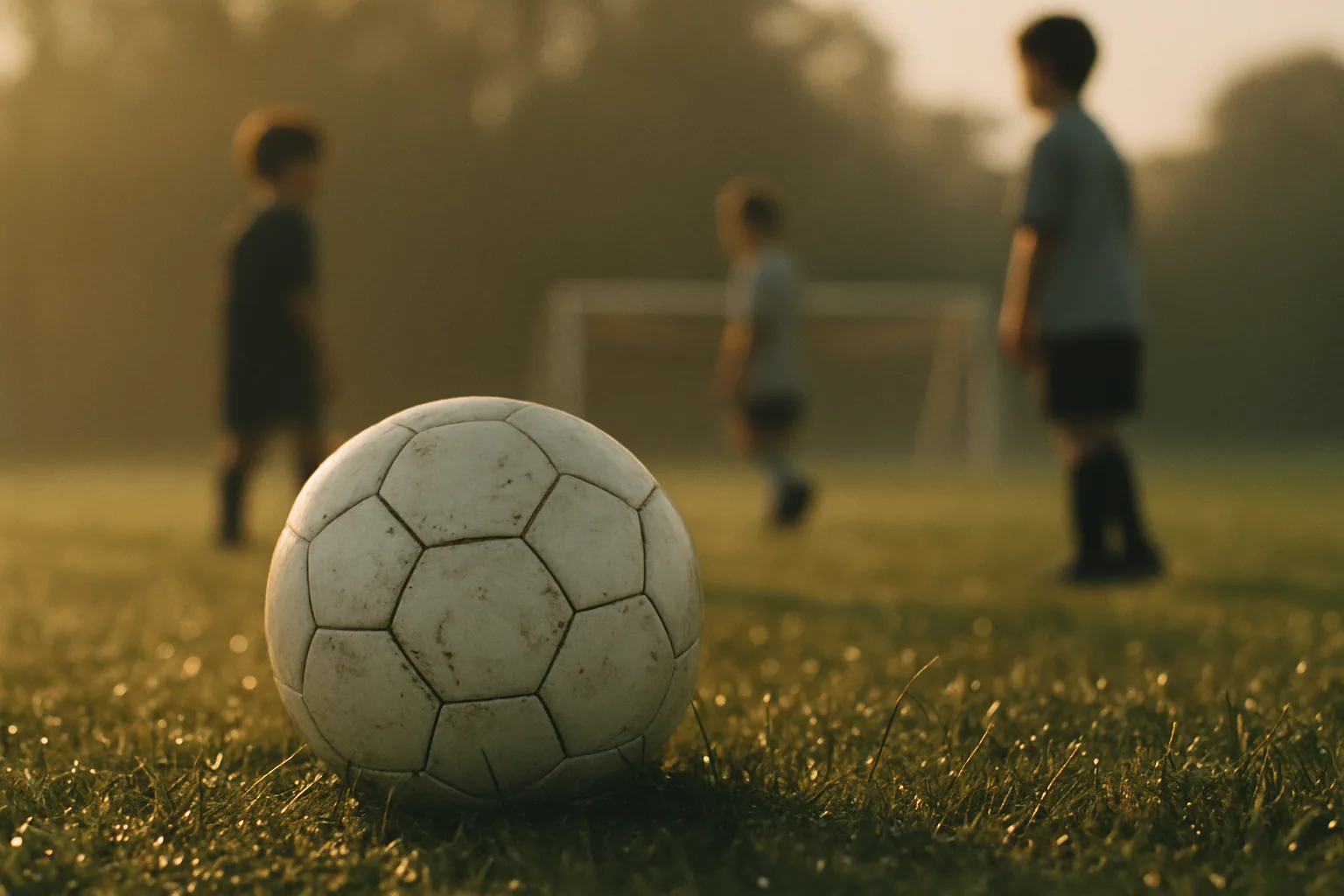
The shootout was already tense before the miss happened. A World Cup Round of 16 match had gone to penalties, the camera kept cutting to a goalkeeper bouncing on his line, and then one of the kicks sailed over the bar. The stadium made a sound that even came through the television speakers. Our kid, watching from the couch with a bowl of cereal at nine at night because it was summer and nobody was strict about bedtime that week, went completely quiet.
We knew why. Four days earlier our kid had missed the front end of a one-and-one at the free throw line with their own team down two, and the conversation about it had not gone anywhere. Every attempt we’d made that week to bring it up got a shrug or a “can we not talk about it.” Watching a professional player miss a penalty, in the biggest tournament in the sport, on the sport’s biggest stage, cracked something open that our direct questions hadn’t.
The professional’s miss did the work we couldn’t do with a direct question. Our kid didn’t say anything about the free throw. They said, out loud, unprompted, “that must feel so bad,” about a grown man on television they had never met. That sentence was doing double duty. It’s easier to feel sympathy for a stranger’s miss than to sit with your own, and it’s a lot easier to talk about a stranger’s miss out loud in a room where your own is sitting there unsaid. We didn’t correct the redirection. We just agreed. That probably does feel terrible. In front of that many people.
We let a full minute pass before we said anything else. The shootout kept going, another kick, a save, a roar. Then we asked, in the most ordinary voice we could manage, whether the player would get another chance to take a penalty someday, in another game, another tournament. Our kid said probably, yeah, he plays for a good team. We agreed. Then, and only then, we asked if our kid thought that’s how it would go for them too, the next time they were at the line.
That’s the whole trick, if there is one. The professional’s miss provides cover. Nobody is asking the kid to explain their own failure head-on. They’re commenting on someone else’s, which feels safe, and once they’re already talking about a miss in general terms, the door to their own miss is open a crack without anyone having forced it. We didn’t walk through that door for them. We waited to see if they would, and this time they did.
Our kid didn’t want to talk about the free throw itself in detail. What they wanted to say, it turned out, was that they’d been thinking about it all week and hadn’t wanted to bring it up because they thought we’d tell them to shoot more free throws in the driveway, which is exactly what we would have said a few days earlier if we’d forced the conversation on our own timeline. Hearing that made us glad we’d waited. The lecture we’d been ready to deliver on day one would have landed as pressure. The conversation that happened instead, sparked by a stranger missing a penalty kick in July, landed as something closer to relief.
Shootouts are a good teaching moment because nobody in that stadium looks fine after a miss. Some players put their head down and walk straight to the bench. Some stand at the spot for a second too long. None of them shrug it off on camera, and that’s useful for a kid to see, because it says the discomfort of a missed shot isn’t something only kids feel and only kids should get over quickly. Professionals who’ve taken thousands of penalty kicks still look wrecked by one that doesn’t go in. That’s not a flaw in them. It’s just what missing feels like, at every level, and a kid carrying around a bad free throw for four days isn’t broken for still thinking about it.
We didn’t turn the moment into a lesson about resilience or bouncing back. We didn’t say anything about practicing more or trusting themselves next time. We mostly just sat with our kid through the rest of the shootout, including the next miss and the eventual result, and let the conversation about the free throw stay exactly as small as our kid wanted it to stay. If our kid decides this is the summer they want to actually work on penalty kicks in the driveway, the age-by-age soccer pathway is a decent place to see what that practice should even look like right now.
We also noticed how our kid talked about the miss differently the next morning. At breakfast, unprompted, they brought up the free throw again, this time without the tight, closed-off tone they’d had all week. They said something about how the player from the shootout probably still thought about that miss too, and that it didn’t seem to stop him from being good at his job. That’s not a resilience speech we