Start with the three things that actually matter: court shoes, knee pads, and a ball sized for your child’s age. Everything else, from nets to training carts, comes after those three are right. For most families, that means a youth light ball for players under 12 (per USAV’s simplified youth rules), a pair of court shoes with lateral support, and a low-profile kneepad. Brands like Mikasa, Tachikara, and Wilson cover those bases at every price point. Parentcoachdesk’s youth volleyball gear list walks you through exactly what to buy by age so you don’t overbuy on the first trip.
This post contains affiliate links. If you buy through them, Parent Coach Desk earns a small commission at no extra cost to you.
Quick shortlist before you read further:
- Youth light ball (U12 and younger): a youth light volleyball or the Mikasa Volley Lite; lighter materials build contact confidence
- Indoor club ball (U14 and up): a USAV-approved match ball once the lighter ball stops challenging them
- Court shoes: a volleyball court shoe with a gum rubber sole; biggest performance impact for young players
- Knee pads: low-profile youth knee pads, age-appropriate density; skip the bulky adult versions for kids under 10
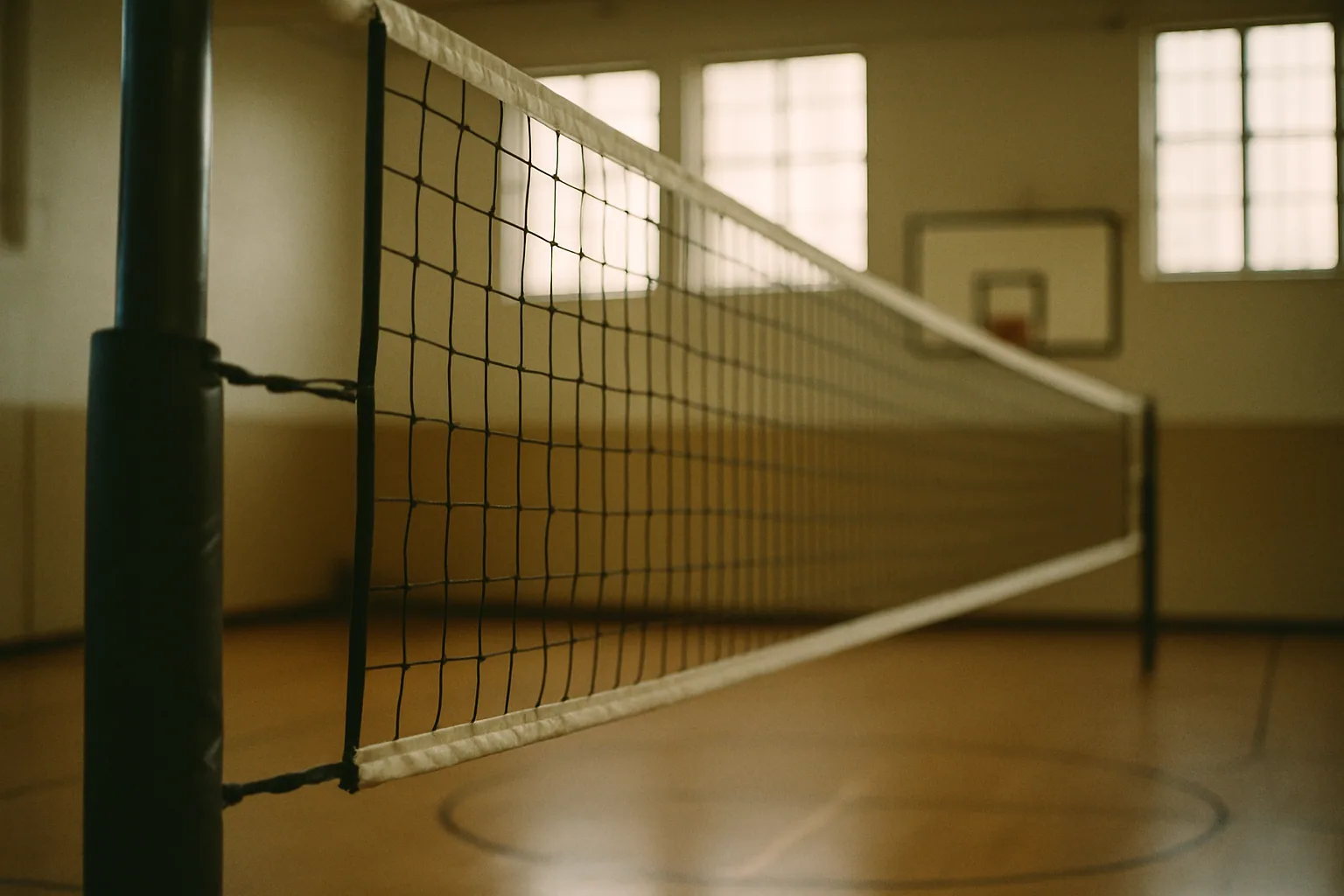
- Adjustable net system: a portable net system for practice and backyard play
- Starter team kit: bulk team orders run through a school supplier rather than a single retailer
Table of Contents
- What does the best volleyball equipment look like side by side?
- What are the official court, net, and ball standards you need to know?
- What gear actually helps kids develop, and what can you skip?
- How do you keep gear safe and match-ready all season?
- Where should you buy volleyball gear in the U.S.?
- Practice and match day packing checklist
- How do you maintain the right ball pressure all season?
- Can you customize volleyball gear with team colors and logos?
- What warranty and return policies should you expect?
- How do the major brands compare on quality and price?
- Key Takeaways
- What most parents get wrong about buying volleyball gear
- Parentcoachdesk makes the gear decision easier
- Useful sources and further reading
What does the best volleyball equipment look like side by side?
The table below maps the nine major brands and supplier categories across the dimensions that matter most for parents, coaches, and organizers. Read the “Best for” column first: it tells you which buyer profile each option fits. Then check “Recommended age/skill” before looking at price.
| Brand / Supplier | Best for | Price range | Size/weight/approval | Material & durability | Portability | Recommended age/skill |
|---|---|---|---|---|---|---|
| Mikasa | Club/competition & youth light balls | — | USAV/FIVB approved; youth lite versions available | Composite/synthetic leather; consistent feel | Ball only | U12 lite through adult competition |
| Tachikara | Recreation & training | — | Standard adult and youth sizes | Durable synthetic; multi-surface | Ball only | All ages; beginner to intermediate |
| Molten | Indoor competition/club | — | FIVB-style panels; USAV approved | Premium composite; distinctive panel design | Ball only | U14 through adult club |
| Wilson | Recreation & school programs | — | Standard adult size | Synthetic composite; broad availability | Ball only | Beginner to recreational adult |
| BSN SPORTS | Bulk team orders & school/club kits | Varies; bulk pricing | Full team kit options | Full catalog: balls, nets, apparel | Catalog ordering | All levels; school and club |
| Gopher Sport | Training aids & school programs | — | Portable net systems; adjustable heights | Durable steel/aluminum frames | High; portable systems | Youth programs through adult rec |
| All Volleyball | Individual buyers & curated gear | Varies by product | Wide selection; buyer guides included | Mixed; curated for quality | Retail shipping | All ages |
| Gold Medal | Facility net systems & gym installation | — | Competition-quality; fixed/portable | Heavy-duty steel; long-term durability | Low; facility-grade | Club through competitive |
| Under Armour | Performance apparel & training wear | — | Team apparel; technical fabrics | Moisture-wicking synthetic | Apparel only | Youth through adult |
For a parent buying a first kit, the “Best for” and “Recommended age/skill” columns do the most work. A coach ordering for a school program should look at BSN SPORTS and Gopher Sport first. An individual player shopping for a club season should start with Mikasa or Molten for the ball, then Under Armour for apparel.
What are the official court, net, and ball standards you need to know?
These are the numbers that govern play in the U.S. Know them before you buy a net or order team balls.
Court dimensions: The standard indoor court has specified dimensions per the 2025-2027 USAV Indoor Rules Book. Younger age groups use reduced configurations; USAV’s simplified youth rules allow smaller court setups to increase rally success and skill repetition.
Net heights (standard):
| Level | Net height |
|---|---|
| Youth (U12 and younger) | Reduced; varies by program |
Ball specs (official adult indoor): Circumference 65–67 cm, weight 260–280 g, pressure 4.26–4.61 psi. Youth light balls use the same circumference but lighter materials.
Stat callout: The USAV Indoor Rules Book sets official ball pressure at 4.26–4.61 psi for adult indoor play. A ball outside that range plays differently enough to affect serve and pass mechanics.
Uniform basics: USAV uniform requirements mandate permanent Arabic numerals 1–99, with a minimum heights on the front and back to ensure visibility. Liberos must wear a jersey with a clearly contrasting dominant color from their teammates. When in doubt, test your jersey combinations in grayscale before ordering; referees make the final call on marginal contrast cases, so having a backup jersey is smart.
What gear actually helps kids develop, and what can you skip?
Age and physical development matter more than birth year when picking gear. A tall, strong 10-year-old may be ready for a standard youth ball; a smaller 12-year-old might still benefit from a lighter version. Use the table below as a starting point, then adjust based on your child’s comfort with the ball.
| Stage | Ball type | Net height | Footwear | Knee pads |
|---|---|---|---|---|
| — | Super-light (foam or trainer ball) | Lowered significantly | Supportive sneaker | Optional |
| U10 | Youth light ball | Reduced | Volleyball or cross-trainer | Low-profile |
| U12 | Youth light ball | Reduced (USAV youth rules) | Volleyball shoe | Low-profile |
| U14 | Standard youth or adult | Standard women’s height | Volleyball shoe | Standard |
| Teen/club | USAV-approved adult ball | Standard by gender | Volleyball shoe | Position-appropriate |
Stage-appropriate programs consistently show that matching equipment to a child’s development stage, rather than their age alone, produces better skill retention and more enjoyment.
Before any purchase, confirm:
- Shoe fits with a thumb’s width at the toe (kids’ feet grow fast mid-season)
- Knee pad sits centered on the kneecap without sliding down during a squat
- Ball feels comfortable to hold with both hands; child can serve it overhand without wincing
What to skip on a first purchase: Ball carts, spike trainers, and rebounder nets are useful training tools, but only once a child is practicing multiple times per week with a coach. Buying them early usually means they sit in a garage.
A printable game-day checklist is in the packing section below. For sizing specifics, the Parentcoachdesk volleyball sizing guide covers shoes, jerseys, and knee pads by age.
How do you keep gear safe and match-ready all season?
A five-minute check before every practice prevents most mid-season surprises.
Ball pressure: Use a needle pump with a built-in gauge. Check pressure before each session; balls lose air gradually, especially in cold gyms. The SCSN equipment guidelines recommend using a pressure gauge; USAV sets official indoor ball pressure at 4.26–4.61 psi for match play. Store balls at room temperature; cold storage drops pressure and stiffens the shell.
Net and post checks: Before practice, run your hand along the net tape to feel for fraying. Check that post padding is secured and covers the full post height required by your facility. Exposed cables or loose padding are the most common net-related safety hazards at the youth level.
Footwear and knee pads: Replace court shoes when the gum rubber sole shows visible wear patterns or when your child reports ankle slipping. Knee pads lose their padding density after heavy use; a pad that slides down during play has lost its structural integrity and should be replaced. Wash knee pads weekly in a mesh laundry bag to prevent skin irritation.
Safety note: USAV rules prohibit players from wearing hard casts during play. Soft braces and approved ankle supports are generally permitted, but always confirm with your league’s specific rules before a tournament.
Pro Tip: Keep a small emergency kit in your coaching bag: a needle pump, a spare pair of knee pads in the most common size on your roster, and a roll of athletic tape. You’ll use all three before the season ends.
Where should you buy volleyball gear in the U.S.?
The right channel depends on whether you’re buying for one player or an entire team.
For individual players: All Volleyball offers strong buyer-advice content alongside its product selection, which makes it useful for parents who want guidance alongside the purchase. Wilson and Tachikara balls are also widely available at Dick’s Sporting Goods and Target for parents who want to see the product before buying.
For school and club programs: BSN SPORTS is the go-to for bulk team orders, catalog-level selection, and team kit packages. Gopher Sport specializes in nets, training aids, and portable systems, which makes it the better call when you’re outfitting a gym or a multi-court practice space.
For facility-grade net systems: Gold Medal’s competition-quality systems are built for permanent or semi-permanent installation. They’re not portable, but they’re the right call for a gym that runs tournaments.
Before placing a bulk order, ask three questions: What is the return window if a size is wrong? Does the warranty cover manufacturer defects, and for how long? Are the net dimensions compatible with your existing post spacing? Getting those answers in writing before the order ships saves significant headaches.
When timing matters (a tournament is two weeks out), order online with express shipping or buy locally. Shipping windows for large net systems can run 7–14 business days, and a delayed net is a real problem for a scheduled practice.
Practice and match day packing checklist
Print this or screenshot it before the season starts.
Everyday practice bag:
- Court shoes (in a shoe bag to protect the sole)
- Knee pads
- Athletic socks (two pairs)
- Water bottle
- Personal practice ball
- Pump with needle
- Hair ties and headband
- Small first-aid kit (bandages, athletic tape)
Tournament-day additions (per the All Volleyball bag checklist):
- Extra pair of socks
- Backup knee pads
- Ankle brace (if worn regularly)
- Snacks and electrolyte drink
- Foam roller or massage ball for recovery
- Extra laces
- Portable pump and pressure gauge
- Team jersey plus a backup
Bag organization tip: Use one compartment for shoes only (keeps the rest of the bag clean), one for recovery and medical items, and the main compartment for apparel and the ball. Players who can find their gear in under 30 seconds before warm-up arrive mentally ready.
How do you maintain the right ball pressure all season?
Ball pressure is the most overlooked part of gear maintenance, and it directly affects how the ball plays. USAV sets the official indoor ball pressure at 4.26–4.61 psi; a ball inflated above this range feels rock-hard and punishes young passers’ forearms. One below this range loses its shape on contact and makes serving inconsistent.
Check pressure with a dial gauge, not just by squeezing the ball. Needle pumps with built-in gauges cost under $20 at most sporting goods stores and are worth every cent. Inflate slowly and check the reading after each pump stroke rather than inflating all at once.
Storage matters too. Balls stored in a cold car trunk or outdoor shed lose pressure faster. Bring balls inside after practice. If you’re storing a ball for more than a few weeks, deflate it slightly (to around 4 psi) to reduce stress on the bladder, then re-inflate before use.
Can you customize volleyball gear with team colors and logos?
Yes, and it’s more accessible than most parents expect. BSN SPORTS offers team customization on jerseys, shorts, and warm-up gear, including logo placement and color matching for club and school programs. Under Armour’s team division handles custom apparel for programs that want technical fabric with branded design.
For balls, Tachikara and Wilson both offer custom-printed options for teams and events, typically with a minimum order quantity. Molten and Mikasa custom orders are available through authorized distributors, though lead times can run four to six weeks, so plan ahead of your season start.
One practical note: custom jerseys must still meet USAV uniform requirements for number size, placement, and libero color contrast. Run your design past your league coordinator before placing a large order.
What warranty and return policies should you expect?
Policies vary significantly by brand and retailer, so read the fine print before buying.
Most major ball brands (Mikasa, Molten, Tachikara) cover manufacturing defects for one year from purchase. That covers seam separation and bladder failure, but not normal wear or punctures. Keep your receipt.
Net systems from Gold Medal and Gopher Sport typically carry longer structural warranties (often one to three years on frames), but padding and net fabric are usually considered consumables and are not covered. Ask specifically about what is and isn’t included.
For online purchases, All Volleyball and BSN SPORTS both publish return windows on their sites; check those before ordering, especially for shoes and knee pads where fit is critical. Buying shoes locally first, then ordering online once you know the size, is a practical way to avoid return shipping costs.
How do the major brands compare on quality and price?
Mikasa and Molten sit at the top for competition quality. Both produce USAV and FIVB-approved balls used at the highest levels of play, and both offer youth versions that maintain that quality at a lower price point. Molten’s distinctive panel design is a genuine performance feature, not just aesthetics; the panels affect how the ball rotates and how passers read its trajectory.
Tachikara earns its place through durability across surfaces. It’s the ball you hand a beginner or use for outdoor practice without worrying about it. Wilson occupies a similar space but with even broader retail availability, which matters when you need a replacement ball the day before a tournament.
BSN SPORTS and Gopher Sport are not ball brands; they’re the infrastructure layer. BSN SPORTS is where a school athletic director goes to outfit an entire program. Gopher Sport is where a parent-coach goes to find a portable net system that actually fits in a minivan.
Under Armour’s volleyball apparel is genuinely technical. Moisture-wicking fabrics and compression fits matter more in a long tournament than in a single practice, and the price reflects that. For everyday practice, a basic athletic shirt works fine.
Key Takeaways
The single most important purchase for any youth volleyball player is a properly fitted court shoe paired with a ball matched to their age and development stage.
| Point | Details |
|---|---|
| Shoes and knee pads first | Court shoes and low-profile knee pads are the highest-impact purchases; buy these before anything else. |
| Match the ball to the player | Use a youth light ball for players under 12; transitioning to adult weight too early slows skill development. |
| Know the official specs | USAV sets ball pressure at 4.26–4.61 psi and adult ball circumference at 65–67 cm; check these before every match. |
| Buy-once vs. consumable | Invest in shoes and net systems; treat balls, knee pads, and tape as seasonal consumables. |
| Parentcoachdesk resources | The youth volleyball gear list and parent-coach gear guide give age-specific buying advice you can act on today. |
What most parents get wrong about buying volleyball gear
Here’s the honest version: most families overbuy on the first trip and underbuy on the things that actually protect their kid.
A $120 training rebounder sitting unused in a garage is a story every volleyball parent knows. The child played twice, lost interest in solo training, and the rebounder became a very expensive coat rack. Meanwhile, the same family bought a $15 pair of knee pads that slid down every rally because they were sized for an adult.
The gear that earns its money is unglamorous: a well-fitted shoe, a pad that stays put, a ball that doesn’t hurt to pass. Those three things, chosen correctly for the child’s age and size, do more for skill development and enjoyment than any training gadget.
Budget is real, and nobody should feel pressured to spend more than their situation allows. But if you’re going to spend carefully, spend on safety and fit first. The youth sports cost question is one worth thinking through before a season starts, and Parentcoachdesk has a clear-eyed resource for exactly that conversation.
One more thing: gear does not replace coaching or repetition. A child with a proper ball, good shoes, and a parent who shows up consistently will develop faster than one with a full equipment catalog and no one to practice with.
Parentcoachdesk makes the gear decision easier
Picking the right volleyball gear for your child doesn’t have to mean hours of research across a dozen retailer sites. Parentcoachdesk pulls together age-specific gear lists, sizing guides, and parent-coach tools in one place, so you spend less time comparing specs and more time on the court with your kid.
The parent-coach gear guide covers exactly what you need on the bench without the extras that just add weight to your bag. If you’re new to the whole youth sports world, the start here guide gives you a clear path through gear, costs, communication, and season planning. Sign up for the Parentcoachdesk newsletter to get printable checklists and gear reminders delivered before each season starts.
Useful sources and further reading
| Source | Best for | Link |
|---|---|---|
| USAV Indoor Rules Book (2025-2027) | Official court, ball, and net specs | USAV Rules Book |
| USAV Simplified Youth Rules | Youth court sizes, net heights, light ball guidance | USAV Youth Rules |
| USAV Uniform Requirements (2024-2025) | Number size/placement, libero color contrast | USAV Uniforms |
| SCSN Uniforms and Equipment | Referee/official gear, post padding specs, gauge recommendations | SCSN Equipment |
| All Volleyball: Gear for Your Child | Parent-focused gear prioritization and shoe/kneepad guidance | All Volleyball Guide |
| All Volleyball: Bag Checklist | Complete packing list for practice and tournament days | Bag Checklist |
| ChalkTalk Sports: Gear for Kids | Kneepad density, ankle support, and protective gear advice | ChalkTalk Guide |
| Volleyball Canada LTAD Guide | Stage-appropriate equipment by development stage | LTAD Guide |