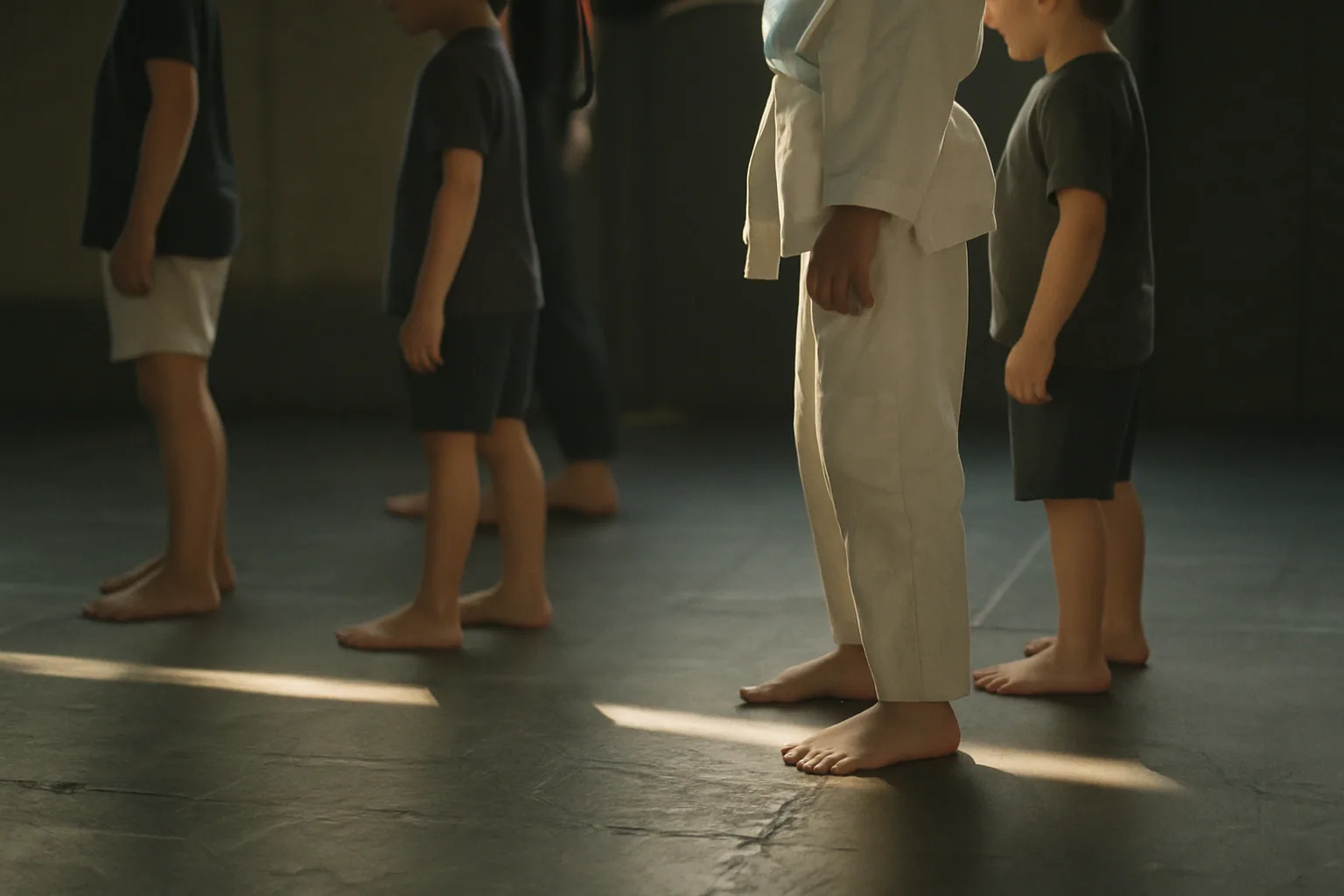
A failed belt test doesn’t look like a loss. There’s no scoreboard, no opposing team to blame, no bad call from a ref. It’s one kid, one panel of instructors, and a standard that either got met or didn’t.
That makes it heavier in a specific way. Team losses get diluted across a roster. A failed black belt test belongs entirely to the kid who failed it, and at 15 that’s a hard thing to sit with.
Same with a tournament where the kid doesn’t place. Bracket luck is real in youth martial arts, more than most parents want to admit. A kid who lands in a deep bracket at a big regional event can lose to the eventual state champion in the first round and get nothing to show for a great performance. A kid who wins a small local tournament may have been the only competitor in the division. None of that softens the walk to the car with an empty hand where a medal should be.
The first move is silence, not analysis. Don’t open with what went wrong technically. Don’t open with “well, at least.” The kid already knows the test was hard or the match was close. What they need first is someone who isn’t trying to fix the feeling, just sitting in the car with it.
Give it the drive home, then stop. One night of real disappointment is appropriate and healthy. Dragging it into the next morning, or worse, into the next week of training, teaches the wrong lesson: that the outcome defines the work. It doesn’t. A kid who trained honestly for four years and failed a test on a bad day trained honestly for four years. That doesn’t evaporate because of one performance.
Ask the instructor for specifics, not comfort. A good instructor will tell you exactly what the panel saw: gassed out on the third sparring round, forgot the sixth form under pressure, lost composure after a bad exchange. That’s useful information a 15-year-old can train against. A vague “just needs more time” answer from the school is a red flag, not a kindness. If the school can’t articulate what specifically didn’t meet the standard, the standard may not be a real one to begin with.
Retesting is normal, not a demotion. At a legitimate school, testing again in three or six months carries no shame. The instructor pathway on this site notes that the black belt test done right is genuinely failable, and that the kids who understand this handle a second attempt differently than kids who thought the belt was owed to them on schedule. Frame the retest as the standard working correctly, not as a setback.
Tournament losses need a different conversation. Ask what the kid actually thought of their own performance before offering an opinion. A 15-year-old who fought well and lost a close decision needs to hear that the performance was good regardless of the bracket. A kid who knows they underperformed needs room to say that themselves before a parent says it for them.
Watch for the quitting impulse in the first 48 hours. Big disappointments generate big, fast decisions that don’t hold up a week later. If a kid says they’re done with martial arts the night of a failed test or a bad tournament, table that conversation. Revisit it after a normal week of training, not during the low point.
The martial arts pathway is honest that competition success at youth levels runs on bracket luck and local depth as much as skill, and that the kid who medals at every small event may simply be facing thin competition. That context is worth sharing with a disappointed teenager directly. It’s not an excuse. It’s the truth about what a medal or its absence actually measures.
The kids who stay in this sport long-term are almost never the ones who never failed a test or never lost a match. They’re the ones who failed once, retested, and kept training like the first attempt was information, not a verdict.