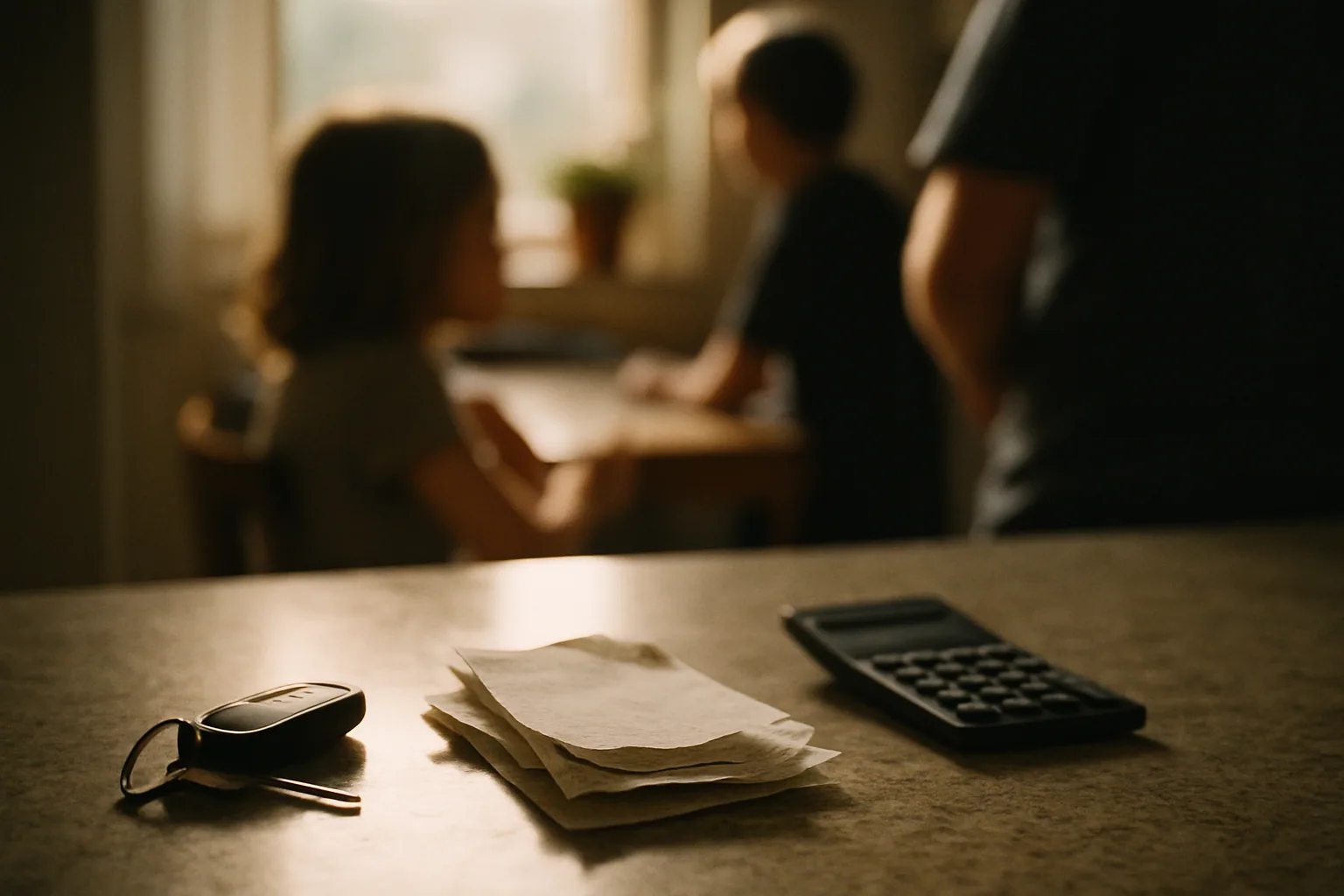
You leave Friday at 4. You get home Sunday at 9:30 p.m. You took 14 photos. You ate at three different chain restaurants. Your other kid spent the weekend with grandma. You played eight games in three days, six of which you don’t remember the score of.
Monday morning your kid has a math test. Your spouse is short with you in the kitchen. The trash didn’t go out. You spent $640 between gas, hotel, food, and the entry fee that was technically already paid.
This was a weekend.
What just happened
You signed up for a tournament. You did the thing you said you’d do. The team had a fine weekend. Your kid played hard.
You also spent 28 hours on the road or at the field or in a hotel room, and you didn’t see your other kid for two and a half days.
Both of those are true. Most travel-ball families don’t add up the second one because the first one is on the calendar and the second one is a feeling.
The math you didn’t do up front
Most tournament weekends look smaller on paper than they are in real life.
The flyer said three days, eight games. It didn’t say four meals out, two hotel nights, three loads of laundry on Monday, six hours of driving, $640 in expenses, the math test your kid had to study for in the hotel, and the missed birthday party for your other kid’s friend.
It also didn’t say the cumulative effect of doing this six times in a season.
If you did the math on a single weekend in advance, you’d probably still go. If you did the math on the cumulative season in advance, you might not.
The signs the weekend was too much
The temperature in the car on the drive home is the first signal.
If everyone in the car is quiet for more than 20 minutes, and not the good kind of quiet, the weekend was too much. If your kid asked twice when you were leaving, the weekend was too much. If your spouse called more than they usually do to check on what time you’d be home, the weekend was too much.
The other signal shows up Monday and Tuesday. School performance dips. Sleep is weird. Sibling tension spikes. Your other kid has a small meltdown over something that has nothing to do with the meltdown.
These signals are easy to attribute to other things. The kid is tired. The marriage is stressed about something else. School is hard right now. Sometimes that’s true. Sometimes it’s the cumulative cost of the last weekend showing up two days late.
The fix is in the prep
The fix is not to skip the next tournament. The fix is to plan it differently.
Three habits that work.
One. Plan the food before you leave. Pack a real cooler (the sideline kit guide has the ones that actually hold ice for the whole weekend). Keep at least two of the meals from being chain restaurants. The food saves $40, the kid feels better, and you don’t lose a full hour finding parking at a Chili’s between games. The cooler is the single best thing you can pack.
Two. Carve out a 90-minute block that is not about baseball. Sometime Saturday, between games or after the last one. Walk to a park. Sit at a coffee shop. Call your other kid. Anything that breaks the rhythm of game-recover-game.
Three. Talk to the coach about the schedule before you sign up for the next one. Some tournaments are six games in two days. Some are three games. The brochure makes them look the same. They are not. Three games on a Saturday with rest in between is half the load of six games crammed in.
What you owe your spouse
You owe them an honest debrief on Monday.
Not a complaint. A debrief. That weekend was harder on us than I expected. Here’s what I noticed. Here’s what I want to do differently next time.
If you don’t do the debrief, the resentment compounds in silence. Your spouse takes the next tournament weekend with the same shape and absorbs the same hit, and somewhere around tournament four they’re going to be done. You won’t see it coming.
The debrief takes ten minutes. It saves the marriage the cumulative pressure of pretending the weekends are smaller than they are.
What you owe your other kid
You owe them a Monday that is theirs.
Not a guilt offering. A real Monday. They pick the dinner. They get the after-school window. They get to talk about their weekend without it being framed as the contrast to the kid who got the trophies.
The other kid was the cost of the weekend. They paid in attention. The Monday is the partial repayment.
What you owe your kid who played
A car ride home that is mostly quiet. The first 90 seconds matter the same way they matter after every game, and we’ve written about those 90 seconds. After that, give them the silence to come down from the weekend. Do not start the post-tournament debrief in the car. Save it for Tuesday, or never, depending on what they want.
Most kids who played hard for three days don’t want to talk about the games. They want to be home. They want pizza. They want their bed. They want to wake up on a Monday where someone is not yelling let’s go let’s go let’s go at 7 a.m.
Give them that.
The bigger frame
You can do tournaments. Most families do. The trick is to do them with eyes open about what each one actually costs and what the cumulative season looks like.
If you ran the math at the start of the season and the answer is we’re going to do six of these and it’s going to be fine, great. If the answer at the end of the season is we did six of these and we’re all a little frayed, plan four next year. The kids will be fine with four. The family is the variable that changes.
Two kids in two sports in two directions is the related read on family schedules. The financial conversation is the deeper money piece.