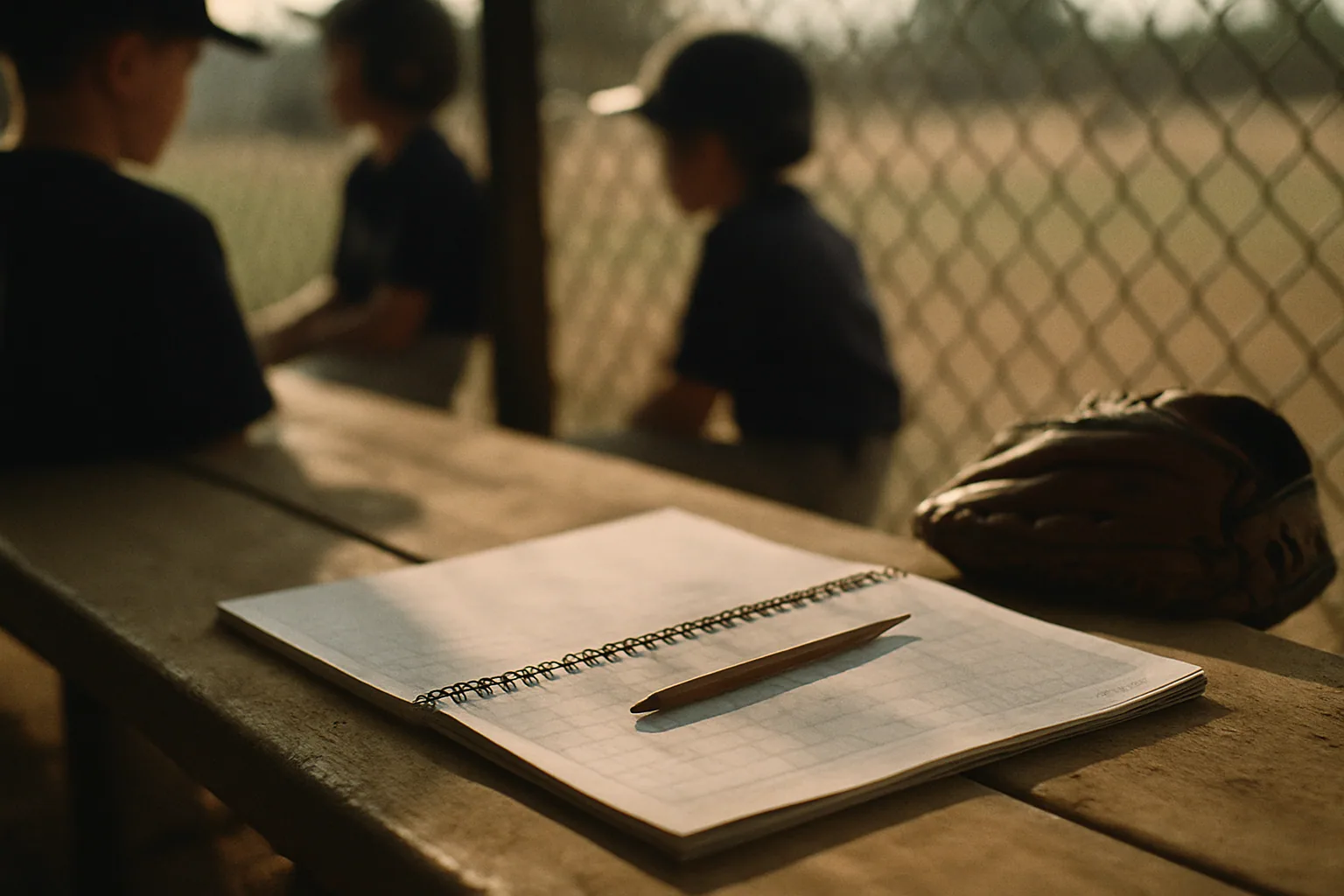
Three games in a day means two gaps. Those gaps are where the day either holds together or falls apart.
Most families fill the gaps wrong. The kid stays standing, stays keyed up, eats junk from the concession stand, and wonders why they’re exhausted by game three. The gap is recovery time. Treat it that way.
The first gap (usually 90 minutes to 2 hours)
The first gap after game one is the most important. Your kid is warm, probably sweating, and has a few hours before the next whistle.
Get them sitting down within 10 minutes of the final buzzer. Off their feet. Real food: a turkey sandwich, a banana, string cheese. Not a hot dog. Not a slushy.
Water first, then the food. And keep the conversation low-key. No game analysis, no coaching, no “you should have done X.” Let the body do its job without adding mental load on top.
Forty-five minutes before game two: light movement. A short walk, a few dynamic stretches. Not a warmup, just circulation.
The second gap (often shorter)
Tournament schedules compress in the afternoon. Your second gap might be 60 minutes, sometimes less.
Same protocol: off the feet, food and water, minimal conversation. But shorten everything. A banana and a rice cake instead of a full sandwich. Ten minutes of rest instead of thirty.
And watch the sugar. By the afternoon gap, kids are tired and the concession stand looks good. A candy bar will spike and drop them before game three. Stick to real food from your cooler.
Siblings who have nothing to do
Six hours at a youth tournament with nothing to do is a long time when you’re nine years old and not the one playing.
The tablet and headphones are the practical answer. But you also need a plan for when they’re done with screens, which happens around hour four.
A walk around the facility helps. Most tournament venues have enough space that a 20-minute walk resets them. Bring a small ball or a frisbee if the rules allow it. And snacks they picked themselves, not whatever the concession stand has.
But don’t send the sibling off alone and forget about them. Check in every 45 minutes. A kid who feels forgotten becomes a behavior problem by afternoon.
Parent sanity
You will be at this venue for six to eight hours. Plan for that length, not the length of a single game.
Bring a chair, bring food, bring something to read or listen to during the gaps (the sideline kit guide covers the chairs worth owning for a six-hour day). Don’t stand at the sideline for the entire day. Your kid doesn’t need you watching every warmup drill, and you’ll be sharper and calmer by game three if you’ve actually rested between games.
Talk to the other parents. Or don’t. But sitting in your car on your phone for the entire second gap is not recovery, and you’ll feel it.
One more thing: eat actual food yourself. Parents skip meals at tournaments constantly and wonder why they’re irritable by 3 PM.
When the schedule slips
Tournaments run late. Build 30 minutes of buffer into every gap estimate. If the schedule says game two is at noon, treat it as 12:30.
If a gap disappears because of schedule compression, prioritize water and a quick snack over everything else. The rest of the protocol is optional. Water and food are not.