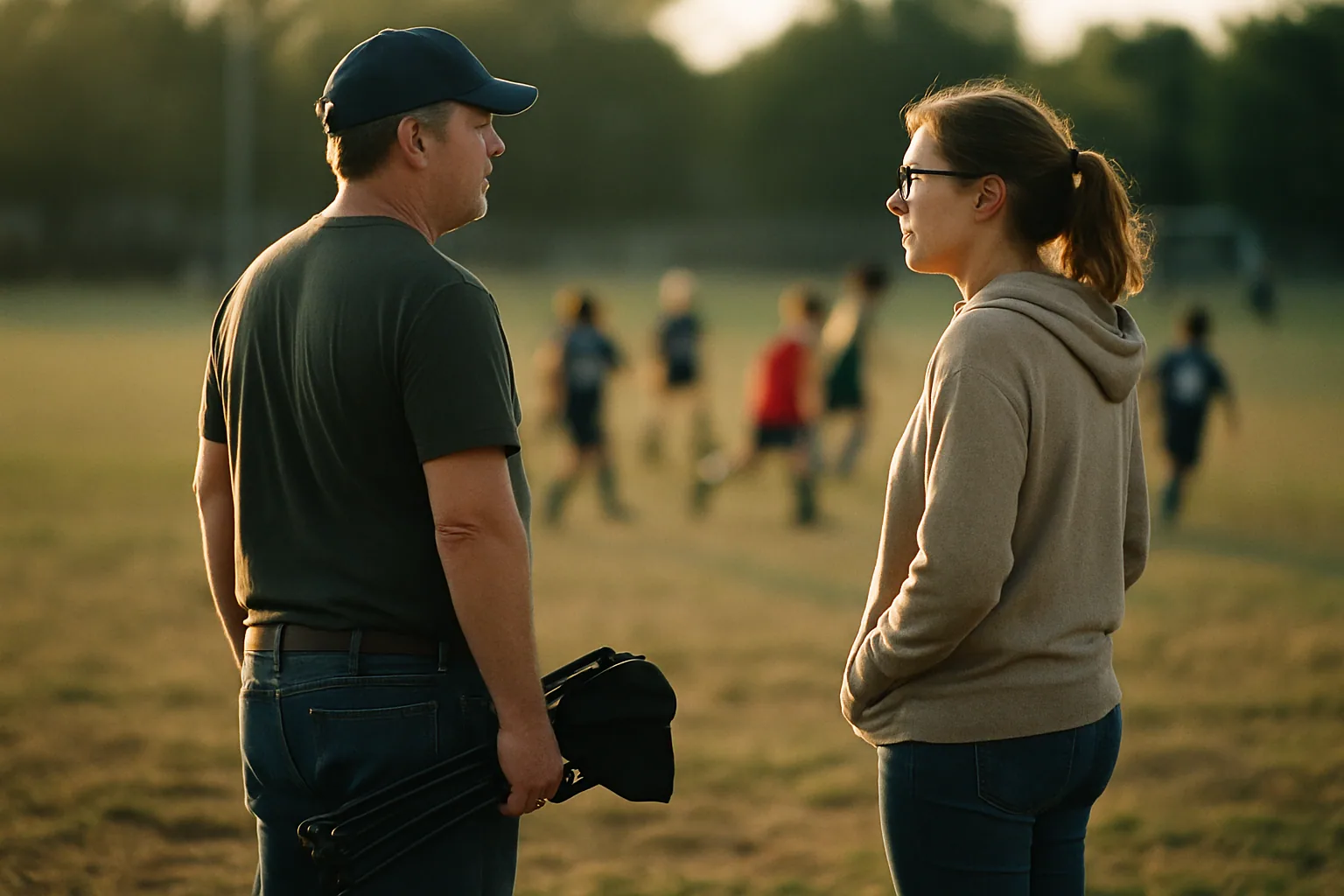
The single highest-impact move you can make this week is swapping outcome praise (“You’re so talented”) for process praise (“I saw you adjust your footwork after that first miss”). Growth mindset in youth sports isn’t a lecture you give once. It’s a handful of phrases, repeated until they become how your family talks about effort and mistakes.
Three actions to start tonight:
- Before the next game, ask “What’s one thing you want to work on today?” instead of “Are you going to win?”
- During practice, use a 30-second cue when a mistake happens: “Good data. What did you learn?”
- After the game, ask one reflection question: “What’s something you got better at, even if the scoreboard didn’t show it?”
Pro Tip: Write your three go-to phrases on a sticky note in your car. Repetition, not inspiration, is what makes new language stick.
What you need this week: a notebook or notes app for post-game reflections, three printed conversation scripts, and a shared agreement with any co-coaches on which words you’ll all use.
Key Takeaways
Growth mindset in youth sports develops through consistent process-focused language from adults, short embedded drills, and reflection habits, not one motivational talk.
| Point | Details |
|---|---|
| Praise process, not talent | Say “I saw you adjust your footwork” instead of “you’re so talented.” |
| Mistakes are data | Use the cue “good data, what did you notice?” during live mistakes. |
| Align adult language | Kids respond to what they think adults believe about them, so get co-coaches and parents on the same script. |
| Keep drills short | Embed two-minute mental skills drills into warm-ups instead of separate lessons. |
| Start with Parentcoachdesk | Use the mental skills hub and 6-week timeline above as your starting playbook this season. |
Table of Contents
- What Does Growth Mindset Mean in Youth Sports?
- Why a Growth Mindset Matters in Youth Sports
- What Scripts and Feedback Patterns Actually Work?
- How Should Language Change by Age Group?
- What Drills Build Growth Mindset in Under 10 Minutes?
- What Mistakes Undermine Growth Mindset Coaching?
- What Does the Research Actually Show?
- What’s a Simple 6-Week Starter Plan?
- Where to Find More Growth Mindset Resources for Your Team
- Frequently Asked Questions
- Sources
What Does Growth Mindset Mean in Youth Sports?
A growth mindset in sport is the belief that athletic ability, decision-making, and mental toughness develop through effort, coaching, and targeted practice, not fixed traits a kid either has or doesn’t. Psychologist Carol Dweck’s original research on fixed versus growth mindsets translates directly to the field or court: a young athlete who thinks “I’m just not a good server” plays differently than one who thinks “I haven’t figured out my toss yet.”
It is not the same as blanket positivity or praising effort no matter what. Telling a child “great job trying” after a lazy rep doesn’t build growth mindset. It just waters down the word “great.” Applied sport psychology guidance from the Association for Applied Sport Psychology recommends modeling curiosity and normalizing setbacks, not handing out participation praise.
Signs it’s taking hold:
- Your athlete describes a loss in terms of what to adjust, not just how it felt.
- They ask you or the coach for specific feedback instead of just “was I good?”
- Mistakes during practice get a shrug and a retry, not a shutdown.
Pro Tip: If your child’s response to failure is silence and withdrawal rather than a follow-up question, that’s your cue to slow down and connect before coaching.
Why a Growth Mindset Matters in Youth Sports
The payoff shows up in the everyday stuff: kids who keep raising their hand for hard drills, recover faster after a rough set, and stay in the sport longer instead of quietly quitting in eighth grade. Athletes with stronger growth beliefs report higher enjoyment and higher intentions to continue playing, according to research on incremental beliefs in youth sport, while fixed beliefs correlate with lower enjoyment and earlier dropout.
There’s a mechanism behind this, not just a feel-good correlation. A study on competitive motivation found that growth mindset boosts motivation largely by lowering competitive stress and increasing satisfaction of basic psychological needs, factors that together explained over 80% of the total effect in that sample.
Growth mindset benefits include:
- Higher persistence after a bad set, inning, or match
- Faster recovery from mistakes during live play
- Greater willingness to attempt a skill they haven’t mastered
- Longer-term participation instead of early burnout
That said, effects vary by context, and some methodological reviews caution that mindset interventions aren’t a universal fix. Treat it as a strong lever, not a cure for every motivation problem.
What Scripts and Feedback Patterns Actually Work?
This is the part you’ll use in the car, on the sideline, and at the dinner table.
Before practice or a game, keep it short and process-focused:
- “What’s one thing you want to focus on today?”
- “What did we work on this week that you want to try?”
- “Win or lose, what’s a sign you’ll know you played well?”
During practice, quick cues reframe mistakes as information instead of failure:
- “Good data. What did you notice?”
- “That’s a rep, not a verdict.”
- “Try it again with one adjustment.”
After the game or practice, two debrief questions are plenty. More than that turns into an interrogation:
- “What’s something you got better at today?”
- “What’s one thing you’d try differently next time?”
Feedback micro-templates matter more than most parents expect, because your child’s perception of what you believe about their ability tends to predict their motivation more than their own self-assessment does. Praise the strategy (“I liked how you moved your feet before that dig”), not the trait (“You’re a natural”). Avoid comparison language (“You’re better than Jenna now”) entirely. It swaps a growth frame for a fixed, competitive one.
Practice design should back up your words. Small moves that reinforce a growth frame:
- Micro-goals: instead of “get better at serving,” try “land 7 of 10 serves in zone 3 by Friday.”
- Deliberate repetition: repeat a skill under slightly increasing difficulty rather than moving on after one clean rep.
- Scaffolded challenge: raise the net, tighten the target, or add a defender only once the base skill is consistent.
Printable practice-day checklist:
- Pre-practice: ask the focus question
- During: use one reframe cue per mistake, out loud
- Post-practice: ask the two debrief questions
- Note one specific process improvement in your phone
Pro Tip: Share your three phrases with the other coaches and grandparents who show up to games. Growth mindset language falls apart fast when one adult says “great talent” and another says “great effort” for the same play.
| Script Moment | What to Say |
|---|---|
| Pre-game | ”What’s one thing you want to focus on today?” |
| Mid-mistake | ”Good data. What did you notice?” |
| Post-game | ”What’s something you got better at today?” |
| Feedback | Praise the strategy, not the trait |
How Should Language Change by Age Group?
Ages 6 to 9: Attention spans are short and self-reflection is limited, so keep it concrete and playful. Use “yet” language: “You can’t do it yet.” Activities like a “mistake of the day” sticker on a chart work well here.
- Pre-game: “What’s one fun thing you want to try?”
- Post-game: “What made you smile today?”
Ages 10 to 13: Self-awareness is growing, and kids start comparing themselves to teammates. This is where fixed-mindset traps (“I’m just not athletic”) tend to appear.
- Pre-game: “What’s one skill you’re working on this week?”
- Post-game: “What’s something you’d coach yourself on?”
Ages 14 to 18: Teens can handle more autonomy and nuance, and they often respond better to questions than directives.
- Pre-game: “What does a good performance look like to you today, separate from the score?”
- Post-game: “What’s one adjustment you’re already thinking about for next time?”
Pro Tip: With teens especially, ask before you offer feedback: “Do you want my take, or do you just want to vent?” That single question preserves the relationship and keeps the door open for coaching later.
Age-specific phrasing matters because a 7-year-old and a 16-year-old process failure completely differently. Applying a teenager’s reflective debrief to a 2nd grader usually gets you a blank stare.
What Drills Build Growth Mindset in Under 10 Minutes?
Short, embedded practices beat occasional long lessons for building mental skills in kids, based on guidance from Sportspsychology on youth mental skills training. A few worth trying this week:
- “Name the fix” drill: after any error in a drill, the athlete says out loud what they’ll adjust before the next rep. Two minutes, built into warm-ups.
- Serve/shot tracker: track attempts and small improvements over a set, not just makes versus misses.
- Peer-feedback pairs: partners give one specific process observation to each other after a drill (“You reset your feet faster that time”).
- One-player reflection card: three questions on an index card, filled out solo after practice: What worked? What didn’t? What’s one adjustment?
Handout checklist after any drill:
- Did I name one specific thing I’ll try differently?
- Did I give a teammate one specific observation?
- Did I avoid comparing myself to someone else?
Pro Tip: Attach these drills to something the team already does, like the first five minutes of warm-up, instead of scheduling separate “mindset time.” Kids buy in faster when it feels like part of the sport, not an add-on lesson.
| Drill | Time | Focus |
|---|---|---|
| Name the fix | 2 min | Verbalizing adjustments |
| Serve/shot tracker | 5 min | Tracking small gains |
| Peer-feedback pairs | 5 min | Giving process feedback |
What Mistakes Undermine Growth Mindset Coaching?
Even well-meaning adults sabotage this work. Watch for these:
- Praise-only messaging. “Great job!” for everything teaches nothing. Fix: name the specific process behind the praise.
- Labeling kids. “She’s our natural athlete” sets up a fixed frame for everyone on the team. Fix: describe what they did, not who they are.
- Ignoring emotional response. Jumping straight to feedback after a tough loss skips the part where your kid needs to feel heard. Fix: connect first, coach second.
- Inconsistent adult models. One parent says “just have fun,” another says “you should have won that.” Fix: agree on shared language ahead of the season.
- Over-coaching the car ride home. Kids need decompression time before analysis. Fix: wait for their first comment before you ask anything.
- Mixing “yet” with fixed judgments in the same breath. “You’ll get it eventually, you’re just not built for this” cancels itself out. Fix: drop the second half of that sentence entirely.
Pro Tip: Pick one shared phrase with your co-coaches or your spouse this season, something as simple as “good rep,” and use it consistently. Consistency across adults matters more than any single perfect sentence.
What Does the Research Actually Show?
The mechanism is worth understanding, because it explains why these scripts work instead of just trusting they will. In the competitive motivation study, growth mindset raised motivation largely by lowering stress response and increasing satisfaction of basic psychological needs (autonomy, competence, relatedness), with those two factors together accounting for over 80% of the total effect measured. Reducing the pressure a kid feels before a big moment appears to matter as much as the belief itself.
That said, broader meta-analytic reviews flag that mindset effects vary by study design and context, and results aren’t uniform across every population. Effects tend to be strongest for motivation and persistence, and more limited when researchers try to link mindset directly to performance outcomes like win rates.
Practical takeaways for your season:
- Lowering pre-competition stress may matter as much as mindset language itself.
- Effects are more reliable for motivation and enjoyment than for raw performance gains.
- Elite-level athletes may see amplified benefits given higher competitive stress to begin with.
What’s a Simple 6-Week Starter Plan?
One-page checklist for this week:
- Choose three scripts (pre, during, post) and write them down
- Introduce two short drills from the list above
- Use two reflection prompts after every practice
- Model the language yourself when you make a mistake at home
6-week timeline:
- Week 1: Introduce pre-game and post-game scripts only.
- Week 2: Add the “name the fix” drill to warm-ups.
- Week 3: Add peer-feedback pairs once a week.
- Week 4: Introduce the one-player reflection card.
- Week 5: Check in on language consistency with co-coaches or the other parent.
- Week 6: Review progress and note what’s sticking.
Track attendance, willingness to attempt new skills, and a simple weekly self-rating from your athlete (1 to 5 on “I tried something hard this week”).
| Week | Focus |
|---|---|
| 1 to 2 | Scripts and one drill |
| 3 to 4 | Peer feedback and reflection cards |
| 5 to 6 | Consistency check and review |
How a Parent-Coach Applies These Scripts
One practice, one cue: “Good data, what did you notice?” One game, one question after: “What’s something you got better at?” Small, repeatable moves matter more than a perfect speech.
Pro Tip: Separate your parent voice from your coach voice out loud: “Coach hat on for a second” tells your kid which conversation is coming.
Where to Find More Growth Mindset Resources for Your Team
Scripts and drills work best when they’re part of a bigger approach to how your season is structured, not a one-off tactic. Parentcoachdesk builds that structure without asking you to overhaul your whole coaching style overnight.
A few places to go next:
- The mental skills hub has more drills and micro-practices to rotate in once these scripts feel routine.
- The youth sports pendulum walks through how to balance learning against winning across a season.
- Start here is the right entry point if you’re new to coaching your own kid and want the fuller picture.
If you’re weighing whether the time and cost of another season are worth it, the honest breakdown at Are Youth Sports Worth It? is worth a read before your next registration deadline. And if you want these scripts and the 6-week timeline delivered to your inbox along with new guides as they publish, the newsletter signup on the Parentcoachdesk homepage takes about ten seconds.
Frequently Asked Questions
What is growth mindset in youth sports? It’s the belief that athletic skills and mental toughness develop through effort, practice, and coaching rather than being fixed traits a young athlete either has or lacks.
How do I praise my child without overdoing it? Praise specific actions and strategies, not general talent. “You reset your feet faster that time” works better than “great job” or “you’re a natural.”
What age should I start using growth mindset language? You can start as early as ages 6 to 9 with simple “yet” language; the phrasing just gets more nuanced as kids move into their teens.
Does growth mindset actually improve performance? Evidence is strongest for motivation, enjoyment, and persistence.
What if my child shuts down after a loss instead of reflecting? Skip the debrief questions temporarily and connect emotionally first. Reflection works better once a child feels heard, not lectured.
Sources
- Growth mindset and competitive motivation study (PMC12151056)
- How parents can encourage a growth mindset in athletes — AASP (2026)
- Instructional strategies to promote incremental beliefs in youth sport (Vella et al., Quest / DOI 10.1080/10413200.2019.1570392)
- Sportspsychology