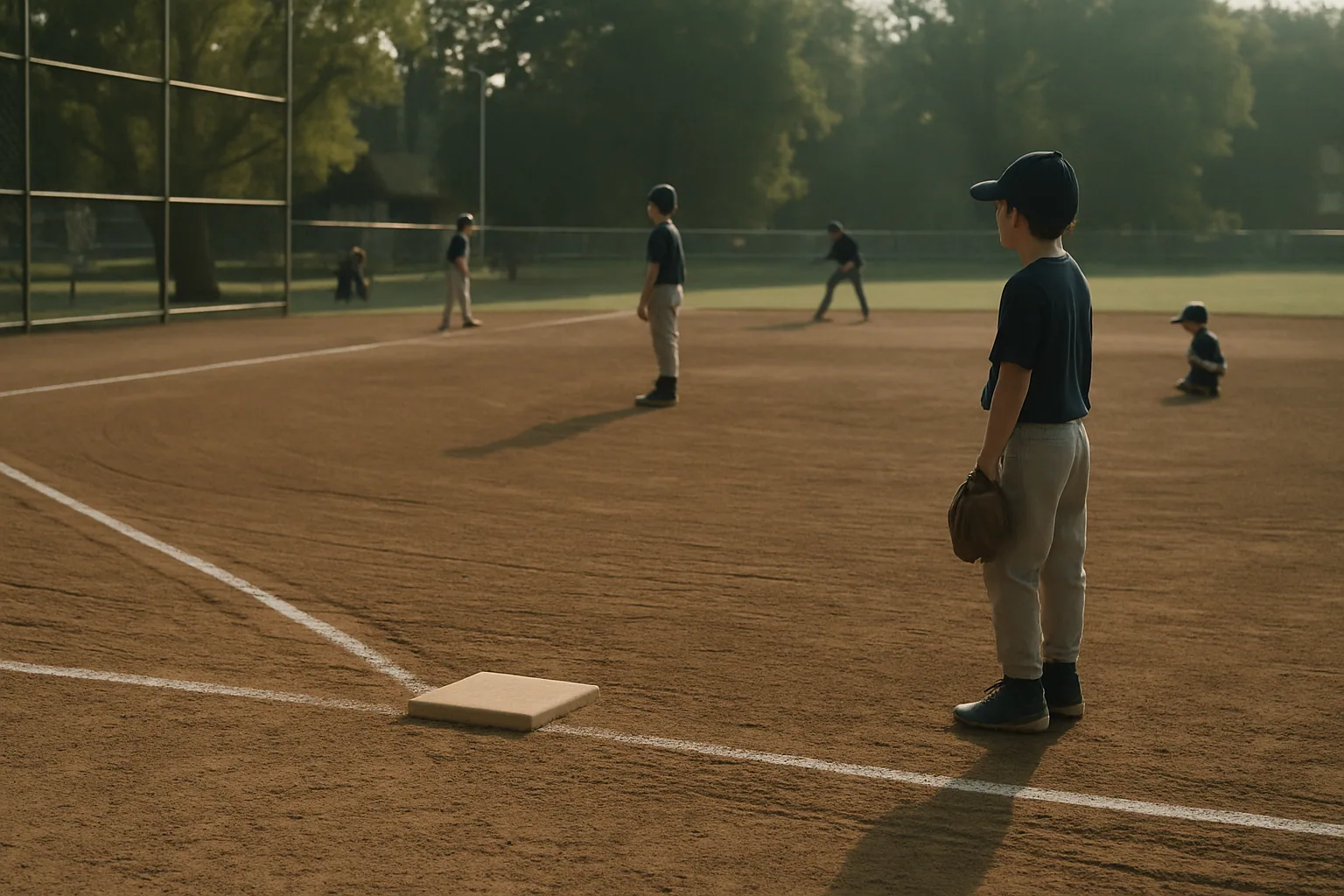
Coach pitch means a parent or volunteer delivers pitches to the batter. Kid pitch (also called player pitch) means a child stands on the mound and throws to teammates. For most 5–8-year-olds, coach pitch or machine pitch is the right starting point because it produces more contact, more confidence, and a better overall experience. Kid pitch typically fits players 9 and older who have developed enough throwing accuracy and emotional readiness to handle walks, strikeouts, and the pressure of pitching to peers.
The recommendation shifts based on four things:
- Throwing control: Can the child throw strikes consistently from the mound distance?
- Emotional readiness: Can they handle a walk, a wild pitch, or a strikeout without shutting down?
- League rules: What does your local board require or allow for your child’s age division?
- Tournament expectations: Does your child’s travel or tournament schedule require kid pitch?
Key Takeaways
Coach pitch builds hitting confidence and contact reps for younger players, while kid pitch develops pitching mechanics and competitive skills for players typically 9 and older who are emotionally and physically ready.
| Point | Details |
|---|---|
| Coach pitch fits most 5–8-year-olds | More contact, faster pace, and confidence-building make it the right starting point for most young players. |
| Kid pitch is standard at 9U–10U | Most organizations run full player pitch by 10U; 8U varies entirely by local league board decision. |
| Hybrid rules bridge the gap | A coach entering after 3–4 balls keeps games moving and protects hitters while pitchers develop accuracy. |
| Readiness is more than age | Throwing accuracy, emotional resilience, and desire to pitch matter as much as the age cutoff. |
| Parentcoachdesk supports the transition | Practice blueprints, parent meeting scripts, and decision checklists are available at Parentcoachdesk to help coaches and parents navigate the format change. |
Table of Contents
- How coach pitch and kid pitch compare across what parents care about
- What coach pitch actually looks like on game day
- What kid pitch changes about the game
- How governing bodies and local leagues decide which format to use
- How each format affects your child’s development
- A practical checklist for deciding when your child is ready
- What this decision really comes down to
- Parentcoachdesk has the tools to make this decision easier
- Sources
How coach pitch and kid pitch compare across what parents care about
| Dimension | Coach Pitch | Kid (Player) Pitch |
|---|---|---|
| Best for (development goal) | Hitting confidence, contact reps, movement fundamentals | Pitching mechanics, competitive rules, full-game realism |
| Typical league age | 5U–8U (Minor divisions) | 9U–10U and up; some 8U leagues |
| Pitching distance | Varies by league; often 30–40 feet from coach | 40–46 feet (8U–10U); 46–50 feet (10U+) |
| Baserunning / stealing | Usually no stealing; runners advance on batted balls only | Stealing often allowed; rules vary by organization |
| Walks and strikeouts | Walks typically not issued; limited pitch count per at-bat | Walks and strikeouts in play; pitch counts tracked |
| Coach location and safety | Coach pitches from a marked circle or line; must avoid fielding | Coach in dugout; pitcher is a fielder after delivery |
| Hitting opportunities | High contact rate; more balls in play per game | Fewer balls in play early; more K’s and walks |
| Pace of play | Generally faster; fewer dead balls | Can slow significantly with young pitchers |
Pro Tip: Many leagues use hybrid rules where the kid pitcher throws until a ball threshold (often 3–4 balls), then the coach steps in to finish the at-bat. This keeps games moving and protects young hitters from automatic walks. Ask your league board whether this option is available before the season starts.
Machine pitch is worth considering when coach pitching quality varies across your league. A consistent machine strike beats an inconsistent adult arm every time for a 7-year-old trying to learn to hit.
What coach pitch actually looks like on game day
In coach pitch, a parent or volunteer coach stands near the mound and delivers pitches designed to be hit. The goal is simple: give every batter a fair chance to put the ball in play. Most leagues set a limit on the number of pitches per at-bat, and if the batter hasn’t made contact, the inning moves on.
The Little League Coach Pitch program provides practice plans and operational guidance specifically for volunteer managers running these divisions. The program is built around one idea: early baseball should fill a child’s confidence tank, not drain it.
Practical logistics for volunteer coaches:
- Stand on a marked pitching line or inside a defined circle, typically 30–40 feet from the plate depending on your league.
- After delivering the pitch, step to the side immediately. You are not a fielder. Touching a batted ball is an obstruction violation in most rule sets.
- Kneel or use a low-arm delivery to keep the pitch angle flat and hittable. High-arc lobs teach bad swing habits.
- If the ball hits you after it’s batted, tournament rules from organizations like Perfect Game typically declare the ball dead and award the batter first base. Know your league’s specific version of this rule before game one.
Simple practice drills that carry over to games:
- Soft-toss from the side at game distance to build timing.
- Front-toss from a knee to replicate the flat pitch angle a coach delivers.
- Station-based batting rotations so every player gets reps in a 60-minute practice window.
Age-appropriate youth baseball coaching tips consistently point to short, station-based practices as the most effective structure for players in the 5–8 age range. Forty-five minutes of focused reps beats two hours of standing in the outfield.
What kid pitch changes about the game
In player pitch, a child takes the mound and throws overhand from a set distance. Everything shifts. Walks happen. Strikeouts happen. The pace slows. And the emotional stakes for both the pitcher and the batter go up considerably.
Key rule differences you’ll see in kid-pitch formats:
- Pitching distances typically range from 40 feet (8U) to 46 feet (10U), depending on the organization.
- Stealing is often permitted, but the rules vary. Some leagues allow stealing only after the ball crosses the plate; others allow it on any pitch.
- Walks are live. A batter who draws four balls takes first base, which can chain into multi-run innings with young pitchers who haven’t found the zone yet.
- Pitch counts are tracked. Most governing bodies and local leagues set per-game and per-week limits to protect young arms.
The USSSA 8U kid-pitch rule highlights offer a concrete example of how one major organization structures this format: 60-foot base paths, a 40-foot pitching distance, a 75-minute time limit, and run limits per inning to keep games from spiraling. These specifics vary by organization. Treat them as a reference point rather than a universal standard.
Hybrid rules are increasingly common at the 8U level. Under one widely used model documented in sample league rules from Ely BC, the kid pitcher throws until reaching a ball threshold, then the coach enters to finish the at-bat. The existing count carries over, and the kid pitcher’s pitch count is preserved for record-keeping. It’s a smart bridge between the two formats.
Developmental implications of kid pitch:
- Young pitchers face real pressure. Some thrive; others need another season of coach pitch to build the arm strength and accuracy required.
- Batters face more strikeouts and fewer balls in play, which can be discouraging for kids who were crushing coach-pitch offerings the year before.
- Fielders get fewer opportunities early in the season when walks dominate. As pitchers develop, the game opens up.
How governing bodies and local leagues decide which format to use
There is no single national rule that says “8-year-olds play coach pitch.” Little League’s division structure makes this explicit: 8U can be coach pitch, kid pitch, or a hybrid of both, depending entirely on the local league board of directors. By contrast, 10U is almost exclusively kid pitch across most organizations.
Local boards make these calls based on practical realities: how many volunteer coaches can pitch consistently, what fields are available, and what the tournament structure requires. A league that feeds into a USSSA tournament circuit may push kids to player pitch earlier than a recreational-only league that prioritizes fun and development.
Little League’s eligibility guidance notes that league-age 5–6 players who have completed one season of Tee Ball may be eligible for a Minor League division that uses coach pitch or machine pitch. Boards may also allow players to play up or play down by local option, which means a mature 7-year-old could play in a kid-pitch 8U division, or a less-ready 8-year-old could stay in coach pitch for another season.
What to verify with your league before the season:
- The official division name your child is registered in.
- The pitching distance used in your league’s games (varies by league).
- Whether hybrid rules apply (coach enters after X balls).
- Stealing rules and when baserunners can break.
- Whether tournament play requires a different format than regular-season games.
Pro Tip: Ask the league director specifically about tournament transitions. A child who plays coach pitch all regular season and then faces kid pitch in a tournament for the first time is set up for a rough experience. Knowing this in advance lets you prepare.
How each format affects your child’s development
The honest answer is that both formats can produce confident, capable young players. The difference is in what each one develops and what it asks of a child who may not be ready.
Coach pitch: what it builds and where it falls short
Coach pitch produces more contact. More contact means more fielding opportunities, more baserunning, and more moments where a child feels successful at the plate. For a 6- or 7-year-old, that feeling is the whole point. The Little League Coach Pitch program frames this directly: early formats should build a child’s confidence and enjoyment of the game above everything else.
The downside is real, though. Kids in coach pitch don’t develop pitching mechanics, and they don’t learn to read a live arm. When they transition to kid pitch, the adjustment can feel abrupt.
Kid pitch: what it builds and where it gets hard
Player pitch teaches the full game. Pitchers learn mechanics, location, and how to compete. Fielders learn to stay ready. Batters learn to lay off bad pitches. These are genuine skills that matter as players get older.
The challenge is pace and discouragement. A young pitcher who walks three batters in a row is struggling visibly in front of teammates and parents. That’s a lot for an 8-year-old to carry. And the batter who strikes out looking at a pitch that bounced in the dirt isn’t learning much about hitting.
A development trade-off grid:
Pro Tip: If your league’s coach pitching quality varies significantly from team to team, machine pitch is worth proposing to the board. A community discussion among coaches consistently surfaces the same point: inconsistent adult pitching creates unequal experiences across teams, and a well-calibrated machine levels that out.
Pro Tip: For kids on the edge of readiness, one extra season of coach pitch is almost never harmful. Confidence built at 8 pays dividends at 10.
A practical checklist for deciding when your child is ready
Readiness for kid pitch isn’t just about age. It’s about what a child can do and how they handle the moments when things don’t go their way.
Readiness signals to look for:
- Can they throw strikes from 40 feet with reasonable consistency during practice?
- Do they recover emotionally after a bad pitch, a strikeout, or an error?
- Have they faced live pitching in practice and made contact?
- Does the child want to pitch, or are they being pushed toward it?
- Has their coach assessed their mechanics and given a positive signal?
A numbered checklist for tryouts and early-season evaluation:
- Watch 10 pitches from the child in a practice setting. Count how many would be strikes at game distance.
- Ask the coach directly: “What pitching distance does this league use in games and in tournaments?”
- Confirm whether hybrid rules apply and how the count works when the coach steps in.
- Ask about stealing rules and whether the team practices baserunning decisions.
- Check the tournament schedule. If tournaments use kid pitch, your child needs live-pitch reps before the first game.
Parent-to-coach conversation script:
Coach-to-league-board conversation script:
A staged transition timeline:
- Off-season (October–February): Focus pitching mechanics in practice. Use a 60-minute practice blueprint to build structured reps.
- Pre-season (March): Introduce live-pitch at-bats in scrimmages. Track accuracy, not outcomes.
- First half of season (April–May): Use hybrid rules if available. Kid pitcher goes until the ball threshold; coach finishes.
- Second half of season (June): Evaluate. Kids who are finding the zone can go full kid pitch. Others stay hybrid or return to coach pitch next season without shame.
The 10-minute parent meeting script at Parentcoachdesk gives coaches a ready-made framework for explaining this transition plan to parents at the start of the season, before any confusion or frustration has a chance to build.
What this decision really comes down to
Different leagues make different choices, and most of those choices are reasonable given their circumstances. A league with ten reliable volunteer coaches who can pitch consistently has a different calculus than one where three coaches throw strikes and the other seven bounce everything in the dirt. A league feeding into a competitive tournament circuit has different pressures than a Saturday-morning recreational program.
What matters more than the label on the format is how well it’s run. A coach-pitch program where the adult pitches flat, hittable balls and stays out of the way of the defense is a genuinely good experience. A kid-pitch program where pitchers get real mechanics coaching and batters are taught to handle adversity produces real baseball players. The format is the container. The coaching fills it.
Staying in coach pitch one extra season is not a failure. Some of the most confident young players we see at 10 and 11 spent an extra year in coach pitch at 8, building a swing and a love of the game before the pressure of kid pitch arrived. Development timelines vary, and the child who is “behind” in format level at 8 is often the one who sticks with the sport at 13.
Parentcoachdesk has the tools to make this decision easier
Choosing between coach pitch and kid pitch is one of those decisions that sounds simple until you’re standing in a parking lot after practice, trying to explain it to another parent who has a very different opinion. Parentcoachdesk is built for exactly that moment.
The team parent resources hub includes a 60-minute practice blueprint you can adapt for coach-pitch or early kid-pitch sessions, a parent meeting script that helps you set expectations before the first game, and a full tools drawer with printable checklists and decision frameworks. If you’re weighing whether the investment in a competitive kid-pitch season is worth it for your family right now, the youth sports cost and benefit guide gives you an honest framework for that conversation too. Head to the start here guide to find the resources that fit your season.
Sources
These are the official pages and rule documents worth bookmarking before you talk to your league director.
- Little League® Coach Pitch
- Perfect Game coach pitch specific rules (tournament rules excerpt)
- 2025 MMPL 8U Kid Pitch Rules - Ely BC (sample league rules PDF)
- 8U Kid Pitch – USSSA rule highlights (email template)