At fifteen and up, the rules get complicated. Red cards. Ejections. Suspensions that carry into the next game. Foul limits. Technical fouls. Your kid needs to understand the consequences, and the consequences work differently in every sport.
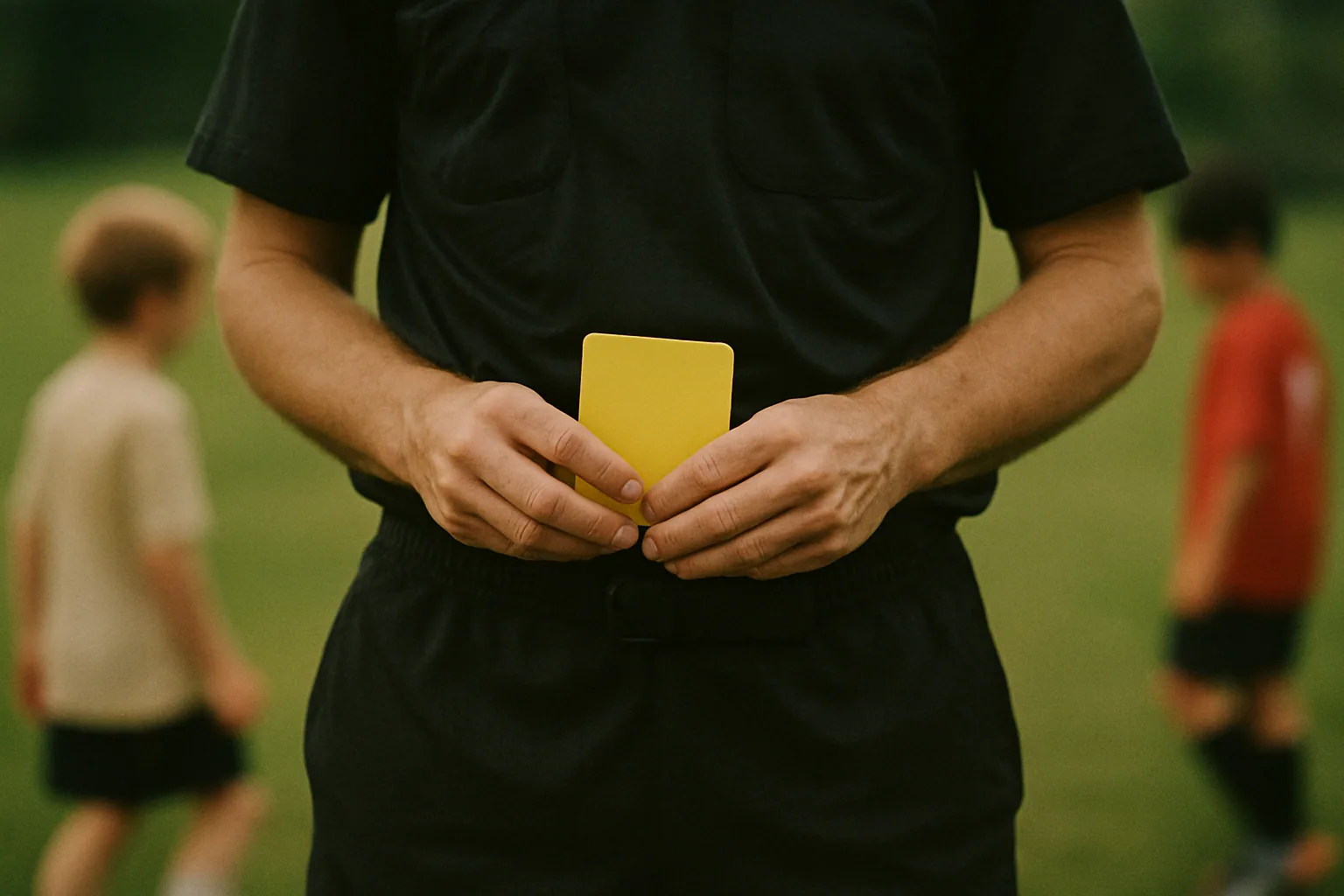
Soccer runs on cards A yellow card is a caution. Two yellows in the same game become a red. A red card, straight or accumulated, means ejection, and the team plays down a player for the rest of the match.
Most high school associations and leagues attach a suspension to a red card, commonly the next game. Some leagues also track yellows across the season and suspend players who pile them up. Know your league’s rule before the season, not after the card.
Basketball runs on fouls, two different kinds Personal fouls are the in-game limit. Five fouls in high school and your kid is done for that game. That’s fouling out, not an ejection, and there’s no suspension attached. It resets to zero next game.
Technical fouls are the conduct system. Two technicals in one game means ejection. A flagrant foul can mean ejection on the spot. Ejections are what carry forward; most state associations attach at least a one-game suspension.
Football runs on conduct penalties No cards, no foul count. Two unsportsmanlike conduct penalties on the same player means ejection under high school rules, and targeting can mean ejection on one play. Suspensions follow per state rules.
What matters Your kid doesn’t care about one yellow card or one technical. They care about getting suspended. They should. Suspensions affect tournament seeding, playoff positioning, and their resume with college coaches.
The game management piece At this level, refs are knowledgeable. Calls are generally right. More importantly, players are expected to play within the rules. A red card or a second technical is rarely bad luck. It’s a player who stopped managing the game and started playing angry.
The conversation with your kid In basketball: “You know when you’re at four fouls. Adjust.” In soccer: “You’re carrying a yellow. The 50-50 slide tackle is off the menu.” Same conversation, different bookkeeping. Don’t blame the ref. Don’t blame the coach. Your kid made the play that drew the call. That’s on them.
What coaches expect Smart players manage their situation. The post player at four fouls stops reaching. The midfielder on a yellow stays on his feet. They know the difference between playing hard and playing stupid.
The ejection piece If your kid gets ejected, that’s serious in every sport. Plan on a suspension and check what your state association adds for fighting or contact with an official; it’s usually more.
The conversation after ejection is not sympathetic. It’s: “What did you do? Why did you do it? How do you fix it?” That’s the whole message.
The perspective Rules exist. Refs enforce them. Your kid learns to compete within the structure. That’s growth.
Arguing the system doesn’t change it. Managing their play does.
By fifteen, that should be automatic.