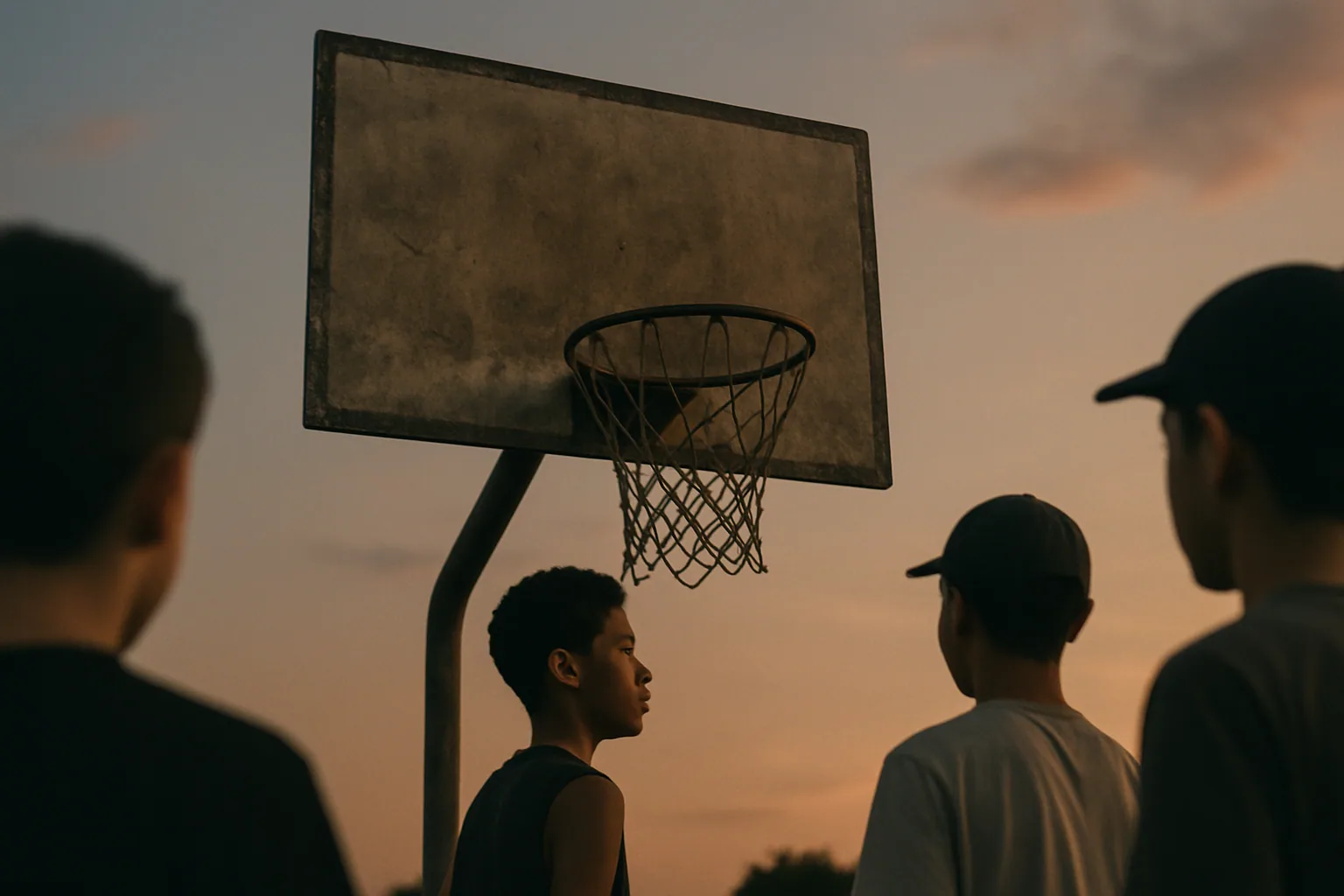
Parents watching 8-10 year old basketball often focus on scoring. The kid who puts up points gets the praise. But the skills that actually predict long-term development at this age have almost nothing to do with how many shots go in.
Here’s what actually matters at 8-10.
Ball handling with both hands. The most important skill at this age, and the one most kids avoid because it’s harder. Dribbling confidently with the non-dominant hand in live situations, not just in isolation drills, is what separates players who can run an offense at 13 from ones who are stuck going one direction. If your kid does any home practice, this is where to spend the time.
Five minutes a day of left-hand dribbling (or right, if they’re left-handed) compounds over a season.
Catching passes. Sounds basic. It is basic. At 8-10, a lot of games get disrupted by kids who aren’t ready for the ball when it arrives. The habit of finding a target before asking for the ball, and having hands ready before the pass gets there, is coachable and transferable.
Moving without the ball. Most kids at this age stand still when they don’t have the ball. The ones who are already learning to cut, set screens, and find open spots without being told are years ahead of the kids standing in the corner. This is about basketball IQ, which starts developing young when the environment rewards it.
Shooting mechanics before shooting volume. A kid who has real form, even if the ball doesn’t go in often, is in much better shape than a kid who chucks up shots in whatever way they can generate power. The muscles and habits built at 8-10 are the ones that stay. Encourage your kid to practice with correct form, even if the made-shot count is lower than they want.
Playing hard. The single most coachable trait at this age is effort on defense, in transition, and on loose balls. A kid who hustles for every ball at 9 is building a habit that’s worth more than any specific skill set.
What to avoid. Private skills training is largely wasted before age 10. The game itself provides enough reps. Specialized training at this age mostly means an adult watching a kid do things they’d do in practice anyway.
The better investment is more touches, more games, more time just playing basketball in an unstructured way.
The parents who support development best at this age are the ones who get their kid to practice consistently, make sure there’s a right-sized ball at home if the kid wants to shoot around (the basketball gear guide has the sizing chart by age), and stay out of the way during games. That’s actually the whole job.