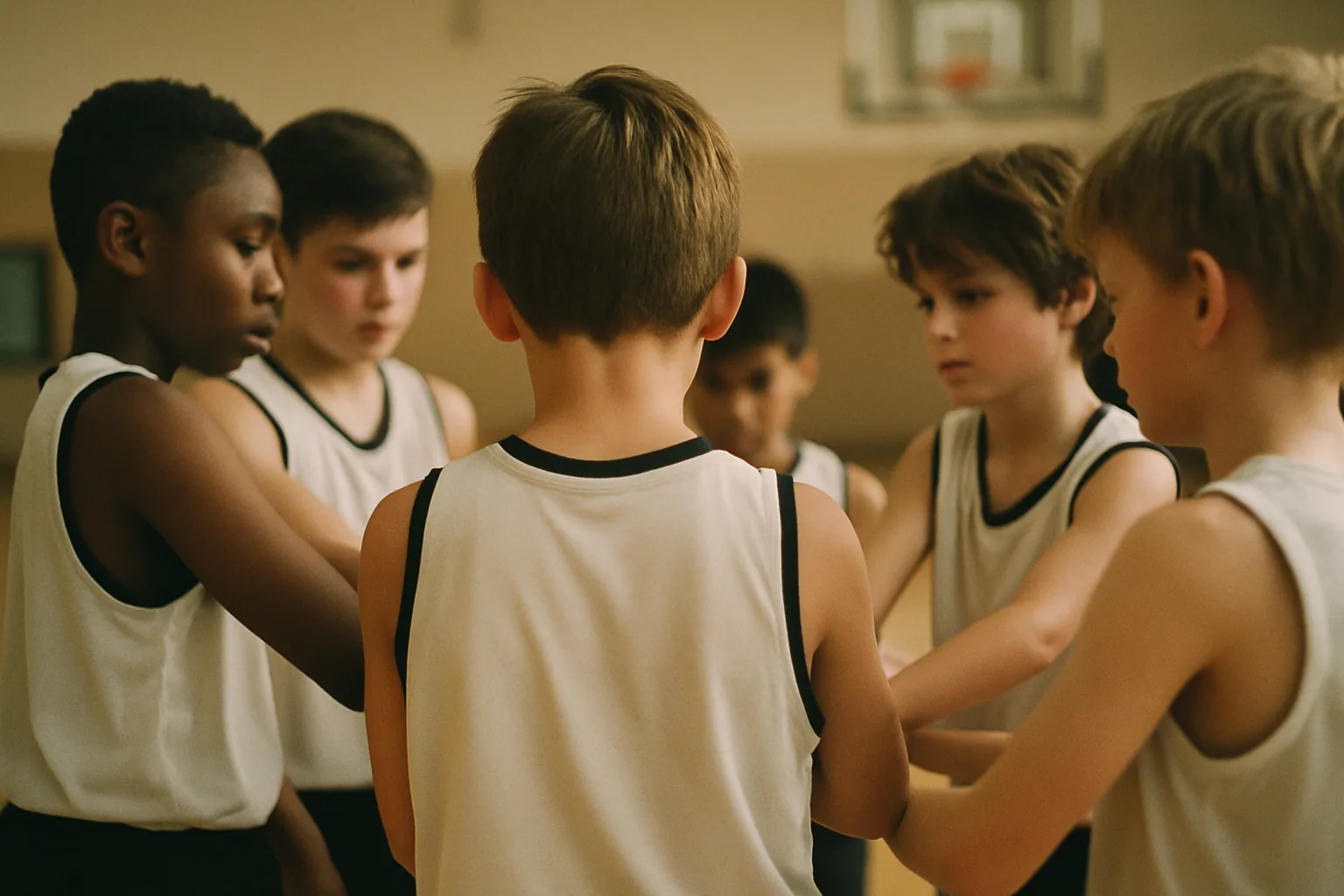
Basketball is not a high-contact sport by design, but the combination of sprinting, jumping, quick cutting, and physical contact under the basket produces a predictable set of injuries. Most are minor. A few aren’t.
Here’s what parents should know.
Ankle sprains. The most common basketball injury at every age. An inversion sprain happens when the foot rolls outward, stretching the ligaments on the outside of the ankle. Mild sprains swell a little, hurt to walk on briefly, and respond well to rest, ice, and gentle movement.
Grade 2 sprains are more significant: real swelling, difficulty bearing weight, pain that doesn’t settle in 24 hours. Grade 3 is a full tear. If the ankle swells significantly, turns purple, and can’t hold weight, get it imaged.
High-top basketball shoes provide some protection but don’t prevent all sprains; the basketball gear guide covers what actually helps versus what’s marketing.
Knee pain. The one to watch carefully in kids ages 10 to 14 is Osgood-Schlatter syndrome, a growth-related condition where the patellar tendon pulls on the tibial tuberosity (the bump just below the kneecap) during rapid growth. It’s painful during activity and tender to the touch. It’s not dangerous but it does need management.
Reduced training load, quadriceps stretching, and sometimes a patellar tendon strap help significantly. It typically resolves when growth slows.
Sharp pain inside or behind the kneecap, locking, or a popping sensation during a jump landing are different and need prompt evaluation.
Finger jams. Very common, often minor. A jammed finger from a caught pass bends the joint and inflames it. Buddy-taping to the adjacent finger for a week and playing through is usually fine.
If the finger is visibly crooked or won’t straighten, get an X-ray.
Shin splints. Pain along the front inside edge of the lower leg, usually from too much activity too fast. Rest, ice, and a gradual return to activity handles most cases. Persistent shin pain that is localized to one spot rather than spread along the shin should be evaluated to rule out a stress fracture.
Concussions. Basketball produces concussions through collision, falls, and elbows. Any hit to the head followed by confusion, headache, sensitivity to light or noise, nausea, or unusual fatigue is a concussion until proven otherwise. Take the player out of activity immediately.
Do not return them to play the same day. Follow your state’s return-to-play protocol, which requires clearance from a licensed healthcare provider.
The general rule. Pain that changes how a player moves, pain that gets worse with activity rather than better, and pain that persists more than a few days all deserve a medical evaluation. Kids at these ages are still growing, and growth plates are vulnerable in ways they won’t be in a few years. Sitting out a week to get something checked is almost always the right call.
Playing through a real injury to avoid missing games is almost always the wrong one.