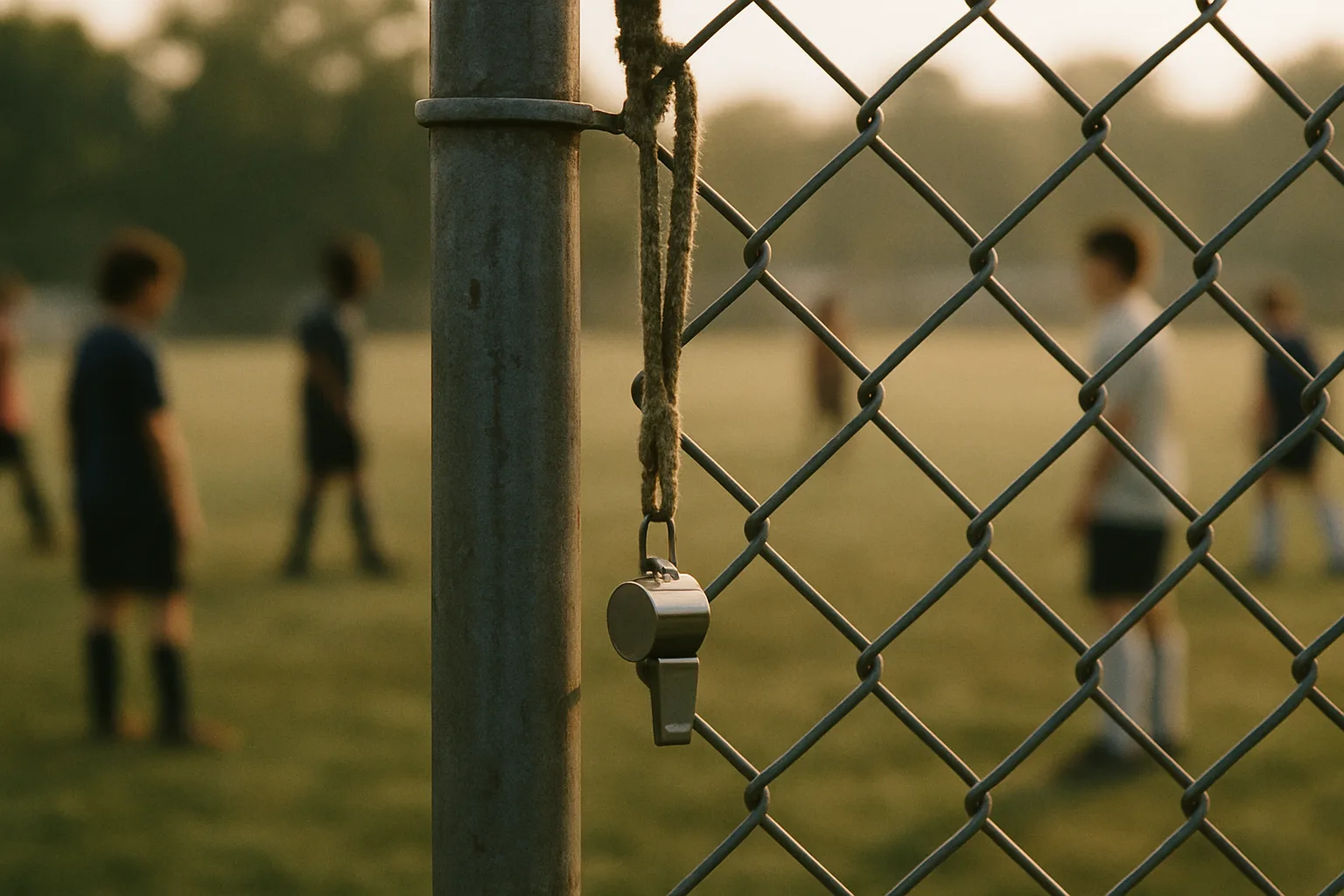
Your four-year-old’s friend just joined a soccer team that keeps score. The neighbor’s seven-year-old is on a travel roster, and you’re wondering if your family is already behind.
You aren’t. The question has two answers, one for movement and one for competition, and most of the bad decisions happen in the gap between them.
Movement starts early
Before age 6, the American Academy of Pediatrics (AAP) says most children don’t yet have the motor skills, balance, or attention span for organized sports. That doesn’t mean sitting still.
It means running, swimming, tumbling, throwing, and catching, all built through active play. The AAP also advises limited instruction at this age, a show-and-tell style, plenty of playtime, and no competition at all.
So the tumbling class counts. So does the backyard ball game. A toddler league with standings is solving a problem your kid doesn’t have.
Organized sport, age by age
By 6, the AAP says most kids have the basic motor skills for simple organized sports. Complex team sports come later.
| Age | What fits, per the AAP | What to hold off on |
|---|---|---|
| 2 to 5 | Free play: running, swimming, tumbling, throwing, catching | Organized leagues and competition |
| 6 to 9 | Simple, adapted sports such as soccer, baseball, swimming, tennis, gymnastics, and martial arts | Football, basketball, hockey, and volleyball unless the rules are modified for young players |
| 10 to 12 | Complex team sports, with the focus on skills, fun, and participation | Treating an early growth spurt as proof of talent |
| 13 and up | Several sports through puberty, and a goals talk with any kid who wants to focus on one | Year-round, single-sport training before about 15 or 16 |
“Modified” has a specific meaning in the AAP guidance. Smaller balls, smaller fields, shorter games and practices, fewer kids playing at once, frequent position changes, and less focus on the score.
A rec league for 6- to 9-year-olds that looks like that is doing its job. For the rest of year one, the first-year sports parent guide covers how the season works and what it costs.
Specialization comes late
The AAP’s clinical report on sports specialization is clear on the timeline. It recommends playing multiple sports at least until puberty and, for most sports, delaying specialization until late adolescence, about 15 or 16.
The same report says multi-sport participation through puberty decreases the chances of injury, stress, and burnout. That’s the AAP’s finding, not a club director’s pitch.
The AAP’s 2024 report on overuse and burnout adds two habits for young athletes. Take one to two days a week off from competition and sport-specific training, and spend two to three months a year away from any one sport.
If the push to specialize is already coming from a coach or a club, should my child specialize in one sport walks through that conversation.
What we’d skip, and what we’d do
These are our calls, not the AAP’s. Skip elite-track programs that recruit out of age-5 classes, and skip paying for private lessons before your kid has played a full season of the sport for fun.
Anyone telling you the competitive window closes at 7 is selling something.
Do the simple thing instead. Find the rec league at the local park, sign up for one activity, and watch whether your kid has fun.
If they love it, go again next season. If they don’t, try a different sport, and keep the schedule loose and the cost low.
The AAP has its own test for when win-or-lose competition fits. A child should understand that their self-worth doesn’t ride on the final score, and plenty of seven-year-olds aren’t there yet.
Updated October 6, 2026: corrected the AAP’s recommended age for single-sport specialization from 14 to about 15 or 16, and replaced general research claims with the AAP’s published guidance.