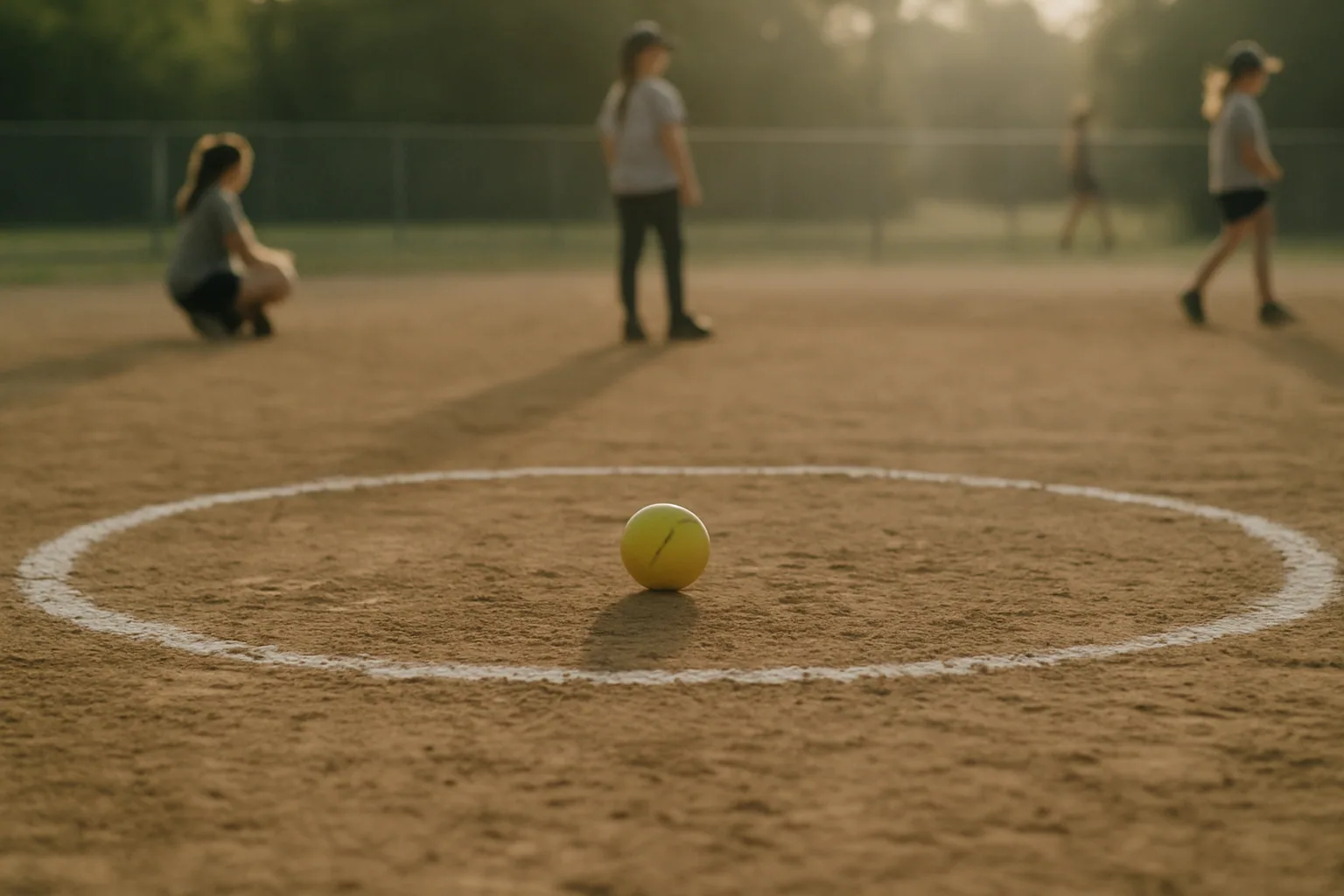
At some point around age 9, a certain kind of kid watches the pitcher get the ball every play and decides that’s the job she wants. What happens next determines several years of your family’s evenings, so it’s worth deciding on purpose.
What the windmill actually is. Unlike baseball pitching, which playgrounds teach for free, the fastpitch windmill is a built motion: footwork, arm circle, release, and timing that come from instruction and thousands of reps. Nobody self-teaches it well. That’s why pitching defines softball budgets, and why the travel-level lesson line runs $3,000-plus a year for committed pitchers.
The right entry is small. Age 9 or 10, one lesson every two or three weeks with a real pitching instructor, plus short practice sessions at home between. Fall ball is the perfect proving ground: relaxed standings, free substitution, and innings available to anyone willing to try. A winter of casual lessons before a fall of low-stakes innings answers the only question that matters at this age: does she love it, or did she love the idea of it?
You just took a job too. Pitcher development has a hidden second position: the bucket parent. Somebody catches her practice pitches, three or four short sessions a week, in the yard or the garage, for years. It’s some of the best one-on-one time youth sports will ever hand you, and it’s also a real commitment to make with eyes open. Buy the bucket, and a catcher’s mitt for yourself; your palm will thank you by August.
Workload rules apply, even though the motion is “safe.” The windmill is biomechanically gentler than overhand, and that fact gets used to justify absurd workloads. Volume injuries to the shoulder, back, and hip are real at the travel level, where a tournament weekend can ask one kid for 200-plus pitches. The protections are the parent’s job: track her weekend totals, insist on rest days, and treat any team that rides one 11-year-old arm through Sunday as a warning sign. Our pitcher arm care guide covers the principles, and they apply in the circle too.
The emotional contract matters more than the mechanics. Pitching is the most exposed position in youth sports: every walk is hers, in front of everyone, with her parents watching. The kids who last in the circle have a short memory and a parent who doesn’t re-litigate innings in the car. Before the first lesson, decide that the ride home stays the same after her worst inning as her best. That promise, kept, is worth more than any instructor.
How to know it’s working: a year in, she practices without being reminded, she has a fastball and a changeup she trusts, and a bad inning ruins an hour instead of a weekend. That kid is a pitcher; invest accordingly. The kid who needs dragging to the bucket sessions has answered the question too, and a happy shortstop beats a miserable pitcher every season of every year.
The full development map lives in the softball pathway, and the gear guide covers what the circle requires. Start small, protect the arm, and keep the car ride kind.
Gear mentioned in this article (affiliate)
Youth softball glove →, a solid pick for youth softball players.
Full Softball gear guide →, all picks by age and level.
As an Amazon Associate we earn from qualifying purchases.