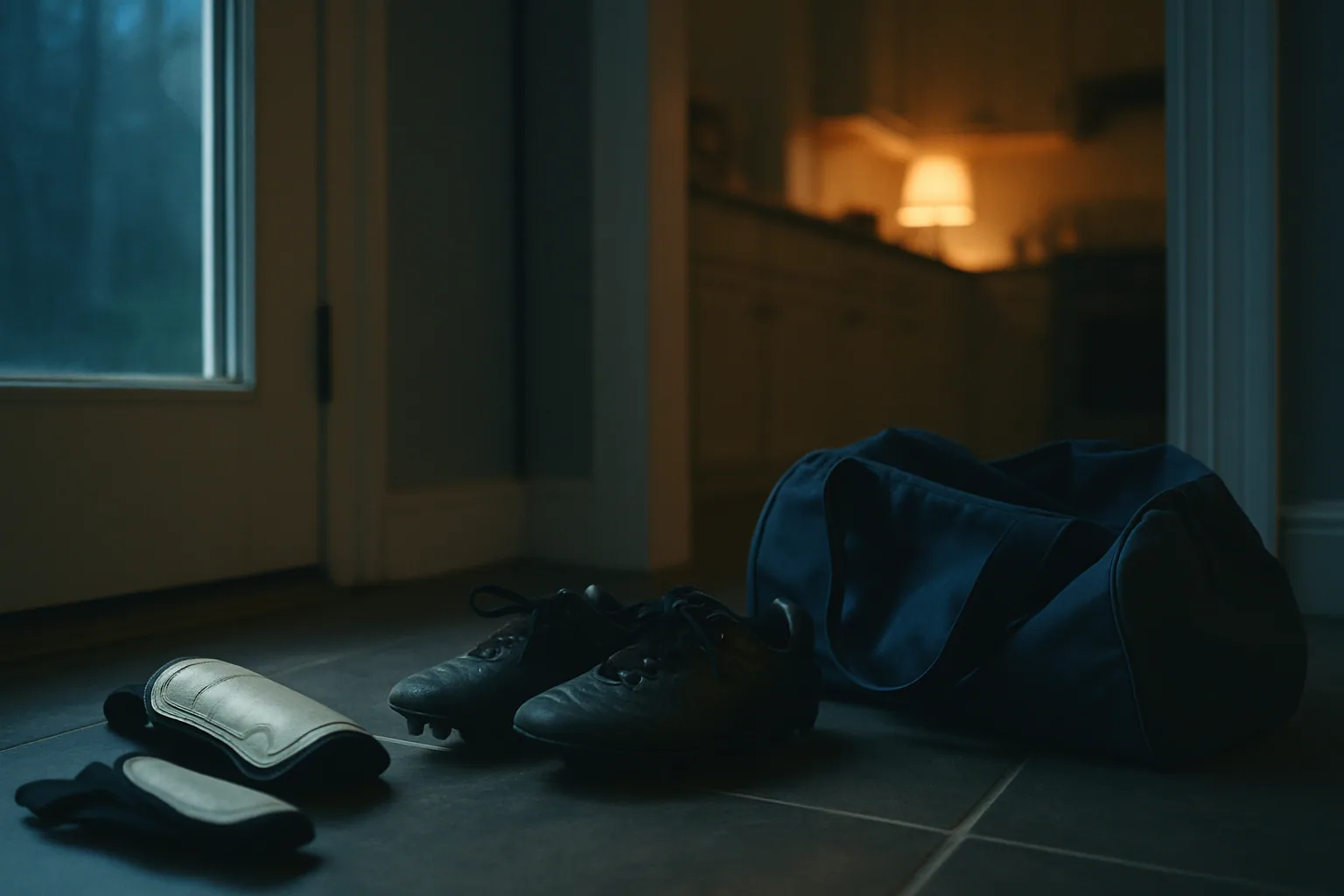
You already know who is making the team. You decided two days ago. The kid sitting across from you at dinner does not know yet, and you are about to spend the next twelve hours pretending to be exactly as in the dark as they are.
This is the seam. Your kid sees you as a parent tonight. Tomorrow morning at 8 a.m., they need to see you as a coach. Most parent-coaches blow the transition because they leak.
What leaking looks like
Leaking is when your parent self gives information that only your coach self has.
You drop a hint about a kid your child shouldn’t be worried about. You over-reassure them about their chances. You tell them not to stress. You stress out yourself, and they read it on you.
The reason leaking is bad is not that it gives your kid an advantage. It’s that the other kids’ parents are not getting the same call, and your kid is now carrying information that makes them act weird in front of their friends. They cannot keep a secret at 9. The team finds out you played favorites, and you didn’t even mean to.
What to actually say at dinner
The script is short. I’m going to be wearing the coach hat tomorrow morning. I love you the same either way. Anything you want to talk about tonight, I’m dad. Anything about tomorrow, you’ll find out with everyone else.
Say it once. Don’t repeat it. Don’t soften it. The kids who handle tryouts best are the ones who know exactly what role they’re walking into.
If they want to ask whether they’re going to make it, the honest answer is I’m going to evaluate everyone the same way tomorrow, including you. That is true. They will not love it. They will go to bed with the same uncertainty as every other kid on the field, which is what fairness actually looks like.
The bedtime question
If they ask “what should I work on tomorrow,” answer like a coach. Specific, short, the same thing you’d tell any other kid at their level.
Don’t give them the secret advice. Don’t tell them what the staff is looking for. The other kids’ parents don’t know either. Hold the line.
The bedtime question I like better is what do you want to feel tomorrow when it’s over. The kid will say something like “proud of how I played” or “like I tried.” That is the thing they actually have control over. Tomorrow, when they are tired and the line is up, they get to decide if they hit that mark. The selection is your job. The effort is theirs.
The morning of
The car ride to tryouts is the last parent moment. Use it as the parent. Music they like. Snacks they pick. No coach talk.
When you get out of the car at the field, the role flips. You are the coach now. The kid knows this because you said so last night. They will adjust faster than you expect.
Don’t have side conversations at the field. Don’t pull your kid aside for one extra cue. The other kids see it. The other parents see it. Treat your kid the way you treat the kid whose name you barely remember.
The car ride home
This is the part nobody warns you about.
If your kid had a bad day, the temptation is to coach them through it. Don’t. The car ride home is parent again. That looked tough. You hungry? The first 90 seconds matter the same way they matter after a regular game. We have a whole piece on what those 90 seconds should sound like.
If your kid had a great day, same rule. Don’t review tape. Don’t grade their performance. Just be glad to see them.
The cuts list goes up when it goes up. Until then, you are the parent in the car. The discipline tonight, in the morning, and in the car after is what makes the season work later. Coach the team in the middle. Keep the kid on either side.
If you want the deeper version of this rhythm, the drive-there pieces cover the before-game frame across every age. The night before tryouts is the parent version of this same script for parents who aren’t coaching.