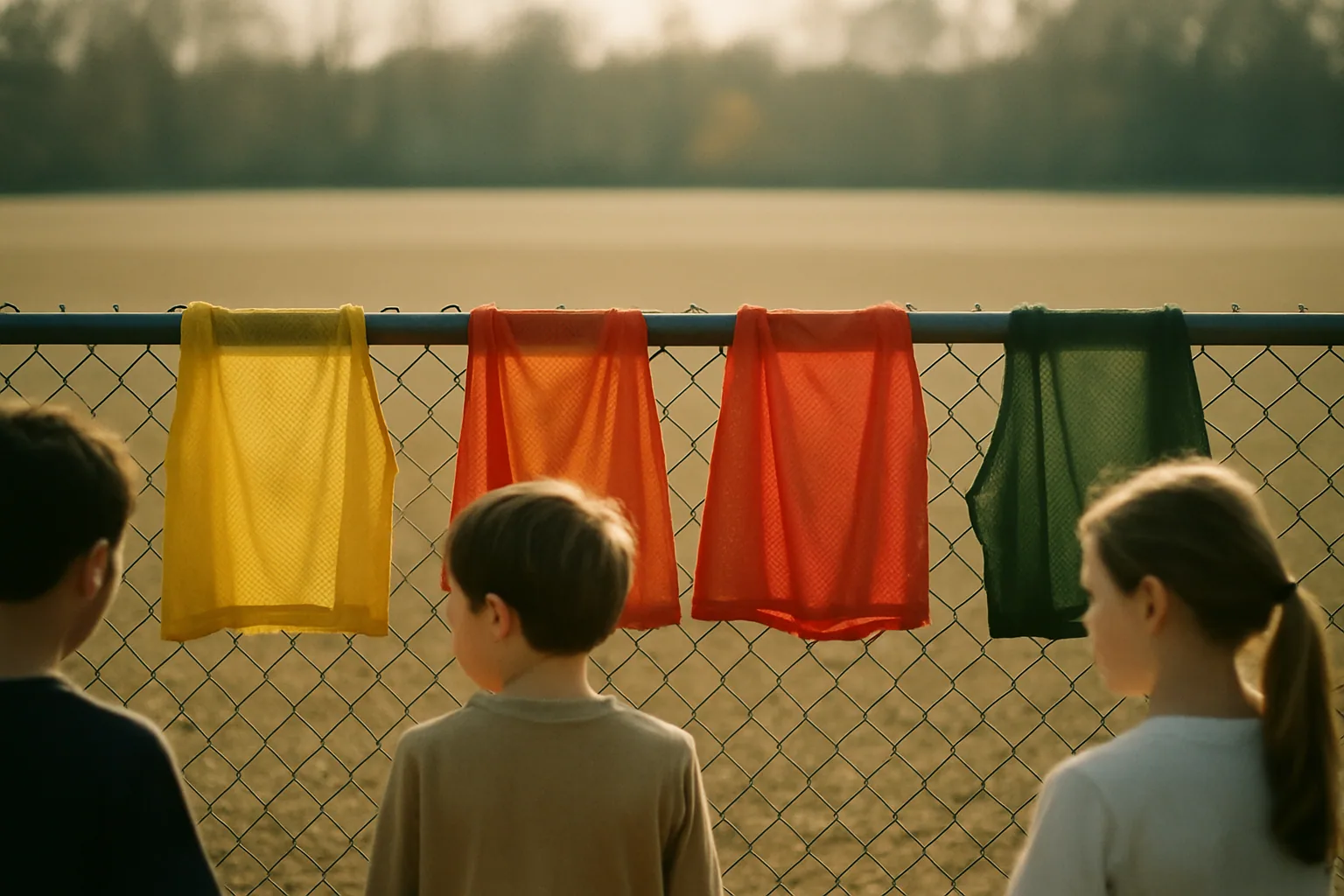
You’re at the field watching tryouts. Forty kids. Three coaches.
Drills you don’t fully understand. You’re trying to figure out where your kid stands.
Treat this as a parent’s field guide, not a published rubric.
What coaches usually watch
Warm-ups show effort and pace. Easy runners often look experienced. Panic sprinters often look nervous.
Skill stations reward clean first touches and crisp passes. The kid who adjusts on the second rep reads as coachable.
Speed work favors first-step quickness over top-end speed. Small-sided games and scrimmage reveal decisions, communication, and composure after mistakes.
The bench and water break count too. Attention and teammate support are tiebreakers for some staffs.
What is not on the rubric
Volume of yelling does not help. Body size at 8 to 12 does not decide the roster.
Whether you cheer from the bleachers is not a positive signal. Sometimes it is a negative one.
Parents grade one pretty drill. Coaches grade all kids across all stations.
Your kid can look great to you and average to a coach who just watched the station next door. Arrival time and how they talk to teammates are part of the evaluation.
A quiet thanks coach at the end is a small mark that silence does not earn.
Your job from the bleachers
Watch quietly. Do not coach from the fence.
Drive home. Wait for the list.
If the wait turns into tea-leaf season, read on the bubble. Night-before logistics live in the night before tryouts.
Your job is witness, not analyst.