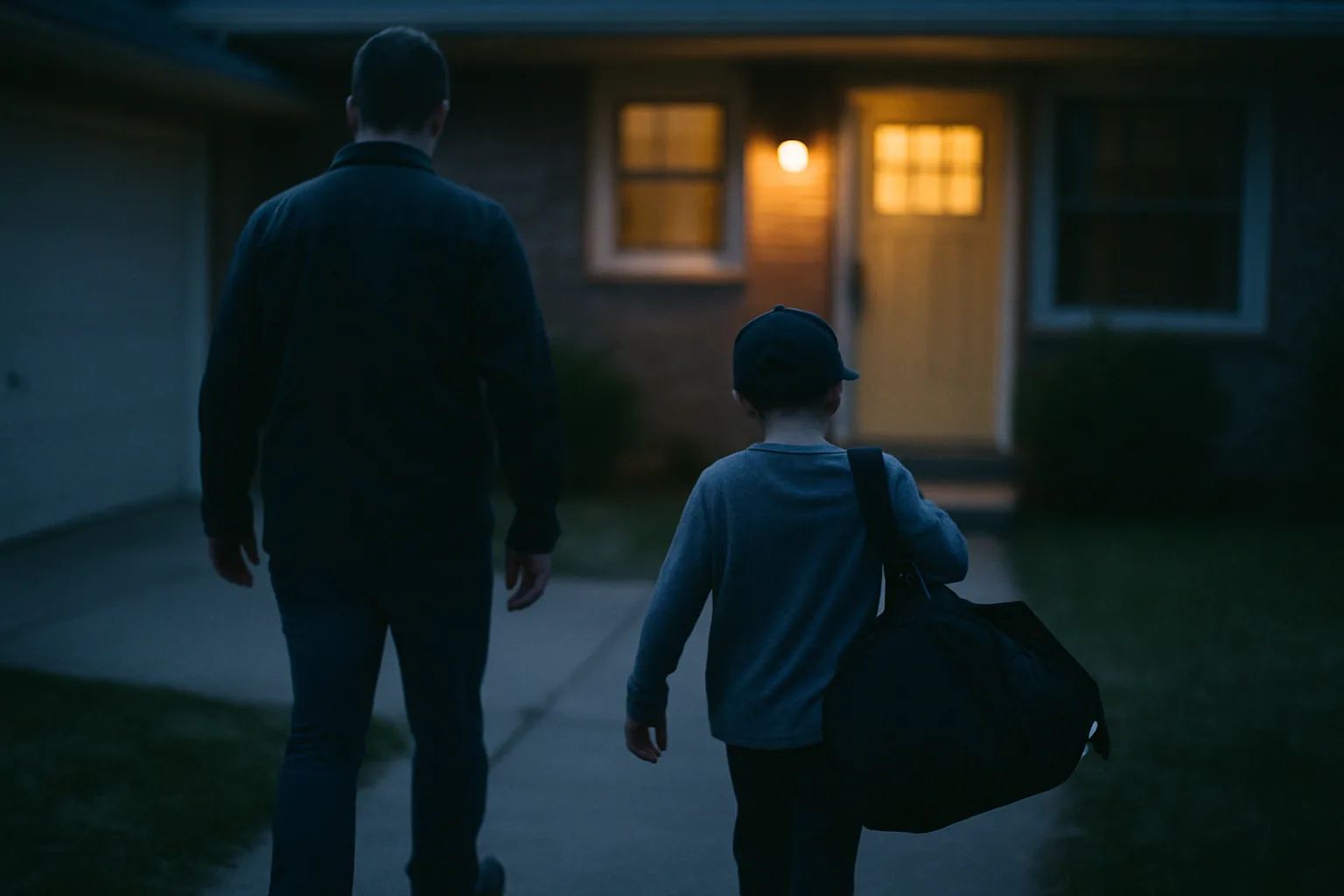
Your kid comes home from a sleepover. They mention, casually, that Henry’s mom said something about you in the carpool on Tuesday.
You can’t tell from the way they say it whether it was good or bad. They are not even sure themselves. They just heard a tone, and the tone has been sitting in their head for two days.
What carpool actually is
Carpool is the parent group chat with no record.
Six minutes from school to practice. Five parents who are tired. Four kids in the back seat pretending not to listen. Whatever gets said there moves through the team faster than email.
If you’re the coach, the carpool conversations about you are happening whether you like it or not. The question is what version of you they’re talking about, and what your kid is hearing on the back-seat side of it.
The three things parents are usually saying
Parents in the carpool are usually saying one of three things about a coach.
One. He’s fair. He works the kids hard. My kid likes him. This is the version you want. It also rarely gets repeated to you, because parents who are happy with the coach don’t have anything to process out loud.
Two. He’s hard on his own kid. Or: he’s easy on his own kid. One of those two, almost never neither. This is the perception thing we’ve written about in coaching your own kid in front of the team. Your kid hears it. Your kid carries it.
Three. Why is my kid not playing more. This is the carpool conversation that has nothing to do with you and everything to do with the parent. The parent is workshopping the conversation they want to have with you, and the back seat is the rehearsal space.
The first one you don’t have to do anything with. The second and third ones you do.
What your kid actually heard
Before you do anything, find out what your kid actually heard.
Don’t ask leading questions. Don’t say did Henry’s mom say something bad about me. Ask once, easy. What did she say?
You will get a 10-year-old version of the conversation. Half of it will be wrong. Some of it will be exactly what was said. You will not be able to tell which is which. That is fine. You’re not gathering legal evidence.
What you’re listening for is whether your kid is bothered. The content matters less than the temperature of how they’re telling it. If they shrug it off, you can probably let it go. If they keep circling back to it over the next two days, the comment landed.
What to say to your kid
The mistake here is to defend yourself to your kid.
If you say Henry’s mom doesn’t know what she’s talking about, you’re inviting your kid to take a side in a fight they didn’t pick. You also teach them that adults who criticize you are wrong, which is not a lesson you want to install at 10.
The better response is short. Sometimes parents talk about coaches. That comes with the job. I’m glad you told me. Are you doing okay with it?
Listen to the answer. If they’re fine, drop it. If they’re not, the next sentence is What do you need from me right now? Most kids will say nothing, which is what they actually mean. Some will say can you not be weird about it. Honor that. Don’t be weird about it.
What to do with the parent
Mostly, nothing.
If the comment was about your coaching, and your kid is fine, let it go. The parent is venting. They will move on.
If the comment was about your kid specifically, that’s a different problem. Henry’s mom said you only play because your dad’s the coach. That sentence was said to a 10-year-old in a back seat. It is a violation of the unwritten rule that coaches’ kids are not the topic in the carpool. You can call it out, parent to parent, in private. Not in a group text. Hey, my kid heard a comment from your back seat. We’re good, I just wanted to flag it. Carpool gets crowded.
Most parents will be embarrassed. Some will double down. Either way, you have done the thing you needed to do, which is name it once and let it land.
What not to do
Do not bring it up at practice. Do not address it in a team email. Do not rearrange the lineup to prove a point.
The team is not the venue for parent politics. The minute you bring carpool back to the field, you teach the rest of the parents that what they say to each other ends up in their kid’s playing time. You do not want that perception, even slightly.
The bigger frame
You will hear something through the carpool every season. Probably more than once.
The job is to keep your kid out of the back-seat politics, hold the line on practice and lineup, and remember that the parents talking about you are mostly working out their own anxiety about their own kid. That doesn’t make it nice. It does mean it’s not really about you.
Your kid is the only person in the equation who didn’t ask to be in it. Make sure the carpool noise doesn’t get louder than the dinner-table conversation in your own house.
The dad who corners coach in the parking lot is the related piece on parent-side politics. Coaching your own kid in front of the team is the deeper essay on the dual-role tightrope.