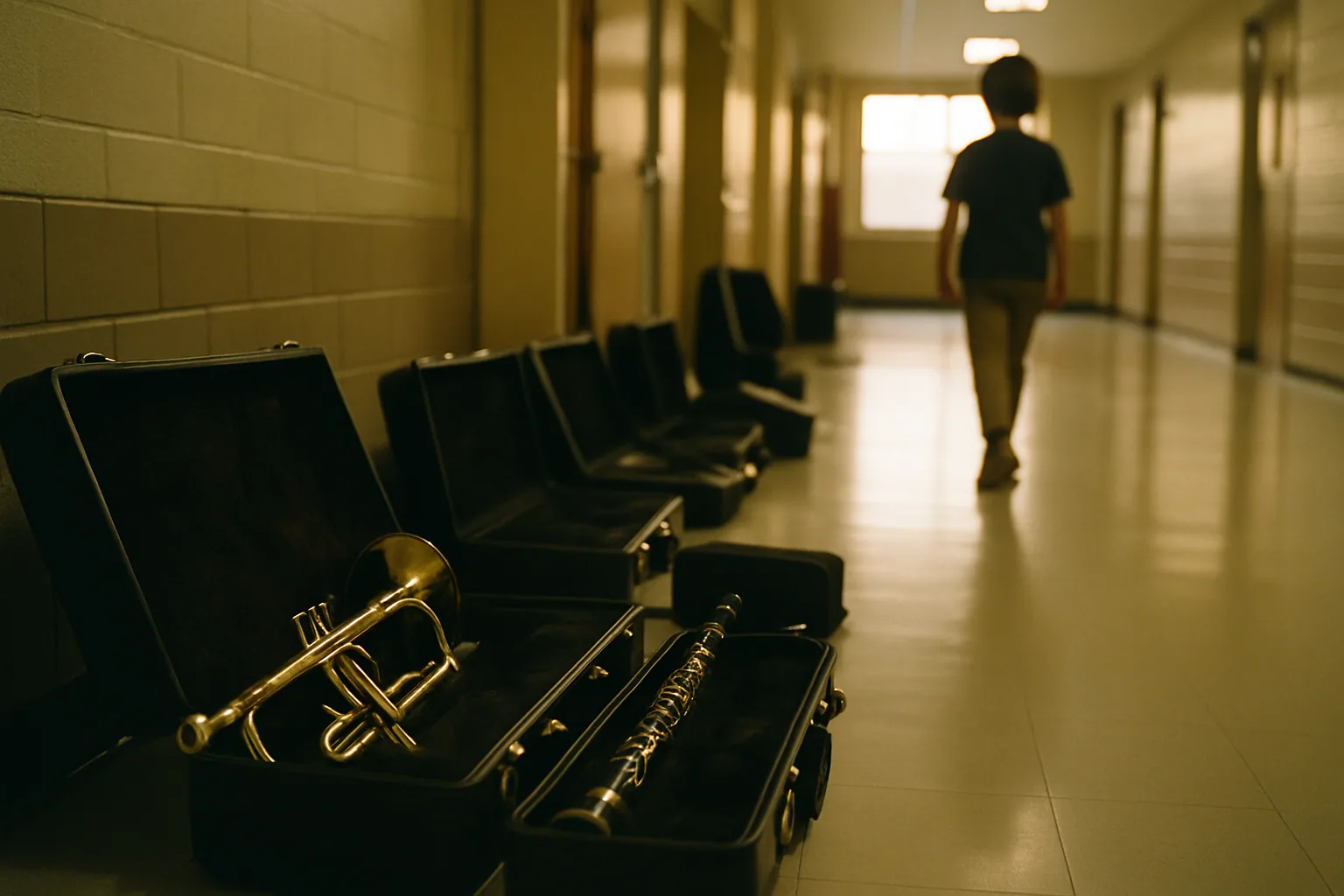
He got in the car with his backpack in his lap and his ears pink. Fourth chair clarinet. He told you in a voice that was trying not to be a voice, and the girl who beat him out for second was sitting on the lobby bench with her mom waiting for her ride. You smiled at the mom and tried not to look at your kid, and you drove home in silence for half a mile. Here’s what the chair number actually means and how to talk about it once you get inside.
How sections and chairs work
A band is made up of sections, clarinets, trumpets, flutes, trombones, and so on, and within each section, players are ranked by chair. First chair is the top player, second is next, and so on down. First chair players sit closest to the audience side, the section leader is usually the first chair, they sometimes get solos, and they’re the one the director looks to first. Second chair is the immediate backup and plays the same parts as first chair when the section is in unison. Third chair and lower usually play harmony or doubled parts.
The position matters for solos and visibility but not for how much your kid plays. Everyone plays the music. Everyone gets the experience.
How chairs get assigned
Most bands use one of three systems. The first is an audition at the start of the year, where the director hears each player play the same prepared piece and ranks them, and most middle school programs do this. The second is the challenge system, where a lower-chair player can formally challenge a higher-chair player, the director hears both and decides who keeps the chair. Some programs allow weekly challenges, some never use them. The third is rotation: the director rotates the chairs every concert or every month so everyone gets stage-side experience and nobody plays the same harmony all year.
Find out which system your kid’s band uses, kids usually don’t know to explain it.
What the chair number actually means
First chair players in middle school bands are usually kids who took private lessons in elementary school, or who have a sibling who plays. Last chair players are usually kids who are picking up the instrument for the first time. The gap between first and last in a twelve-person section is huge in year one and small by year three. Catching up is normal, many last-chair beginners become first-chair players by eighth grade if they practice.
The chair number tells you where the kid is right now. It doesn’t tell you where she’ll be in two years.
The challenge conversation
If your kid’s school uses the challenge system, she’ll eventually face the question of whether to challenge up. The math is simple: the challenger plays an audition piece against the chair-holder, and if she plays better she moves up, if she plays worse she stays where she is. Either way the section knows who challenged whom.
The social cost of a challenge is real. The kid who challenges and loses sometimes feels worse than she did before, and the kid who challenges and wins moves up the chair but may have created a tense seat next to her. When to challenge: if she’s clearly playing at a higher level than the chair above her and the gap is unmistakable, the challenge is fine and the section will accept the result. When not to challenge: right before a concert, when the director has enough to manage; right after a fight in the hallway, when the motivation is wrong; as a first-year kid against a third-year kid, not because she can’t win but because the result is unlikely to change the section dynamic.
How to talk about chair number
A few moves. Don’t ask “what chair are you” every week, kids will start to think that’s what you care about. Do ask “what are you working on this week” once or twice a week, and you’ll get a real answer. If she’s bothered by her chair, acknowledge it and don’t dismiss it: “Fourth chair is a hard place to be. What do you think you need to work on to move up?” Then help her practice the thing. If she’s happy with her chair, don’t push for higher, most kids settle into a chair number they feel right in, and pushing for higher when the kid is comfortable creates pressure that takes the fun out of band.
The high school transition
In high school, chair numbers tend to ossify. First chair is often the senior who has held that seat for two years, and lower chairs cycle through underclassmen. The ninth grader who challenges up to first chair in a competitive program is rare. The ninth grader who slowly moves up over four years to be first chair as a senior is common. If she’s in this for the long haul, the goal isn’t first chair in ninth grade, it’s first chair when it matters, which is junior or senior year if she wants to audition for college music programs.
A small thing
In most middle school bands, the chair number gets mentioned in the concert program. Her name is going to be listed with her chair, and she’s going to compare to siblings, friends, and to her last concert. That’s part of band. It’s fine. The number means less than she thinks it does. Tell her that. Mean it. The pathway by age covers how chair placement tends to shift year over year, if you want the longer view.