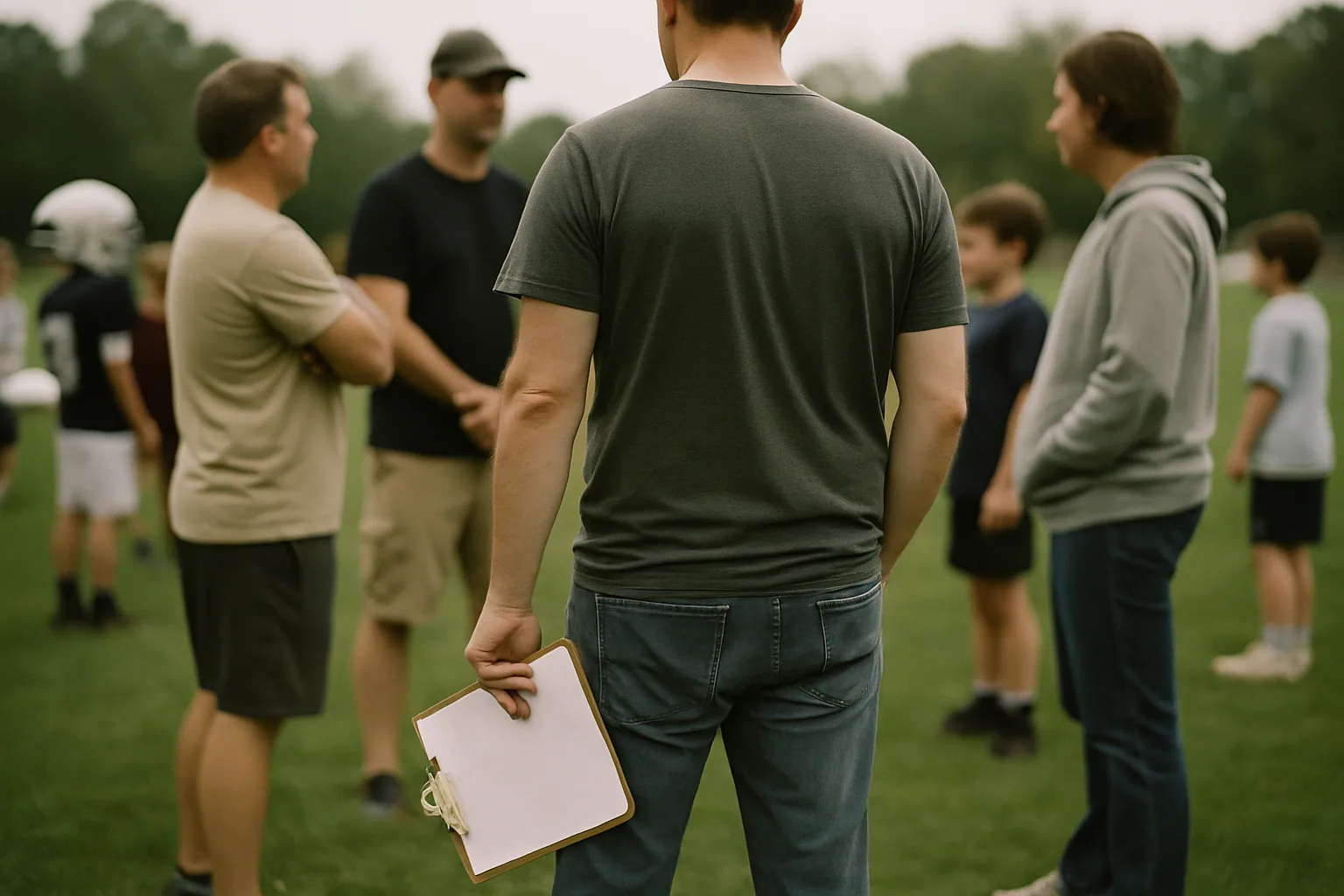
The most developed athletes in any youth program are not always the ones who practiced the most. They’re the ones who played the most.
Those aren’t the same thing.
Organized practice is valuable. Coached repetition, structured feedback, deliberate work on specific skills, all of that builds real competence. But it builds a particular kind of competence: the kind where someone else defines the problem, sets the terms, and tells you when you got it right. That’s useful. It’s also incomplete.
Unstructured play is where kids invent the game, set the rules, settle the disputes, and decide when it’s over. Nobody blows a whistle. Nobody runs the drill. Two kids in a backyard or eight kids at a park figure it out on their own, and what they develop in that process is something organized practice rarely produces.
Watch what actually happens when kids run their own game. They negotiate rules before they start. They modify things when something isn’t working. They argue about a call, work it out, and keep going because they want to keep playing. The kid who doesn’t want to follow the rules gets social feedback immediately: the game stops, or the kid gets left out. That pressure is real, and it’s more effective at teaching cooperation than most lectures.
Adults stepping back is what makes this work. When a coach is running the activity, the coach is solving the social and logistical problems before kids get to try. The drill is designed. The groupings are assigned. The feedback comes from outside. Kids learn to follow instructions well, which matters, but it’s a different skill set than building something from scratch.
This is why the best athletes often have a history of playing multiple sports informally, neighborhood games, pickup, messing around on the field after organized practice ends. The variety and the self-direction build adaptability. They’ve solved more kinds of problems. They’ve been in more situations where the script ran out and they had to figure it out.
For coaches, the application is concrete. Encourage your players to play something outside of practice, ideally something that isn’t the sport you coach. Don’t schedule every available hour. If a player tells you they spent the weekend playing backyard games with their siblings, that’s not wasted time. That’s development you didn’t have to plan.
If you want to see what free play develops, watch your players during a scrimmage with minimal coaching intervention. The kids who play a lot outside of organized sports tend to read situations faster, adapt to something unexpected, and recover from broken plays with more creativity. They’re not following a script because they spent time in environments that didn’t have one.
The burnout argument is also real and underrated. Kids who have unstructured play built into their week, and especially into their off-season, tend to show up to the next season hungry. The absence of evaluation and structure is actually part of the recovery. When everything is measured and coached and assessed, there’s no break from the pressure. Free play is one of the places kids remember that they actually like the sport, separate from all the adult apparatus around it.
There’s a version of well-intentioned parenting that fills every available slot. Another practice, another private lesson, another showcase. The logic is that more structured activity produces more development. It doesn’t, not linearly. Past a certain point, you’re depleting something rather than building it.
The research on early specialization keeps pointing in the same direction: kids who play freely and widely through early adolescence tend to outperform kids who trained intensively in one sport through the same period. Not because talent is different, but because the range of physical and social experience creates a more complete athlete.
One practical note for parent-coaches: you don’t have to engineer free play. You don’t have to create an unstructured activity. Just stop filling the time. When there’s a gap in the schedule, leave it. Put a ball in the backyard and walk inside. Drop a few kids at a park and sit on a bench. The game will happen. Kids know how to play when adults get out of the way.
The sport they love needs organized coaching. It also needs them to be kids who play. Both things are true, and they work better when they coexist rather than one crowding out the other.
More structure is not always more development. Sometimes it’s just more adult involvement in something that was working fine without it.
The social dynamics of free play deserve more attention than they usually get. When kids run their own game, every social skill gets tested in real time. Who decides the rules? What happens when someone cheats? How do you keep the kid who’s dominating from ruining the game for everyone else? What do you do when two players disagree and there’s no adult to appeal to?
These aren’t trivial problems. They’re the actual stuff of working in groups, and most of the settings where kids practice them have adults ready to intervene within thirty seconds. Organized sports have coaches. School has teachers. Youth programs have counselors. Free play has the kids themselves, and that’s what makes it irreplaceable.
A player who has spent years negotiating backyard games learns to read group dynamics in ways that organized sport alone doesn’t develop. They’re quicker to identify when something isn’t working and propose a solution. They’re more comfortable in leadership without official authority. They’ve had a hundred small experiences of things going wrong and then working it out and continuing to play. That history is useful.
There’s also a physical dimension to free play that structured practice doesn’t fully replicate. In free play, kids move in unpredictable ways. They sprint, stop, change direction, jump from unusual angles, land imperfectly. The movement vocabulary that develops in unstructured environments is richer and more varied than what organized drills produce. Youth sports medicine research consistently points to this: athletes who played multiple sports and moved freely in childhood tend to have better general movement quality and fewer overuse injuries than athletes who trained in one highly specific pattern from a young age.
If you’re a parent-coach wondering what to do with this practically: stop filling the off days. When there’s no practice and no game, don’t schedule a training session to stay sharp. Give them a ball and a space and get out of the way. If you’re watching, move further back. The game that happens without adult direction is doing something the coached game can’t.
And if you’re building a youth program and thinking about what to add, consider this: one of the most valuable things you could add is time you’re not in charge of. Five minutes at the end of practice where you step back and they play something they made up. A season-end day that’s just games they run themselves. It costs you nothing. The return is real.
Organized practice and free play aren’t competing. They’re completing each other. One teaches the athlete what to do with skill. The other builds the person who has to decide what to do when the play breaks down and no one is calling the next rep.
Both matter. Right now, the balance is off. Most kids are getting too much of one and too little of the other.