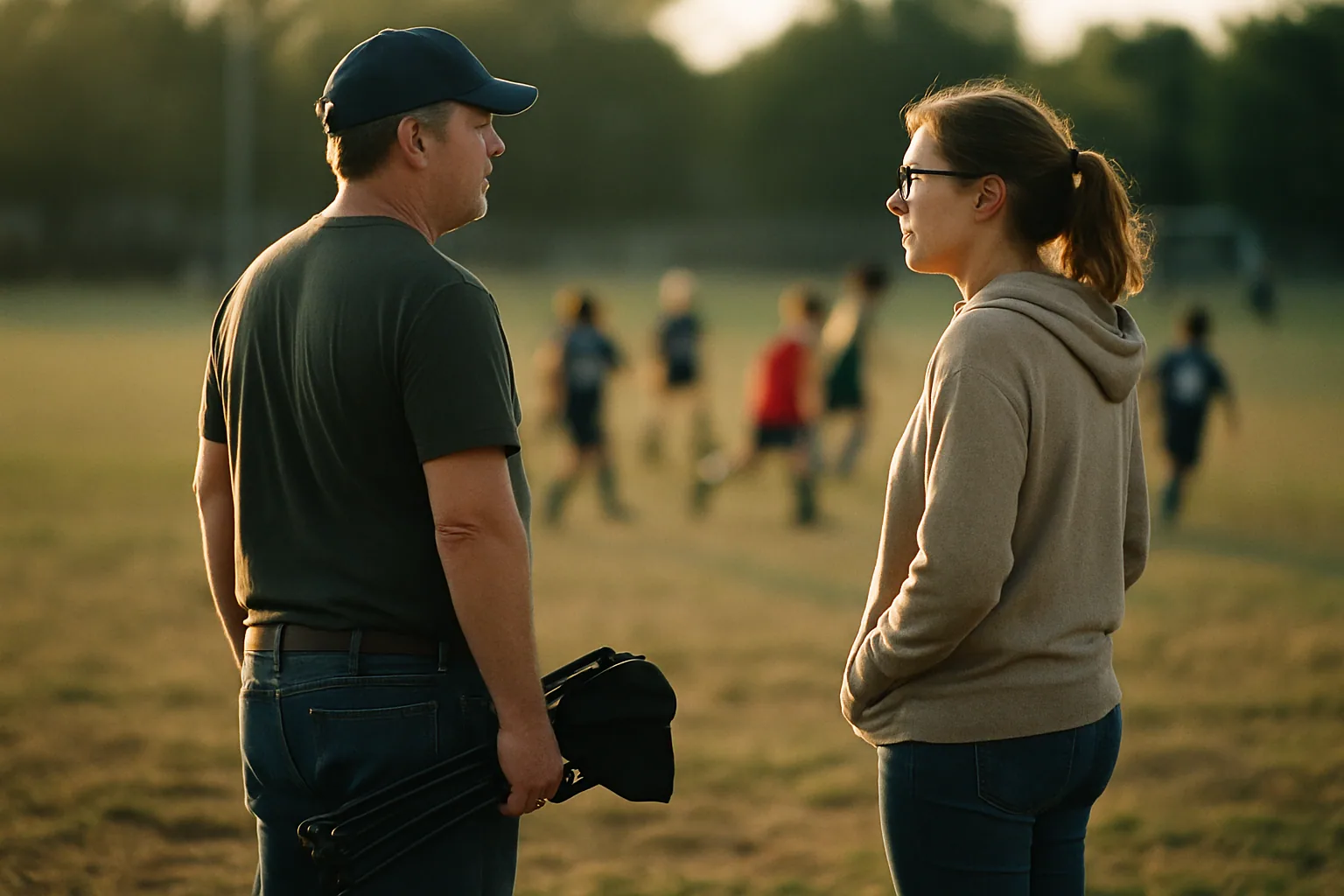
Most youth teams run this way: the coaches do everything. They set up equipment, drag out cones, fill water jugs, run the warmup, run the drills, clean up, and pack it in. The players show up, do what they are told, and leave. That structure is efficient. It is also a missed opportunity every single practice.
Kids want to matter. Not in an abstract way. In a real, concrete way that they can see and point to. When a player has a job, something real that the team depends on, they stop being a participant and start being a member. That difference is larger than it sounds. Participants show up because the schedule says to. Members show up because something is waiting for them.
The Equipment Captain is one of the simplest jobs and one of the most effective. This player arrives early, helps lay out what the team needs, and makes sure everything gets packed properly at the end. They are responsible for the stuff.
The team depends on them knowing where things are. It is a low-stakes job but it creates ownership in a player who otherwise might spend the whole practice just waiting for drills to start.
The Water Captain makes sure hydration happens. They know where the cooler is, keep track of who is drinking, and flag the coach if supplies are running low. Not glamorous. But essential. And kids given this responsibility almost always take it seriously.
The Warm-Up Leader runs the first part of practice. The coach gives them the sequence once and they own it after that. This is a visible leadership role, one that teaches command, projection, and confidence. Give it to different players each week and watch how players who never speak in school suddenly find a voice when they have a purpose and an audience that is ready to follow.
The Encouragement Captain is one of the most underrated roles on any youth team. Their job is to watch their teammates, look for moments of good effort, good attitude, and good character, and name them out loud. Not random praise. Specific praise, targeted at real moments.
“Nice pass, she saw you cutting before you even knew you were cutting.” That kind of recognition, coming from a teammate, often lands harder than the same words from a coach.
The A.C.E. Spotter, especially useful for injured athletes, observes the full practice and announces at the end who earned recognition for Attitude, Character, or Effort. But any player can rotate into this job. They slow down, watch more carefully, and develop an eye for the things that make teams work.
The Team Photographer captures a few moments each practice or game. It gives a kid a lens, literally and figuratively, on what their team looks like from the outside. Parents love it. The team gets documentation. And the player carrying the camera is invested in every moment of practice because they are looking for the good ones.
The Cleanup Captain does exactly what it sounds like. They are the last person out. They do a final sweep. They make sure nothing gets left behind. Again, not a glamorous job. But assigned responsibility and completed responsibility are two different things, and the kid who learns the difference between them in youth sports is ahead of kids who never had to be accountable for anything.
Here is the important rule: rotate all of these weekly. Every player on the team gets to cycle through every role across the season. No single kid owns the same job all year.
That rotation does two things. It prevents the same players from being associated with the same identities all season, and it gives every player a chance to experience leadership in a context where the stakes are low enough to try without fear.
Playing time and responsibility are not the same thing. This is worth saying clearly, because most players and parents treat them as equal measures of status. A player who is fourth on the depth chart can still be the most accountable member of the team when it comes to their job. And when that player gets public recognition for how they handle their role, the team starts to understand that showing up and being reliable is its own kind of contribution.
Kids who are given real responsibility tend to rise to it. That is not a theory. It is what happens on teams where coaches trust players with real jobs, real expectations, and real accountability.
The player who owns the water bottles and never misses is building something that follows them. The employer who hires them in fifteen years does not know about the water bottles. But they absolutely notice what that kind of practice creat