Every team has one. The kid who shows up ten minutes into the warm-up, three times a week, for the entire season. Helmet half on, cleats in hand, apologizing quietly to nobody in particular as they jog to find a spot in the drill. You’ve seen it. You’ve probably wondered what to do about it.
Before you do anything, think about what’s actually going on.
Chronic lateness from a youth athlete almost never comes from a kid who doesn’t care. The ones who don’t care stop showing up entirely or find increasingly elaborate excuses to miss. The kid who keeps coming, even late, is still coming. That tells you something. They want to be there. Something is making it hard.
Most of the time that something is happening at home. A parent who works until 5:30 and has to drive across town in rush traffic. A single-parent household where the sibling pickup sequence makes a 4:00 practice mathematically difficult. A home situation complicated enough that even getting a kid fed and out the door is a real effort. Sometimes it’s just that the family’s version of “be there at 4” means “start trying to leave at 4.”
None of these are the kid’s fault. And here is the part that coaches get wrong: treating it like it is.
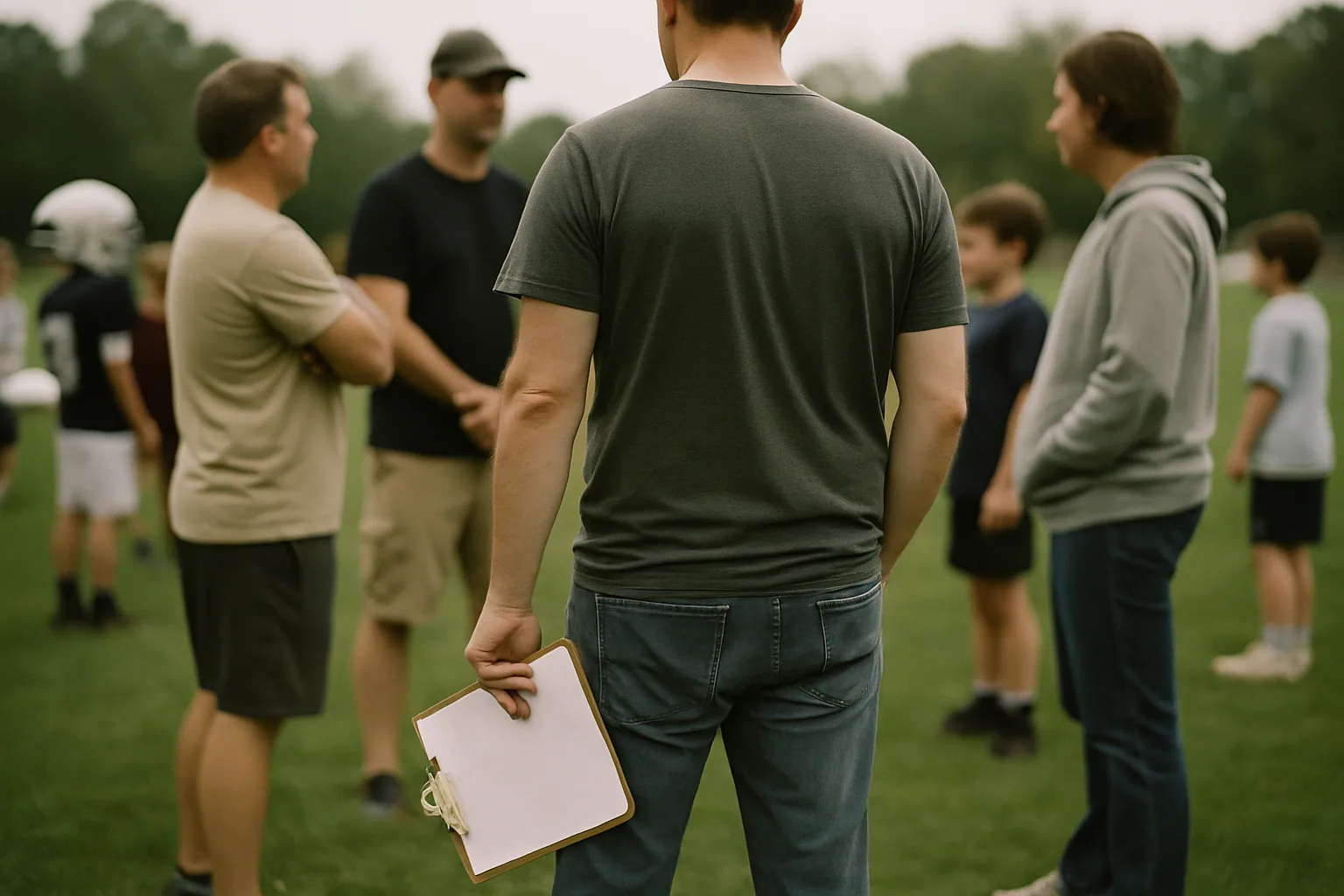
The instinct, especially for coaches who care about culture and punctuality, is to address it publicly. The kid walks in late again, and you stop the drill and say something about everyone being on time, and you look in the general direction of the kid who just arrived. You know who you’re talking to. The team knows who you’re talking to. The kid definitely knows. And now they’re standing there with their cleats still in their hand, thirty pairs of eyes on them, and the message they’re receiving is not “be on time.” It’s “you don’t belong here.”
That kid is now less likely to come back, not more likely to be on time.
The conversation about lateness, if you have it at all, needs to be private. After practice, one-on-one, without the team around. Not to shame, not to lecture, but to actually find out what’s going on. A simple version of it: “Hey, I notice you’ve been getting here late a few times. Everything okay? Anything I can do to make this easier?” That’s it. Open question. Then you listen.
What you hear might surprise you. Some parents are embarrassed about the transportation situation and haven’t said anything. Some kids are managing a family logistics chain that would challenge an adult. Some are dealing with a parent whose work schedule changed after the season started and nobody told you because they didn’t want to make it your problem. Once you know what’s actually happening, you can respond to the real situation instead of the surface one.
What you do with what you learn depends on what it is. If it’s a transportation problem, sometimes just knowing about it opens a solution. Another parent on the team might pass near that neighborhood. You might be able to adjust the practice start time by fifteen minutes. You might not be able to fix it at all, but the kid now knows that you know, and that you’re not holding it against them.
If the lateness is going to continue, the most useful thing you can do is stop making it a disruption. Build a routine for late arrivals. Tell the kid ahead of time: when you get here, grab a ball and do your own warm-up along the far sideline until I wave you in. Don’t make them check in, don’t make them explain, don’t break the drill to acknowledge them. Make arriving late feel less like walking into a spotlight and more like sliding into the back of the room.
Kids who arrive late and feel welcomed anyway are more likely to keep coming. Kids who arrive late and feel watched and judged are more likely to start finding reasons to miss entirely.
There’s a version of this situation that’s harder: when you know the lateness comes from a home environment that’s genuinely chaotic, and there’s nothing you can do about the logistics. Maybe there’s inconsistency in the household. Maybe there’s instability you can’t quite name. The kid’s attendance is irregular, not just late.
In those cases, the most important thing you do is be the constant. You’re the adult who’s there, who’s the same every week, who responds the same way to this kid whether they arrive on time or fifteen minutes late. For some kids, that consistency from an outside adult is something they don’t get anywhere else. It matters more than you know, and it doesn’t cost you much.
The practical note here: if you ever suspect the home situation is more than logistical, loop in whoever the league or school has in place for that. A counselor, an activities director, a program coordinator. You are not equipped to be a social worker, and you don’t need to be. But making the referral is part of the job.
The parent relationship around lateness is a separate question from the kid relationship, and it’s worth handling carefully. Most parents who are sending a chronically late kid know the kid is late. They’re probably not thrilled about it either. The conversation with the parent, if you have one, should sound like problem-solving, not complaint.
“I wanted to check in because I know practice timing has been tough with your schedule. I just want to make sure we figure out something that works so Jordan can keep coming.” That framing treats it as a shared problem you’re trying to solve together. The parent who gets that call is more likely to engage. The parent who gets a call that feels like a scolding shuts down or gets defensive, and you’ve made things harder.
The underlying principle in all of this is that youth sports exists, at the base level, to get kids to participate in something physical and social and structured. A kid who shows up late is still showing up. That’s worth protecting.
The ones who never made it easy on themselves, who kept coming through all the friction, who walked in late and found a coach who waved them in without making it a thing, a lot of those kids remember that specifically. They remember the coach who didn’t make them feel small for a situation they didn’t control. That’s what keeps them in sports long enough for sports to actually do the things sports can do.