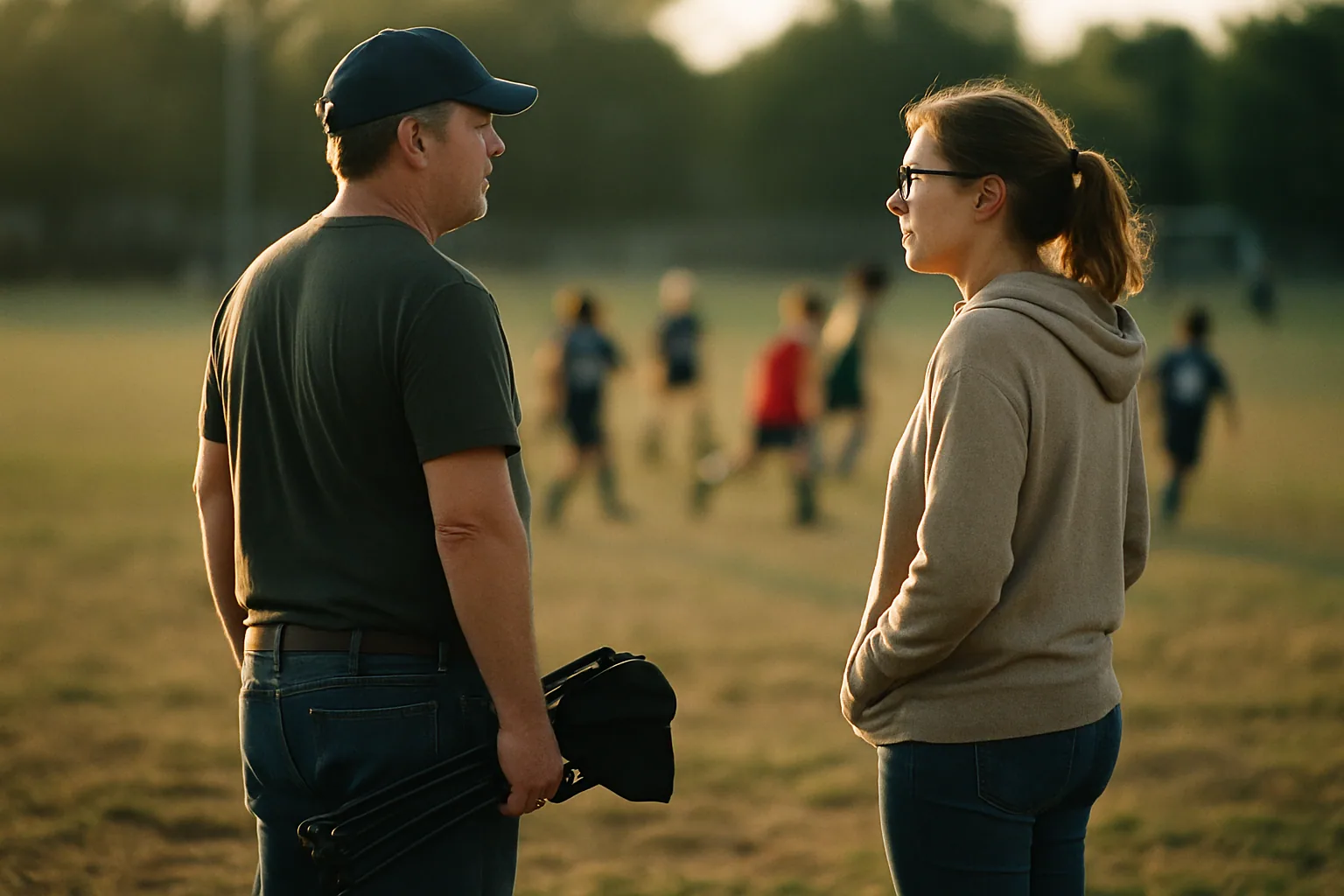
Before you decide a kid is being disrespectful, ask a different question. Did they understand the instruction? Did they actually hear it? Was the explanation so long that they stopped processing it before you finished? Were they watching something else when you demonstrated? Were they overwhelmed and covering it?
Most listening problems in youth sports are communication problems. The coach who has been explaining things to adults in meetings all week sometimes forgets to recalibrate for an eleven-year-old on a Tuesday evening. The instruction that makes complete sense in your head comes out in four sentences when two would work, and the player’s brain stopped at the second one.
Keep instructions short. The rule is explain, demonstrate, start moving. Tell them what to do in one sentence. Show them what it looks like. Then put them in motion. Questions and adjustments happen from what you observe after they try, not from adding sentences to the instruction before they start. If you catch yourself talking for more than thirty seconds straight to a group of young players, you have already lost half the room. The half who stopped listening are not being disrespectful. They are being eight years old.
Check for understanding the right way. “Does everyone understand?” is not a check. Players who are confused do not raise their hand in front of their teammates to announce it. Ask someone to show you. “Marcus, can you show me what we’re doing on the first rep?” That reveals whether the instruction landed. It also shows every other player one more demonstration, which costs nothing and improves everyone’s execution.
Attention follows reinforcement. The player who hears their name followed by something positive pays closer attention to what earns that. Catching players doing it right and naming it out loud is more effective than correcting players who get it wrong, and it has a secondary effect: other players see what gets noticed. “Nice footwork on that last rep, Sofia” tells Sofia something specific and tells the other eight players what you are watching for. The behavior that gets real attention gets repeated.
Build the relationship. This is not a soft add-on. It is a load-bearing pillar. Players listen to adults they trust. The coach who knows ten things about each player, who asks about school, who remembers that Alex had a math test last week, has access that the coach who only interacts during drills does not have. When that coach says “I need you to focus on this one thing for the next five minutes,” the player has a reason to try. Trust is the currency of influence with young athletes.
Consider developmental differences. Not every child processes verbal instructions the same way. Some players need to see the demonstration before the words make sense. Some need to try it wrong once before they can fix it. Some need a quieter moment away from the group to ask a question they would not ask in front of teammates. None of that is defiance. It is how brains work at different developmental stages. The coach who treats every learning difference as a listening problem will spend a lot of energy solving the wrong problem.
Give responsibility and watch what happens. The player who does not listen during instruction sometimes becomes the player who listens hardest when you make them responsible for something. Give them the warm-up. Put them in charge of a drill station. Ask their opinion on something in front of the team. Responsibility changes the relationship a player has to the information. The kid who was checking out during the explanation becomes invested when they own a piece of the outcome.
Correct privately when it makes sense. Public correction can work in situations where the whole team needs to see the standard held. But with individual players who struggle to listen, public correction usually creates two problems: the original behavior and a new one, which is embarrassment producing defensiveness. Pull them aside. Keep it short and direct. “I need you to look at me when I’m demonstrating. That’s the one thing. Can you do that?” A player who agreed to one specific thing has a much clearer path forward than a player who received a general message that they were not behaving right.
The player who does not listen is giving you information. Find out what it is before you respond.