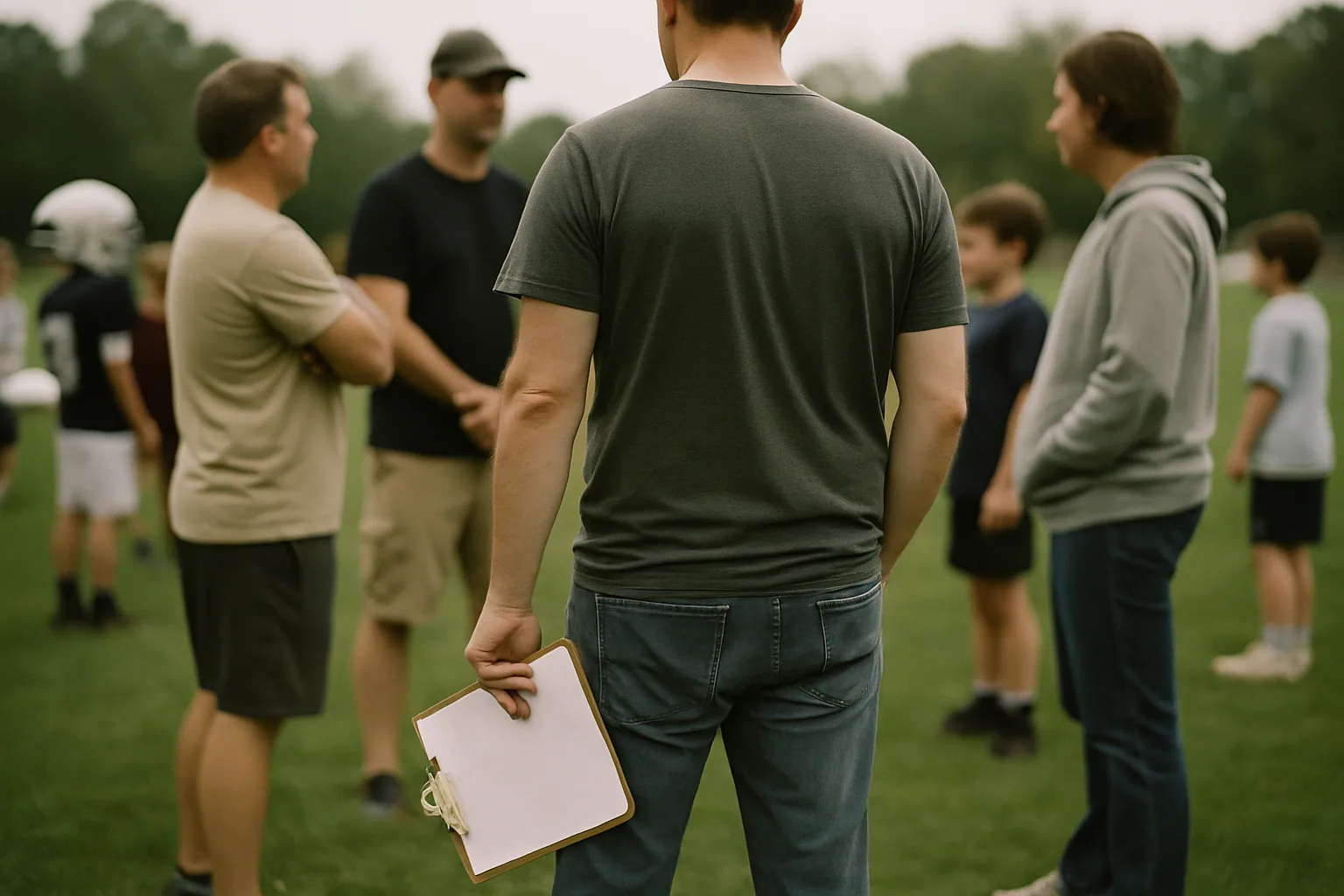
Most coaches leave practice already thinking about the next one. That’s understandable, but it means skipping the only feedback loop that actually tells you how you’re doing.
Two questions. Ask them after every practice, in order, before you start planning anything else.
The first question is: did we get better?
Not did we become perfect. Not did we master the thing we worked on. Did any player improve at anything today, even slightly? Coaches who train themselves to look for this start finding it everywhere, and coaches who don’t find it tend to run practice in a way that makes improvement invisible to them.
Small improvements are not consolation prizes. They’re the actual mechanism of development. A player who has been fighting a throwing motion for three weeks finally gets one clean rep. A shy kid speaks up during a team activity for the first time. A player who’s been avoiding a particular drill stays in it longer than usual. These things don’t announce themselves. You have to look for them, and looking for them is a skill that gets better with practice.
The reason this question matters operationally: if you can’t answer it, you don’t know what your practice produced. You know what you planned to teach. That’s different. Planning is input. Improvement is output. They don’t always match, and the gap between them is where coaching growth lives.
If a skill wasn’t clicking for anyone, that’s information. Maybe the progression was too fast. Maybe the activity you chose doesn’t actually isolate what you think it does. Maybe the group needs more time on the foundational piece before reaching the application. Coaches who ask the question develop sharper instincts about which activities actually produce change and which ones just fill time.
The second question is: did they have fun?
Some coaches dismiss this as soft. It isn’t. Fun is one of the strongest predictors of whether a player stays in the sport, and whether a player stays in the sport is the strongest long-term predictor of development. A player who quits at ten because practice felt like a chore never becomes the player they might have been. The kid who kept playing because they loved it keeps accumulating reps for years. That gap compounds.
Fun also tells you things about engagement that skill work alone can’t. A practice where kids are excited, loose, and laughing is usually a practice where learning is happening. A practice where energy is flat and kids are going through the motions is usually a practice where not much is sticking, even if the drills look correct from the outside.
You don’t have to guess on this one. Ask the players directly. After practice, before they go: what was your favorite part today? What did you learn? Their answers are often different from what you expected, and that difference is the data.
When a player says their favorite part was a five-minute game at the end, and you spent forty minutes on the main drill, that’s worth knowing. It doesn’t mean the forty minutes were wasted. It might mean the game had an intensity or a clarity of purpose that the drill lacked, and you can steal that. When a player names a moment you almost cut from the plan because you were running short on time, that tells you something too.
The combination of the two questions is more useful than either alone. A practice where players got better but nobody had any fun is building skill at the cost of retention. That’s a bad trade over a full season and especially over multiple seasons. A practice where everyone had a blast but nobody improved anything is good for relationship-building but it’s not coaching. The target is both.
Here’s the practical pattern: after the last player leaves, before you put away any equipment, stand in the middle of the space and answer both questions out loud or in a notebook. One sentence each. “Jenna finally got her footwork in the first transition drill. Energy was high in the second half, low in the first.” That’s it. Thirty seconds.
Do this for a month and you’ll have a record of what works and what doesn’t that’s more useful than any curriculum you could import from outside.
The practice that went sideways and the practice that clicked both become information rather than noise. You start noticing patterns: this group responds to competition formats, they flat-line on repetition drills. This player comes alive when paired with a particular teammate. The end-of-practice activity that I almost never include is consistently the one they remember.
Two questions. Every time. Before the next plan.
The coaching gets better in the space between them.
There’s a third layer to this practice, and it applies specifically to parent-coaches: what did I do well as a coach today, and what do I need to do differently?
Coaches spend nearly all their evaluation energy on player performance. Very little goes toward their own. But the same growth principle that applies to players applies to coaches. You improve what you measure. If you never examine your own coaching behavior, it doesn’t change much. If you spend sixty seconds after every practice asking whether your instruction was clear, whether you handled the mistake that happened in the third drill well, whether you spent time with the players who needed it most, you start developing sharper instincts about the craft.
This is not self-criticism for its own sake. It’s the same feedback loop you’re trying to build in your players, turned on yourself. You model it when you’re willing to say, in the moment, “I ran that drill wrong, let me fix it” or “I handled that correction too harshly, let me circle back.” Players who see a coach self-correct without shame learn something significant about what it looks like to own mistakes.
Parent-coaches carry a particular challenge in this self-evaluation: your own child is in the group, and you will have natural blind spots about whether you’re being too hard on them, too easy, or whether your relationship with them in practice is affecting the rest of the team. The honest answer is that it probably is affecting things, because it’s genuinely hard to separate the parent role from the coaching role in real time. Asking yourself after practice whether you handled your kid the same way you handled everyone else is a useful check.
The two primary questions, did we get better, did they have fun, and the self-evaluation question are most useful when you write the answers down rather than just thinking them. The act of writing forces a level of specificity that mental review doesn’t. “We got better at transition defense” is more useful than “practice went okay.” “Three players seemed disengaged in the second half” is more useful than “energy was a little low.” Over a season, those notes become a record of your program and your coaching that’s more honest and more useful than anything you’d get from watching film.
Give it thirty days. One notebook. Three questions after every session. The patterns that emerge will tell you more about your coaching than any outside feedback you could seek.