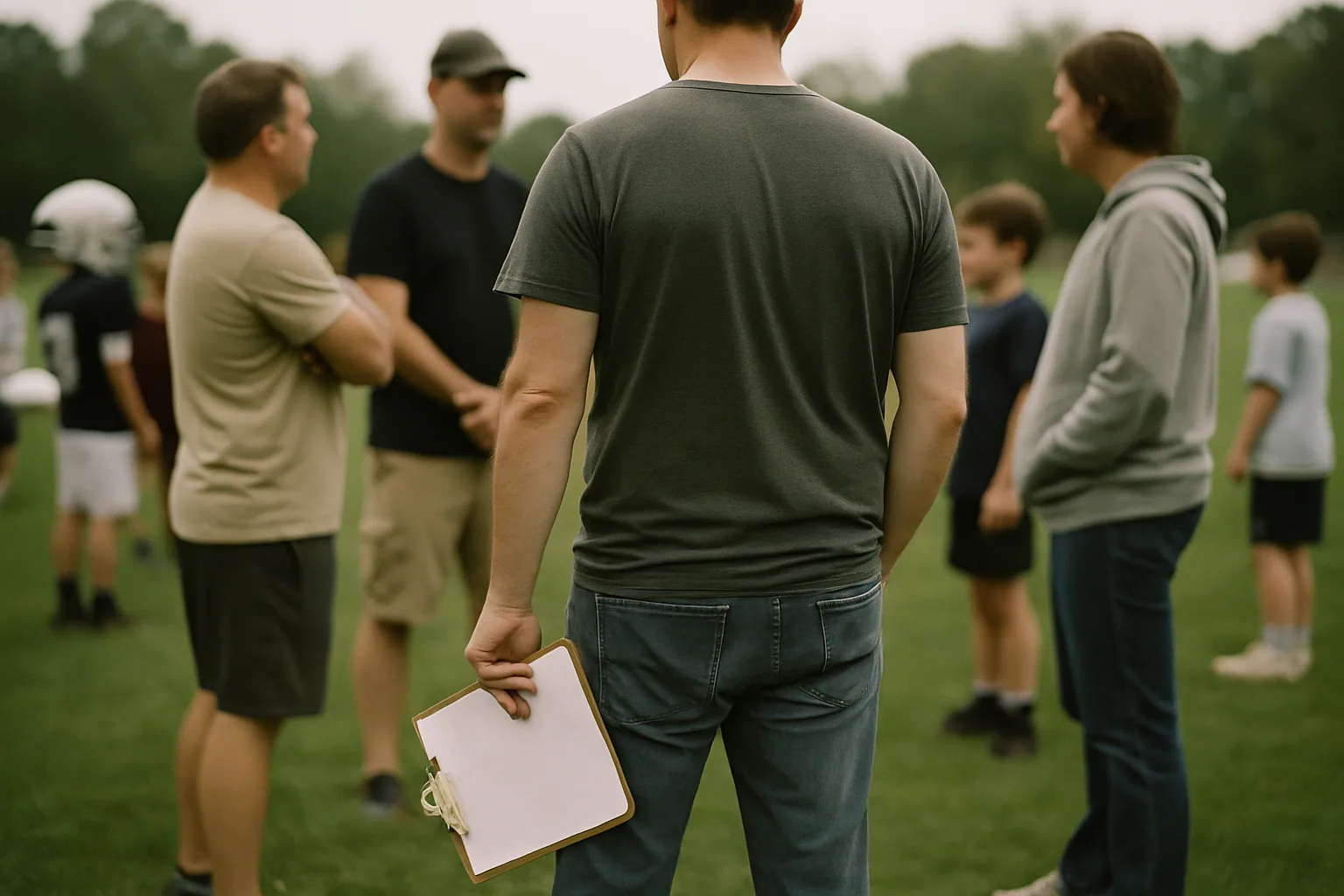
There is pressure, in youth coaching, to deliver something memorable before every game.
Something from a movie. Something that builds the moment, charges the room, and sends players out ready to run through a wall. Coaches feel this expectation whether or not their players are old enough to want it or their sport context calls for it. The result is a lot of pregame talks that are too long, too emotional, and too far from what players actually need in the thirty seconds before they go compete.
What most players actually need is simpler: clarity, confidence, and permission to go play.
The most common mistake is talking too long. Attention narrows before competition. The physiological state players are in before a game, heart rate rising, focus narrowing toward the activity ahead, is not designed for complex information processing. They can hold a few things. Not a strategy briefing. A short, clear signal that points them toward the most important thing and then releases them to go do it.
Two minutes is a reasonable target for most youth sports pregame talks. Some coaches can do it in ninety seconds and that’s fine. Ten minutes is almost always too long, and the last eight minutes are competing with whatever the players’ bodies and minds are already doing in preparation for the game.
Focus on what players control. Effort, attitude, communication, preparation. Not the officiating, not the opponent’s reputation, not the weather or the travel or whatever else is present. The opponent is not something players control. The referees are not something players control. Focusing on those things before a game puts players in a reactive posture, waiting to see how external forces treat them. Focusing on what they control puts them in an active posture, ready to bring something rather than waiting for something.
“Compete hard, support each other, play with character” covers most of what matters in a youth sports pregame talk. It’s three things, all of them about behavior, all of them within the players’ ability to execute regardless of the score. You can add a specific element for that particular game if there’s something worth naming: “we’ve been sloppy with our transitions in practice, let’s clean that up today.” One specific thing is useful. Five specific things are too many.
Reinforce team identity with a phrase or two from whatever vocabulary you’ve built across the season. If your team has been using “ACE” all year, the pregame moment is when you say it and mean it. “Go out there and ACE every moment” takes three seconds and connects to everything you’ve built. That phrase carries more weight than a brand-new motivational concept introduced five minutes before game time.
Consistency in the pregame structure matters more than most coaches realize. When the talk follows a predictable pattern, players know what’s coming and can settle into it. When the coach invents something different every game, the unpredictability adds a small but real layer of cognitive load to an already activated state. Keep the structure the same: brief check of what we’re working on, what we control, team identity, energy close. Same shape, different specific content.
One of the most effective things a pregame talk can do is remind players what they’ve already done. They prepared. They practiced the week before. They know what to do. The game is not something to be afraid of. It’s an opportunity to show what they’ve built. “You’ve put in the work. Go trust it.” That’s a confidence move rather than an information move, and confidence is what most players need before competition, not more information.
Make winning the whole focus and you increase the pressure without increasing the capacity to perform. A twelve-year-old who walks into a game thinking about whether their team wins or loses is carrying more mental load than a twelve-year-old who walks in thinking about competing hard and being a good teammate. Both players play in the same game. One has a narrower channel. Focus on performance rather than outcome, and the outcomes tend to follow.
Some coaches do one final thing at the end of a pregame talk that works well: they ask players what they’re going to do. Not a rhetorical question for emphasis, but a real one. “What are we focusing on today?” Let two or three players answer. This does a few things. It checks that the message landed. It puts the words in the players’ mouths rather than just the coach’s, which deepens ownership. And it ends the talk with player voices rather than coach voice, which is an energizing shift.
Then stop talking. Let them go.
The game is theirs. They’ve been preparing for it. The coach’s job in the pregame is to point them toward what matters, send them out confident, and then step back from the center of the moment.
Some coaches have trouble with that last part. The talk goes long because the coach isn’t ready to let go of the room. Know when you’re done. Say the last thing, create the energy close, and get out of the way.
They’re ready. Trust the work.
There’s a category of pregame talk that actually hurts performance, and it’s worth identifying. The talk that focuses heavily on what the opponent does well, on the ways this game is going to be hard, on the stakes and what a loss would mean, creates a threat environment rather than a challenge environment. Players in a threat state are protecting against failure. Players in a challenge state are pursuing performance. The research on this distinction is consistent: challenge activation produces better athletic outcomes than threat activation.
Your pregame talk, intentionally or not, is setting one of those two states. Every time you emphasize the opponent’s strengths, you’re nudging players toward threat. Every time you emphasize what your team is capable of, you’re nudging them toward challenge. The information in both cases might be accurate. The emotional frame is what matters.
This doesn’t mean you avoid reality. If the opponent is good, you don’t pretend otherwise. “They’re a tough team and we’re ready for it” is honest and challenge-framed. “They’re a tough team and we’re going to have to be perfect” is honest and threat-framed. Both sentences acknowledge the same fact. One sends players onto the field activated. The other sends them onto the field tightened.
For youth sports specifically, the pregame talk is competing with a lot of internal noise. The ten-year-old standing in front of you is thinking about their stomach feeling weird, about whether their parents are watching from the right spot, about the player on the other team they heard is really fast. The talk you give lands on top of all of that. Keep it simple enough to cut through.
One line that works well as a close, regardless of the sport or the opponent: “You’re ready. Go show them.” It’s direct. It’s confident. It assumes competence. It ends with action. Four words that do more than ten minutes of strategy.
After the season ends, ask your players what they remember about your pregame talks. Not to grade yourself, but to understand what actually landed. Most coaches are surprised. The moment players remember is rarely the detailed tactical breakdown. It’s often the shortest, most direct thing you said. The one sentence that felt true and clear in a moment when their nervous system was running high.
That sentence is what you’re looking for. Find it for your team. Say it every game. Let it be the last thing they hear from you before they go compete.
Then get out of the way. The work is done. The game is theirs.