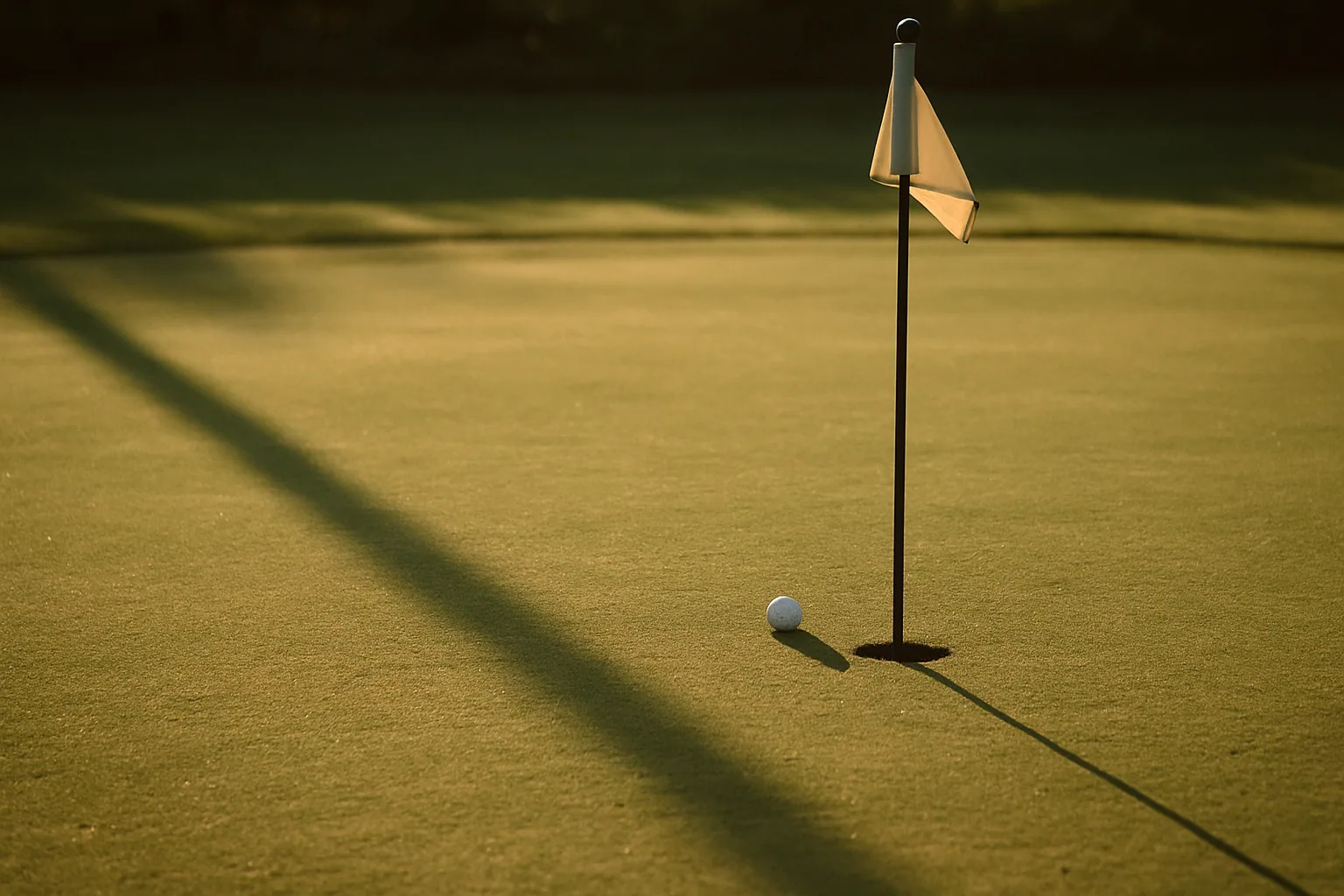
Our kid was lined up over a putt on the sixteenth green at his first real tournament, and we had “you got this, buddy” fully loaded, the way we’d said it a thousand times from the sideline of a soccer field. Then we noticed the six other parents standing near the green weren’t moving, weren’t talking, weren’t even shifting their weight on the gravel path. We swallowed the sentence whole and stood there like everyone else, feeling like we’d nearly committed some kind of crime.
Years of soccer and basketball and baseball train a parent to associate support with volume. The instinct is to cheer when the moment is tense, to call out encouragement right before the big swing or the big shot, because that’s when a kid seems to need it most. Golf runs on the exact opposite logic, and nobody hands over the new rulebook before a first tournament. The silence isn’t coldness. It’s structural. A voice, a car door, a phone buzzing in someone’s pocket at the wrong second can genuinely affect a swing or a putt, so the entire gallery goes still by unspoken agreement the moment a player addresses the ball.
The quiet is protecting every kid on the course, not just being polite. Golf is a sport where the ball sits still and the player has to generate all the motion themselves, with total concentration, often over a shot that’s worth real strokes. A rustling snack bag or a shouted “nice shot” mid-swing from a well-meaning parent can throw off a stance or a tempo in a way that a shouted comment during a basketball possession never could. Once we understood the silence as a safety rail for the shot rather than an arbitrary custom, it got easier to hold ourselves to it.
The cheering energy doesn’t disappear. It just has to move to a different moment. We started saving every ounce of the reaction for right after the shot lands, when a quiet thumbs up or a nod actually registers without disrupting anything. A kid who sinks a long putt can absolutely see a parent’s face light up from thirty feet away; they just can’t hear a shout mid-stroke. We learned to time our reactions to the ball dropping, not to the swing itself, and it turns out that delayed cheer feels just as real to a kid as an instant one did in other sports.
Walking the course gave us somewhere to put the restless energy. Sideline sports let a parent pace a fixed strip of grass. Golf galleries walk the entire round with the group, moving from hole to hole, staying back at a respectful distance during each shot and closing in a little between them. That walking turned out to be exactly the outlet we needed. Instead of standing still and holding in a cheer, we were moving, watching the course unfold, and getting small windows between holes to actually talk to our kid about how things were going.
Between-hole conversation became the new sideline chatter. On the walk from the green to the next tee, there’s a natural minute or two where quiet conversation is completely normal. That’s when we asked how a shot felt, what club he used, whether he was happy with a decision. It’s a different rhythm than a car ride after a game, more like check-ins spread across two hours instead of one conversation at the end. We found we actually learned more about how our kid was thinking during a round than we ever picked up from watching a full soccer game in real time.
A golf clap exists for a reason, and it’s a genuinely satisfying substitute once a parent gets used to it. Polite, brief applause after a good shot is the sport’s built-in release valve. It’s quieter than what we were used to, but it isn’t nothing. The first time a small gallery gave our kid a real round of applause after a birdie, the feeling in our chest was identical to any loud sideline moment from another sport. The volume was different. The feeling wasn’t.
By the back nine of that first tournament, we’d stopped fighting the silence and started using it. We knew when to hold still, when to clap, when to walk, and when the ten minutes between holes belonged to actual conversation instead of stored-up cheering. The instinct to support a kid loudly doesn’t go away in golf. It just gets rerouted into quieter, better-timed moments, and most parents find, a season or two in, that the quiet version feels just as connected as the loud one used to.
The golf gear guide is worth a look too, since showing up with the right clubs and bag makes that first tournament feel less foreign before the round even starts.