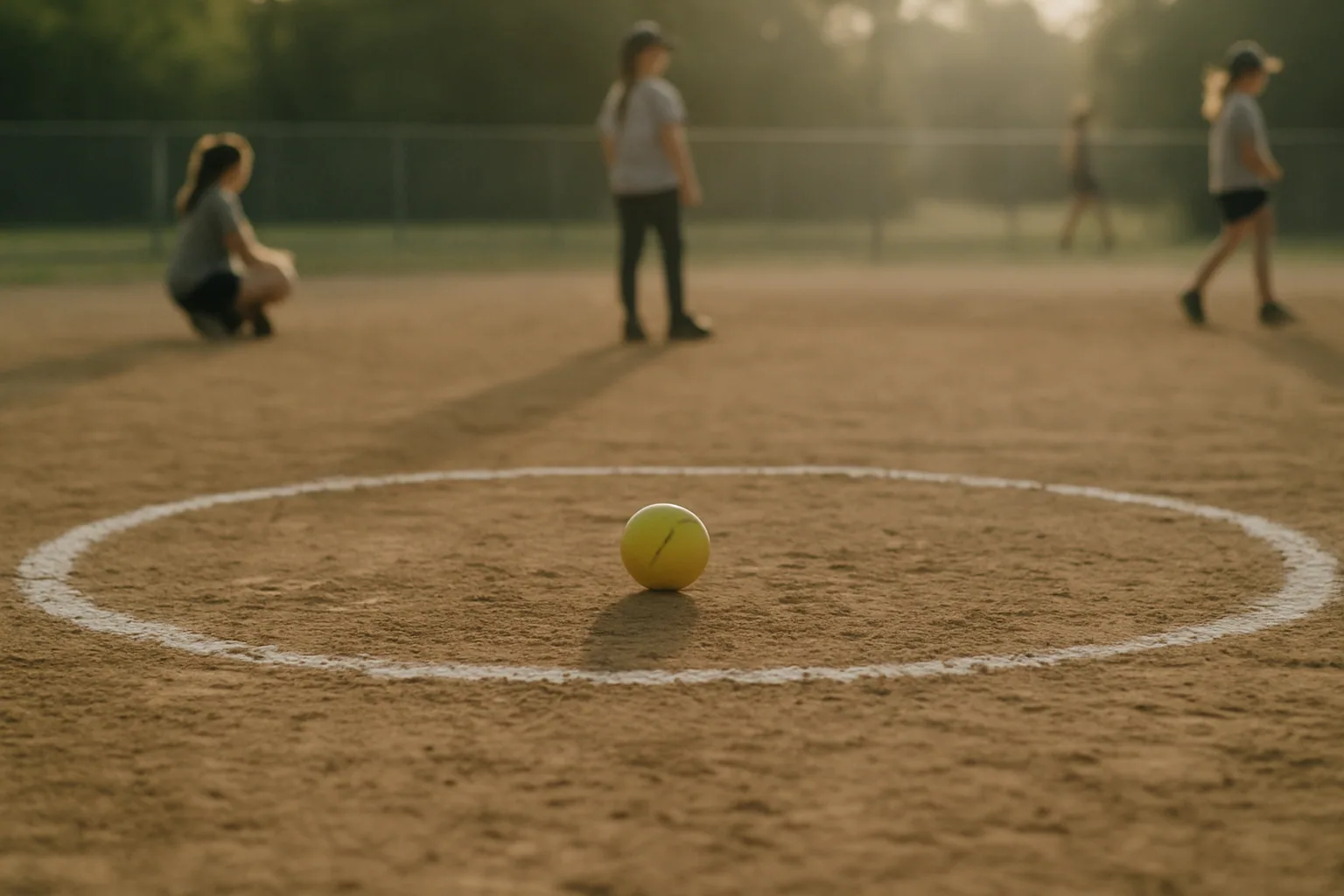
Softball tryouts at the 11-12 age group have a predictable structure. Most run 90 minutes to two hours and cover the same four areas: throwing and fielding, batting, running, and pitching for those who pitch. Knowing what’s coming helps your kid show up prepared instead of surprised.
The throwing and fielding station. Players take ground balls or fly balls and throw to a base. Coaches watch for clean fielding mechanics, footwork, and arm action. Velocity matters less than form at this age.
A player with clean mechanics and an accurate arm, even at moderate velocity, is more interesting to coaches than a player who throws hard with bad habits that will need to be fixed.
Batting. Expect a round of live pitching or machine pitching. Coaches watch bat path, balance, and contact rate. A player who makes consistent contact to the right part of the field shows more than one who occasionally crushes one but swings and misses frequently.
The goal isn’t to see your kid’s best at-bat of the year. It’s to see a reliable swing.
Running. Home-to-first speed is often timed. Run hard every single time, regardless of where the ball went. Coaches notice effort, and effort during running drills is one of the few things entirely in your kid’s control at tryouts.
Pitching. If your kid pitches, there’s usually a separate station or a moment where pitchers can show their stuff. Windmill mechanics and strike-throwing matter more than speed at 11-12. If your kid isn’t a pitcher, this part doesn’t apply.
What coaches are actually evaluating. Athletic ability and coachability sit above most specific skills at this age. A player who listens, adjusts when corrected, and hustles throughout a two-hour tryout is telling coaches something important. The player who looks over at her parent after every rep, checks out when it’s not her turn, or reacts to corrections with visible frustration is telling coaches something different.
Your role. Transport, gear, and calm. Don’t give a pep talk in the car beyond “go play your game.” Don’t watch from the fence and signal things to your kid during drills.
Don’t try to catch the coach’s eye to make sure they see your kid’s good moments. They’re watching. That’s their job.
After the tryout. Ask how they feel about it before you share any observations. Their answer tells you what kind of conversation they need.
Before tryout day arrives, what actually matters for softball gear can save you from showing up with the wrong glove or bat.