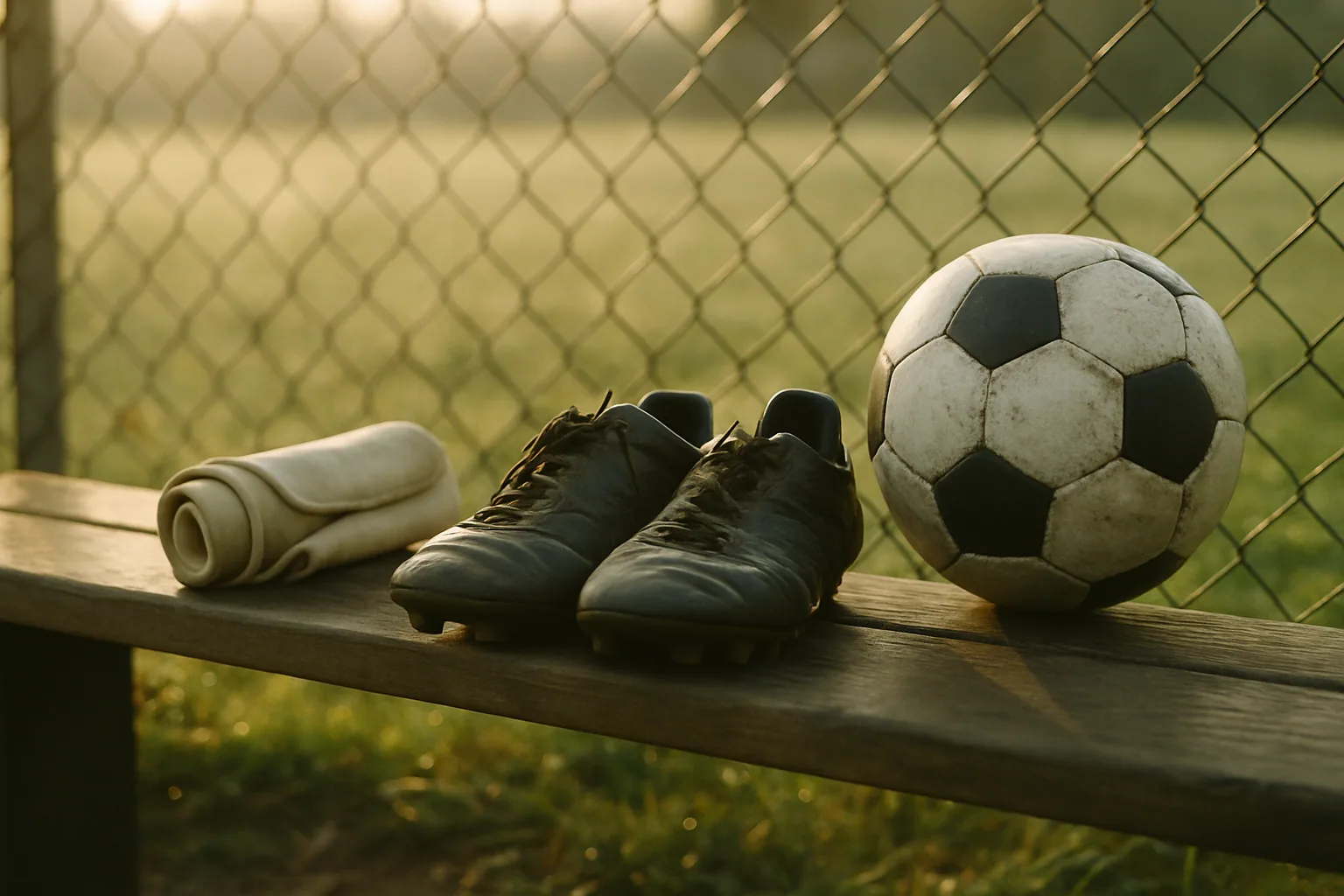
Get the team equipment list before choosing cleats, a ball, or goalkeeper gear.
Soccer’s core list is short, but age groups, fields, and competitions can use different local requirements.
Start with Law 4 and the team list
The current IFAB Law 4 on players’ equipment names a shirt with sleeves, shorts, socks, shinguards, and footwear as compulsory match equipment. Youth programs often arrange some uniform pieces, so confirm exactly what the family must provide.
Law 4 also says shinguards must be made of suitable material, be an appropriate size, and be covered by the socks. Players are responsible for the size and suitability of their shinguards.
The same law prohibits jewelry during play. Taping over jewelry does not make it acceptable under the IFAB rule, although the referee and competition rules remain the practical authority at the field.
Fit the player and the surface
Choose footwear only after the program identifies the playing surface and permitted sole or stud type. A store category such as “soccer cleats” does not prove that a shoe is accepted by the league or suitable for that field.
Have the player try the shoes with the socks they will wear. Check that the shinguards stay covered and do not stop the player from moving normally. The soccer buying guide handles product and sizing choices after those requirements are known.
Do not guess at a ball size from age alone. Ask the coach which size and type the team uses, and whether players need to bring a ball to practice. Match balls are normally supplied by the organizer, but a local practice policy may differ.
Keep optional items optional
Goalkeeper gloves are allowed, not listed as compulsory equipment in Law 4. Buy them only after the coach confirms the player’s role and what the team expects.
A labeled water bottle and a simple bag make the handoff easier without changing the rules. Use the soccer bag checklist for game-day packing, and read what to expect at soccer tryouts before the first evaluation.
The final check is simple: team list, shinguards under socks, approved footwear, uniform pieces, water, and no jewelry.