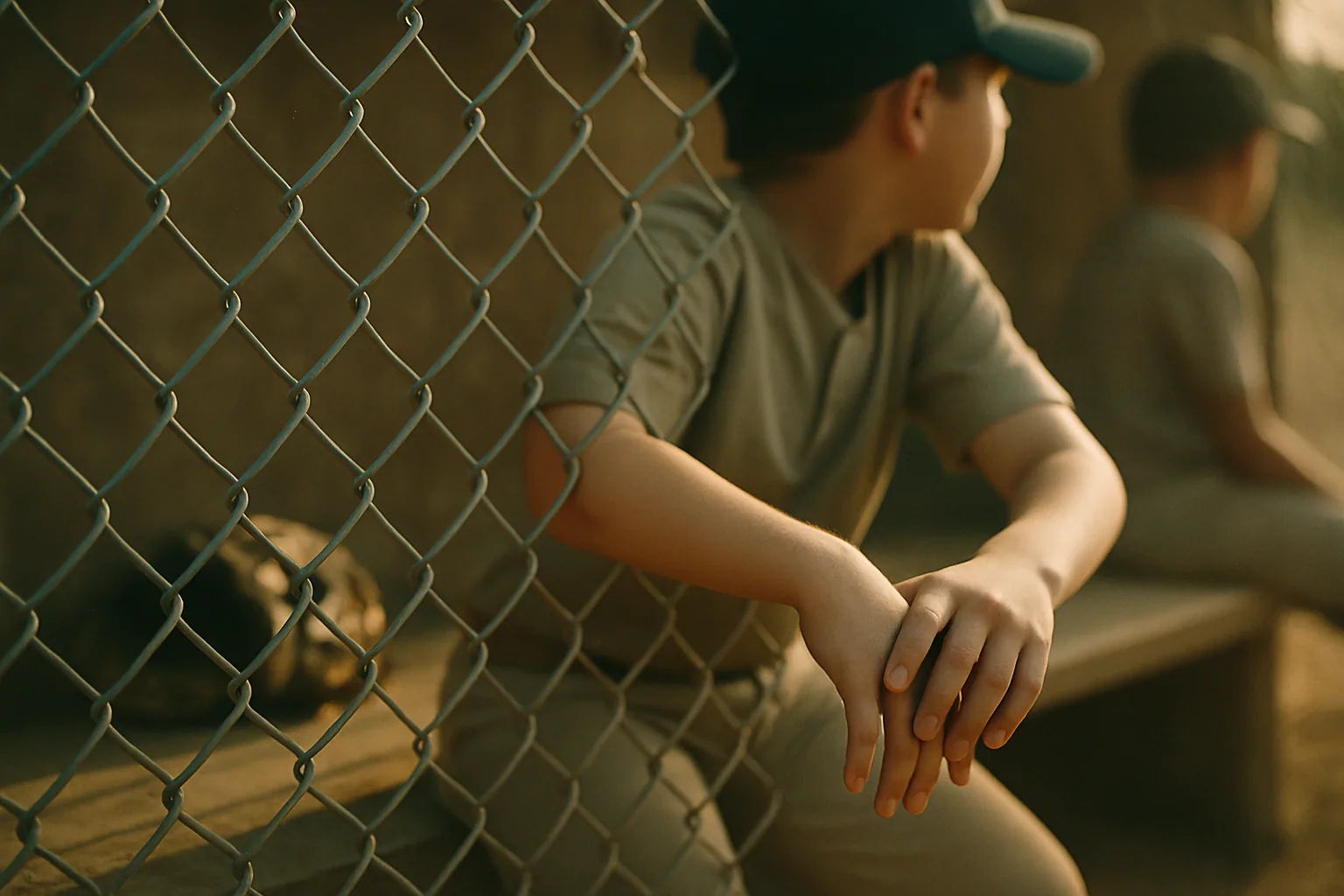
Baseball tryouts follow a more structured format than most youth sports, because the evaluations break down by skill. There’s nowhere to hide if you can’t throw, and there’s nowhere to hide if you don’t run hard to first base. Coaches see both.
What the tryout looks like. Most 11-12 age group tryouts run 90 minutes to two hours. The standard format covers four areas: throwing (usually from short, then long distance), fielding ground balls, taking batting practice or hitting off a machine, and running the bases. Some programs add a pitching evaluation for kids who want to be considered for that role.
What coaches are actually watching. Arm mechanics matter more than velocity at this age. A kid with clean arm action and a fluid release has a much higher ceiling than one who throws hard with a violent motion. Coaches know that mechanics at 11 are more predictive than raw output.
Field the ball with your feet in the right place, and you stand out even if the arm is still developing.
Hitting is the hardest skill to evaluate in a short tryout. Coaches know that. They’re watching for balance, contact rate, and approach, not exit velocity.
Swing and miss at everything, and that’s noted. Make hard contact on a few balls, even to the wrong part of the field, and coaches see a swing they can work with.
Running is not optional. Every kid in a tryout should run hard. Every single time. The kid who trots to first on a ground ball has already told the coaching staff something about how they compete. It’s one of the few things entirely within your kid’s control at tryouts. Run hard.
Coachability check. Coaches often give small adjustments during tryout drills to see how players respond. A kid who processes the correction and tries to apply it immediately signals coachability. A kid who argues, ignores it, or looks at their parent in the stands signals a different pattern.
Your role. Bring the right glove, cleats that fit, and a helmet if batting is included; the baseball gear guide has sizing notes if any of that needs replacing before tryout day. Don’t coach from the sideline during tryouts. Don’t make eye contact every time something goes wrong.
Let the tryout belong to your kid. If they look for you when they make an error, give them a neutral nod and let them get back to work.
After the tryout. The “I love watching you play” line works here too. If results come back and placement isn’t what you hoped, be honest about disappointment while keeping it in proportion. One tryout result at 11 is not a prediction of anything.