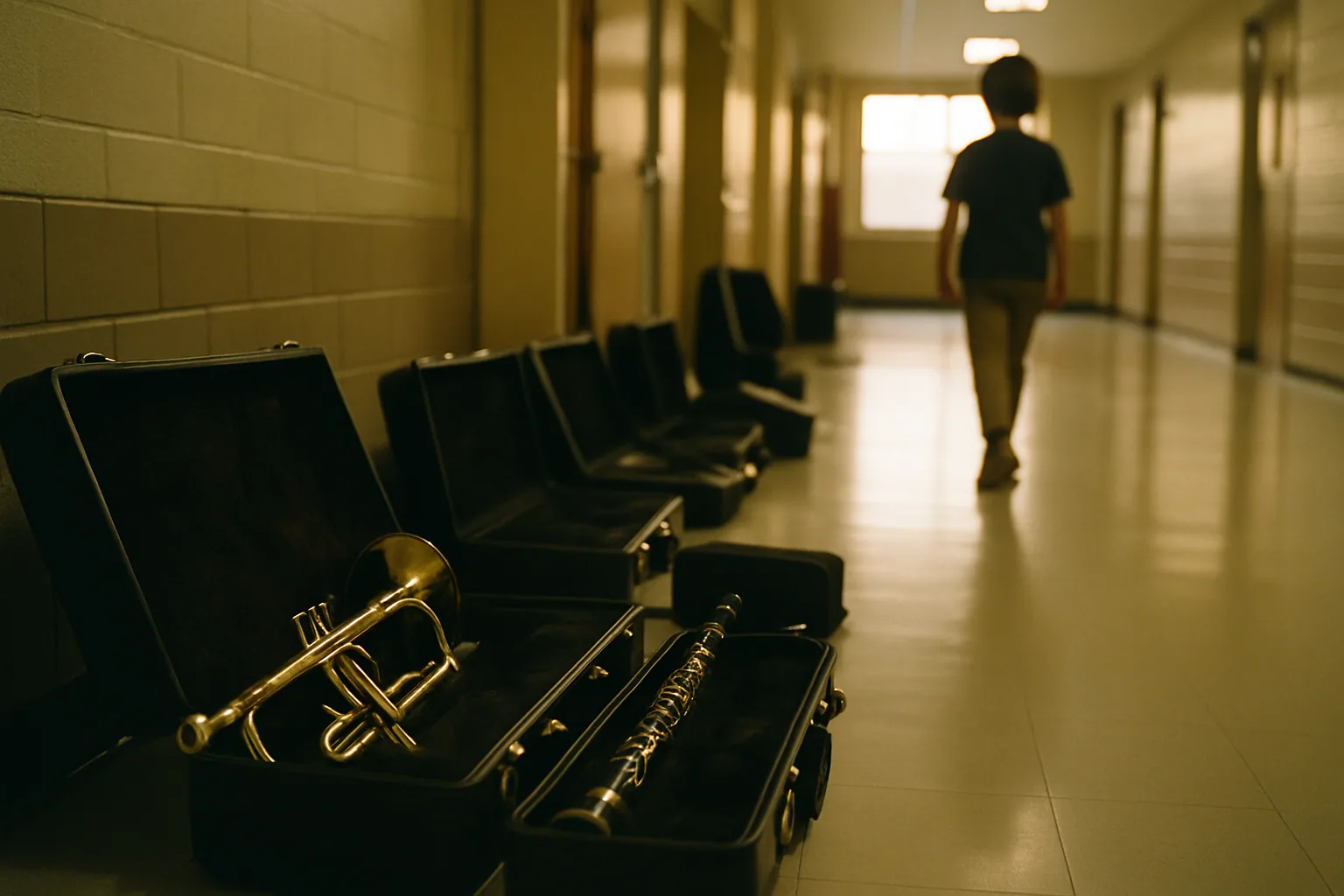
By junior year, band stops being one thing. It splits into three different paths, and most families never sit down and name which one their kid is actually on.
Path one: marching band. This is the fall activity, August camp through the last football game or a competition circuit into November. It is loud, social, physical, and largely separate from music-major ambitions. Many colleges offer marching band scholarships to any student who joins the band, music major or not. For a lot of kids, marching band is the whole goal. It doesn’t need to lead anywhere else to be worth doing.
Path two: concert band or wind ensemble. This is the more serious playing track, the one that runs during the school day and builds toward solo and ensemble festival, all-state auditions, and honor bands. Kids on this path are usually taking private lessons and thinking about repertoire, not pageantry. A kid can do this track hard without ever intending to major in music. It is also the track that best prepares a kid for a college music school audition, if that turns out to be the direction.
Path three: music as a college major. This is the smallest group. It means auditioning for a conservatory, a school of music, or a university music program as a performance, composition, or music education major. This path requires the concert band track as its foundation, usually years of private lessons, and a formal audition process separate from general college admissions.
How to tell which path your kid is on. Ask what she looks forward to more, the halftime show or the winter concert. Ask if she practices for the marching show or for her private lesson assignment. Neither answer is wrong, but the honest answer tells you where to put your energy and your money.
A kid who lives for marching season and treats concert band as the quieter obligation is probably not headed toward a conservatory audition, and that is completely fine. A kid who counts down to solo and ensemble festival and asks for extra lesson time is telling you something real about where this is headed.
The band pathway page breaks down what each age looks like across all three tracks, which helps when a family is trying to figure out whether this year is the year to add a second weekly lesson or just let marching season be marching season.
Don’t force a kid onto the music-major path because she is good. Being good at 16 and wanting to spend a career at it are two different facts, and only one of them is up to her.