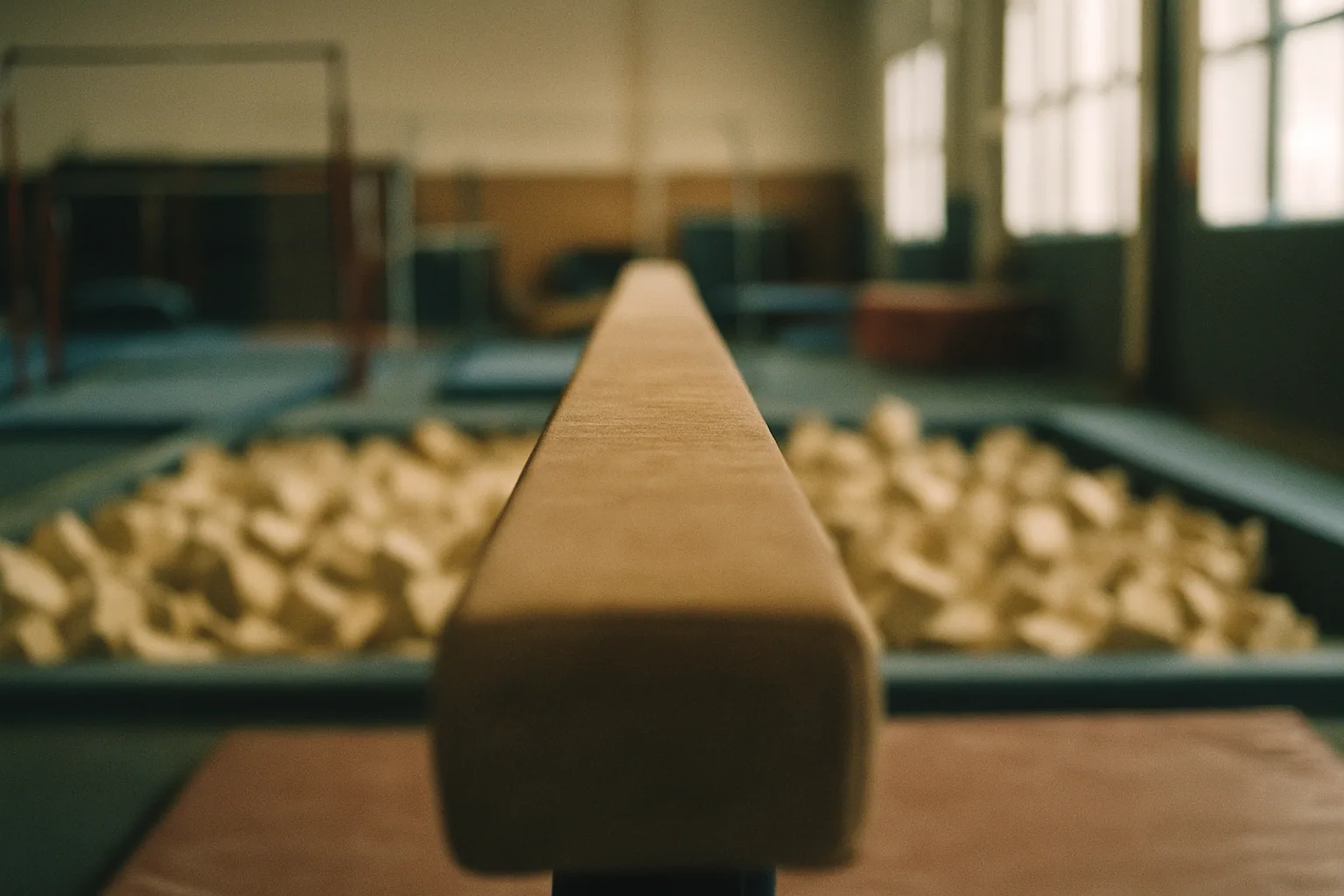
Every other sport on this site tells a version of the same story. Train through high school, peak as a senior, then find out what college looks like. Gymnastics does not work that way, and pretending it does sets a family up for a confusing few years.
The gymnasts who reach elite or Level 10 skills at the highest international level frequently do it in their early-to-mid teens, not their late teens. Puberty changes the body mechanics, weight distribution, and power-to-bodyweight ratio a gymnast depends on for certain skills, and for some athletes that shift makes advanced skills harder to hold onto, not easier.
That means a 15-year-old gymnast can be doing everything right, training hard, staying healthy, and still be on the back half of her physical peak rather than building toward one. That is a strange thing to explain to a kid raised on the usual sports story of steady improvement toward a senior-year high point.
It is worth saying directly: this is not true for every gymnast, and body changes affect athletes differently. Some gymnasts hold their skills through puberty with no real disruption. Others lose a skill they had cold at 12 and never fully get it back the same way, through no fault of effort or coaching.
The gymnastics pathway calls this out at the 13-14 age band directly, because it is exactly the age where body changes start affecting skills and where a temporary regression is normal, not a sign anything has gone wrong. By 15, some of that regression has resolved. Some of it hasn’t, and the training plan needs to answer to the body a gymnast actually has now, not the one she had at 12.
What this means practically at 15-plus is that the goal shifts. Difficulty is not usually the priority for most gymnasts anymore. Consistency is, hitting the routine she already has clean and controlled, because judges and college coaches both reward a clean 9.4 over a shaky higher-difficulty routine.
This is also the age where the injury math and the peak-age math meet. A gymnast pushing to add new high-difficulty skills at 16, on a body that is past its most favorable window for learning them, is taking on more risk for less return than the same push at 12 or 13 would have carried. That is worth a direct conversation with the coaching staff, not an assumption that more training always means more progress.
None of this is an argument to stop. A gymnast who loves the sport at 15 and is training safely within what her body can currently do is having a good, full experience regardless of whether she is still chasing new skills. The argument is only for naming the shape of this sport’s timeline honestly, instead of running a 15-year-old gymnast on the same script written for a 15-year-old distance runner or swimmer, whose bodies are usually still building toward their best years ahead.