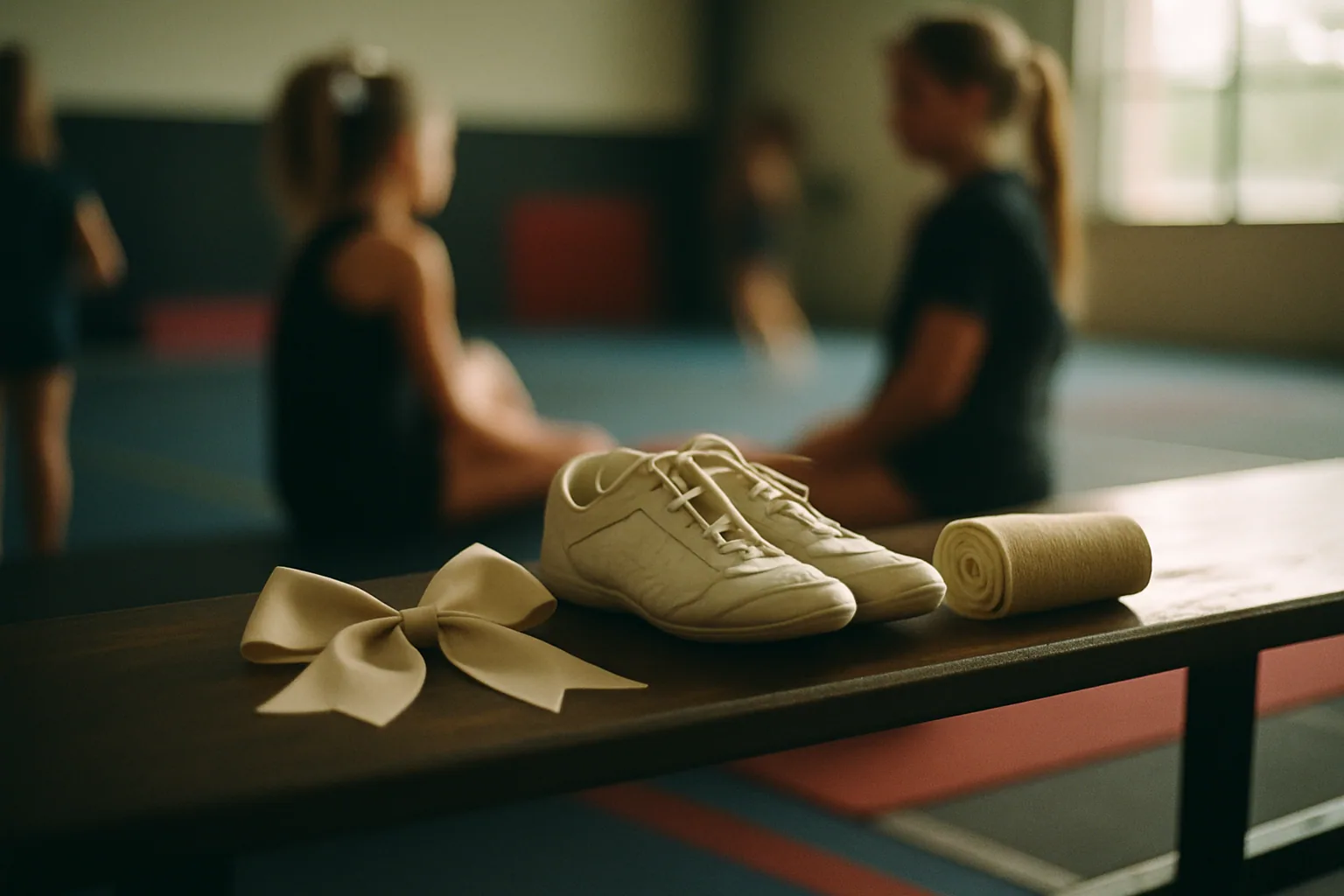
The word “cheer” is doing a lot of work. Two sports use it, they share aesthetics and vocabulary, and they have almost nothing else in common. Before you go to a tryout, before you pay a gym deposit, you need to know which sport your family is entering.
Sideline cheer is what most people picture. Your kid cheers at the school’s football and basketball games, does pep rallies, possibly goes to a regional competition in the spring. The season follows the school calendar. The cost for the season lands somewhere between $200 and $800 depending on the uniform situation and whether the school requires a spirit pack. It is a school activity that takes 6 to 10 hours a week during football season.
All-star cheer is a different sport. It happens at a private gym, runs year-round, competes at judged events on Saturdays from October through May, and the best teams go to Worlds at ESPN Wide World of Sports in Orlando in April or the US Finals in the spring. The routine is two and a half minutes, choreographed, performed on a spring floor, and judged on execution, tumbling difficulty, stunting, and synchronization. The cost for a typical all-star year runs $4,000 to $6,000 for a mid-level program, and you can see the full breakdown in what competitive cheer actually costs.
All-star uses a leveling system governed by the USASF: Level 1 through Level 7, with Level 1 being the entry point and Level 7 being the top of the sport. Most kids start at Level 1. Level 1 is tumbling limited to standing back walkovers and round-offs; no back handsprings. Level 2 adds the back handspring. Level 3 adds the back tuck. The level system matters because it controls what skills your kid’s team is allowed to do in competition. A gym that talks about levels casually without being able to explain where your kid would place is not a gym you want.
Before Level 2, your kid needs to have a back walkover and a clean round-off. Those are the realistic gates. A gym that accepts a brand-new tumbler into Level 2 without those skills is either going to spend the whole season trying to catch them up or putting them in a spot in the routine where they don’t show their tumbling. Neither is good for the kid.
Tryout culture varies by gym. Some gyms do formal skill evaluations with a score sheet; others do a day-camp tryout where coaches watch kids learn a short routine. In both cases, show up in practice clothes, cheer shoes if you have them, hair up and out of the face, and ready to follow instructions in a group. The coaches are watching for coachability at least as much as skill. A brand-new cheerleader who picks up an ei
Gear mentioned in this article (affiliate)
Youth cheer shoes →, a solid pick for youth cheer players.
Full Cheer gear guide →, all picks by age and level.
As an Amazon Associate we earn from qualifying purchases.