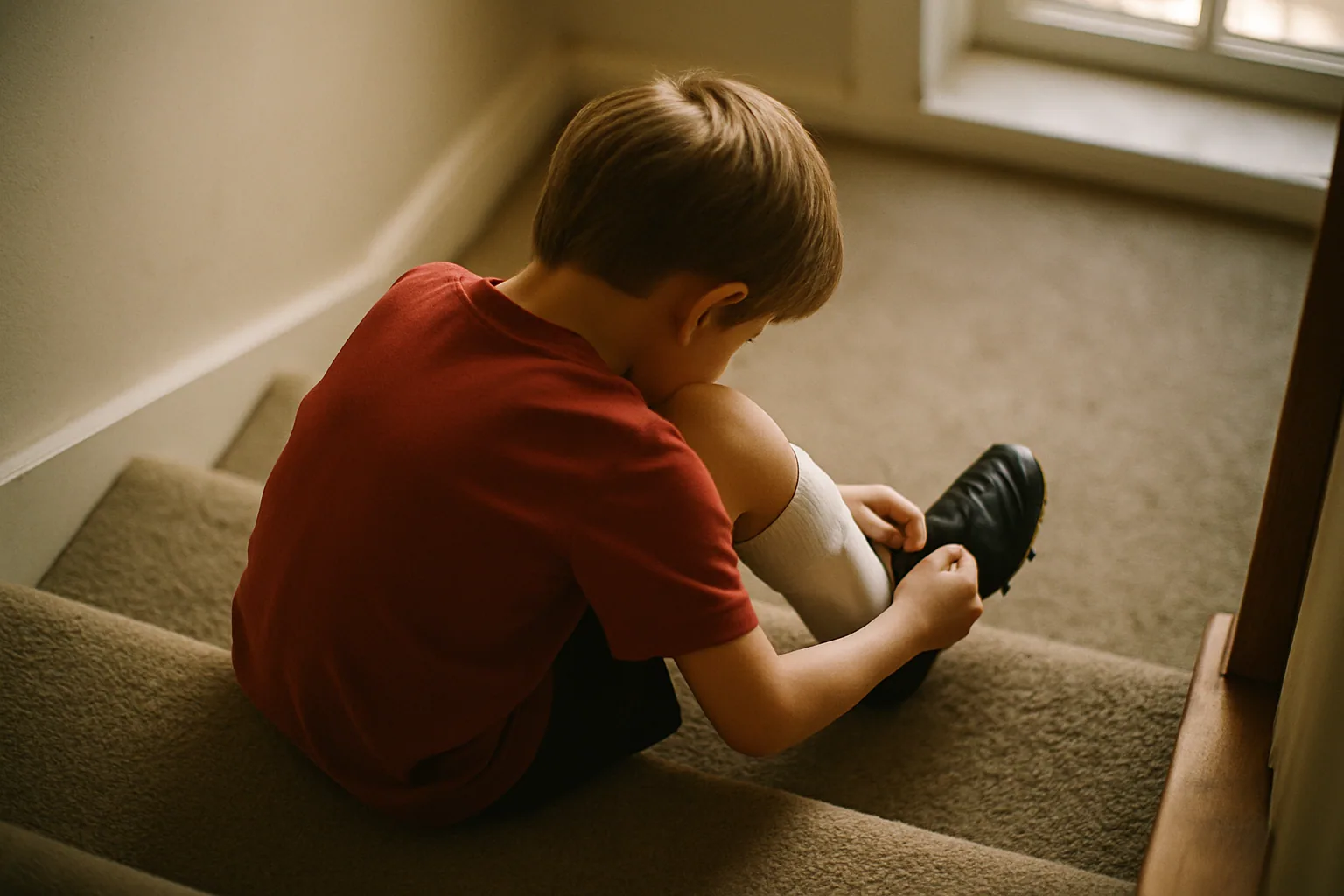
We were three minutes from the field, mid-sentence about keeping the elbow up on the follow-through, when our kid said, “I know, I’ve got it,” in a tone that wasn’t rude exactly but made clear the sentence didn’t need finishing. We’d been giving some version of that pre-game reminder since he was eight. It had never occurred to us that at sixteen it might have stopped being useful information and started being something he had to sit through before he could focus on the actual game.
That drive was the first time we really noticed how much unsolicited coaching we’d been doing from the passenger seat, and how little of it he’d actually asked for in years.
The habit forms early and rarely gets reexamined. When a kid is eight or ten, a reminder about a specific mechanic or a simple strategic point genuinely helps, because they’re still learning the basics and don’t yet have the experience to self-correct. Parents build a routine around that, a few pointers on the way there, a debrief on the way back, and the routine tends to keep running on autopilot for years after the kid has developed enough of their own feel for the game that the input isn’t teaching them anything new.
By sixteen, most kids have absorbed the fundamentals we’re still repeating. Our kid had heard “watch the elbow” so many times over eight years that repeating it once more wasn’t providing new information. It was signaling that we didn’t trust him to remember something he’d been coached on by an actual coach, in actual practice, for years. The message underneath the reminder, even when we didn’t mean it that way, was that we didn’t think he had it handled.
Post-game breakdowns can crowd out a teenager’s own read of the game. A sixteen-year-old walking off a field has usually already run their own mental replay: what worked, what didn’t, what they want to fix next time. A parent jumping in with an analysis before the teenager has said anything can override that internal process before it finishes, replacing the kid’s own conclusions with the parent’s version of events. Over time, a kid who’s used to getting the parent’s take first may stop bothering to form their own.
The silence in the car feels wrong before it feels right. We stopped offering the pre-game reminder cold, the same week as that comment, and the first few drives felt oddly empty, like we were failing to do something we were supposed to do. That discomfort is worth expecting. It fades once the new pattern, us not narrating the game, becomes the normal one, but it doesn’t fade on the first drive or the second.
Asking an open question works better than staying totally silent, if silence feels too abrupt. “What are you thinking about for today” on the way there, or “how do you think that went” on the way back, hands the analysis back to the teenager without going cold on the conversation entirely. The difference between that and our old habit is who does the actual assessing. We ask. He answers, or doesn’t, and either way the read on his own performance comes from him first.
When he does want our take, he asks for it now, and it lands differently. A few weeks into the new pattern, he asked us directly what we thought about a decision he’d made late in a game. Because we hadn’t been volunteering opinions unprompted for weeks, our answer carried more weight than it would have if it were just one more entry in a running commentary he was used to tuning out. Feedback he requested got heard in a way that feedback we volunteered hadn’t been for a while.
We had to sit with feeling less useful, which was its own adjustment. Years of pre-game tips and post-game breakdowns had become part of how we felt involved in his sport. Stepping back from that left a gap in our own sense of participation that had nothing to do with him and everything to do with us needing to find a different way to feel connected to what he was doing. Watching more of the game itself, instead of mentally drafting notes for the car ride, ended up filling some of that gap.
The coach’s job and the parent’s job are different, and the overlap had been ours to give up. A coach correcting a mechanic in practice is doing their job. A parent repeating that same correction in the car isn’t adding a second layer of useful coaching, mostly it’s adding a second source giving the same note the kid already got from someone whose actual job is coaching. Recognizing that the correction had already been delivered, by someone qualified to deliver it, made it easier to stop delivering it again ourselves.
We also had to notice how much of our old habit was really about managing our own nerves, not his performance. Giving a pre-game reminder felt productive in the moment, like we were doing something useful with the anxious energy of watching our kid compete. In hindsight, a lot of that energy was ours, not his, and handing him a tip he didn’t need was really just a way of putting our nervousness somewhere it could feel like help instead of worry. Once we