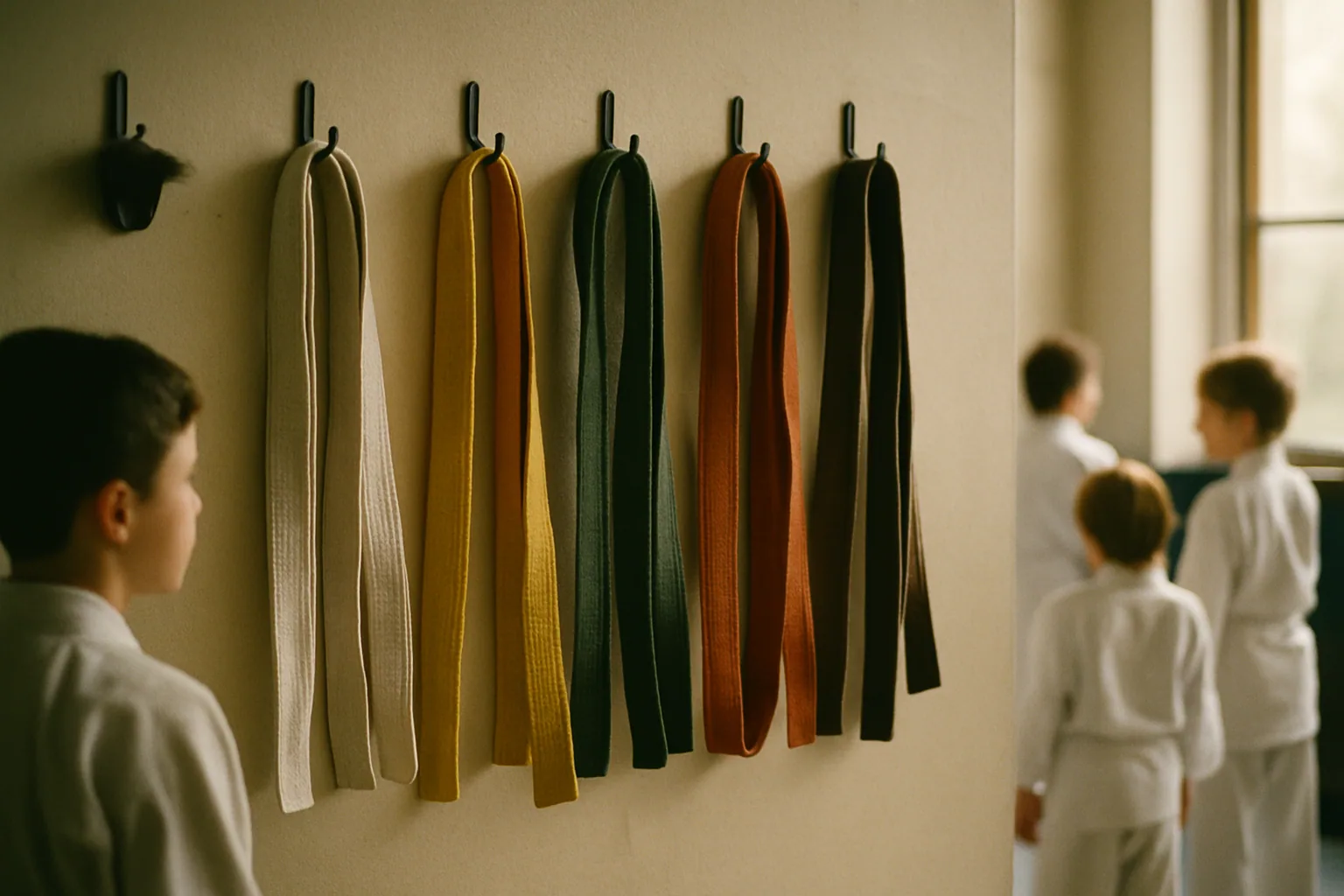
Some schools will hand a ten-year-old a black belt after eighteen months and a check. That is not what this article is about.
At a school with real standards, black belt candidacy for a teenager takes four to six years of consistent training. That’s not a marketing number. It’s what it takes to move through the full belt curriculum, build the stamina the test requires, and reach the composure that separates a black belt from a very confident brown belt.
Start with the timeline most families actually see. A kid who begins at 9 or 10, trains two or three times a week without long gaps, and stays at one legitimate school is often testing for first-degree black belt somewhere between 13 and 16. A kid who starts at 14 or 15 and trains hard can still get there, usually closer to 18 or into college, because there’s no shortcut through the curriculum regardless of age.
The test is built to be failed. Not everyone fails, but the standard has to include the real possibility of failure or it isn’t a standard. A legitimate black belt test runs hours, sometimes spread across a full day: forms performed under fatigue, sparring against multiple opponents back to back, breaking technique, and often a written or verbal component on the art’s history and philosophy. Kids show up exhausted by the midpoint and have to perform anyway. That’s the point.
Some schools add a board-breaking sequence at the end specifically because a tired body and a nervous mind make a clean break harder. It’s not decoration. It’s the last stress test before the belt goes on.
What actually predicts who gets there. Consistency beats talent by a wide margin. The naturally flexible, fearless kid at 7 and the stiff, cautious kid at 7 converge by 12 if both keep training, and this pattern holds straight through to black belt candidacy. The kid who shows up twice a week for six straight years, injuries and slumps included, is the one testing at 15. The kid with more natural ability who trains in bursts usually isn’t.
The 11-to-12 window is where most quitting happens, often framed as boredom. Sometimes that’s real. Sometimes the school stopped challenging the kid and the boredom is a symptom, not a cause. Worth diagnosing honestly before letting a kid quit two years short of testing.
What the test actually certifies. A first-degree black belt at a legitimate school certifies competence in the style’s full curriculum, not mastery. Most instructors will say the belt is the beginning of serious study, not the end of it. That framing matters for a 15-year-old standing at the finish line of a five-year project: the finish line is also a starting line, and the kids who understand that keep training past the ceremony instead of hanging the belt on a wall and stopping.
What to watch for if the timeline feels too fast. A junior black belt awarded to an 8-year-old, or a teenager testing after eighteen months at a new school, is not automatically fraudulent, but it’s worth asking direct questions about what the test actually required. The martial arts pathway is blunt about this: belt color tracks attendance and school policy as much as skill, and comparing belts across schools tells you nothing. A four-year standard with real failure possible is a credential. A two-year sprint to a guaranteed belt is a product.
If your kid is somewhere in year three or four right now, tired and unsure the test is even coming, that’s normal. Most serious black belts remember exactly that stretch, the one where the belt felt theoretical and the training felt like it might never end. It ends. It just doesn’t end on the schedule a brochure promises.