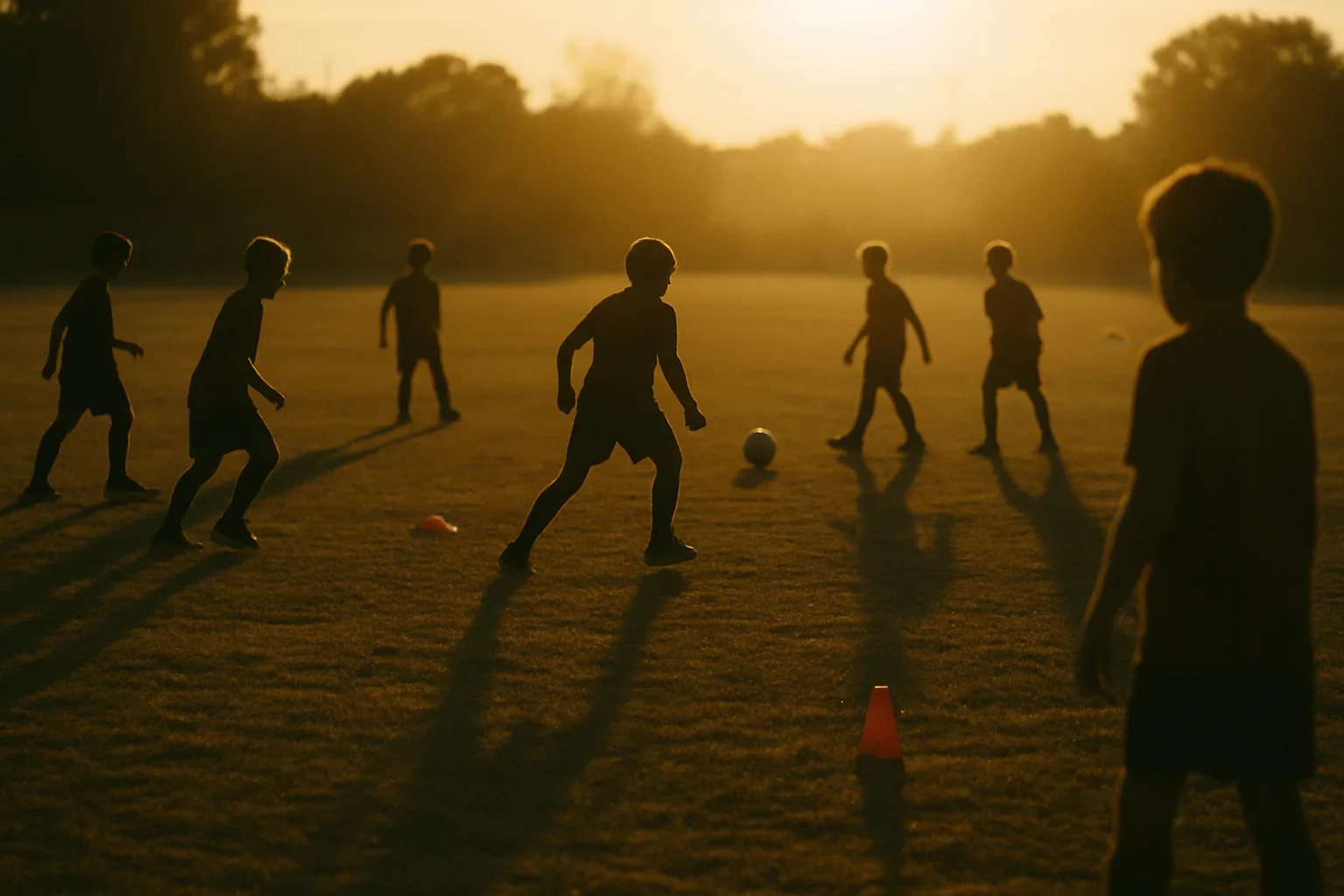
Most eight-year-olds don’t need cleats. Most kids wearing cleats at this age are wearing them because their parents think they do. The real answer is simpler.
The test Indoor court or hard-packed dirt: no cleats, flat shoes work. Grass or turf where the kid is slipping on cuts and starts: cleats earn their keep. Watch them play before you decide.
When to buy After the first month of season. Not before. Let them play in running shoes. See if they slip. If they slip, then you buy cleats. If they don’t, you save the money.
What to buy When you do buy, go molded firm-ground. Rubber studs, no metal. Molded works on grass, turf, and dry fields, which is everywhere an eight-year-old plays. Skip soft-ground cleats entirely: those are the long screw-in studs for mud, most youth leagues don’t allow them, and they’re miserable on firm fields.
The fit This matters more than the brand. Half a size larger than their normal shoe. Their foot grows. You want room. Take them to the store. Have them wear the socks they’ll wear to soccer. Try them on. Walk around. If they say they’re tight, they’re too tight.
The spend Forty to sixty dollars. That’s the actual range for eight-to-ten. Anything above that is marketing. The soccer gear guide has specific picks by age if you want a shortcut past the wall of options at the store.
The problem They’ll outgrow them in one season. Not because they’re bad. Because they’re eight and they grow fast. This is not your fault. Plan for that.
The real cost Add up the season: shoes, socks, shin guards, jersey if you’re buying it. Add the cleats. That’s your number. Most parents are surprised it’s cheaper than they thought if they don’t buy status brands.
Get what fits. Ignore the logo. Their foot doesn’t care what swoosh you paid for.
Gear mentioned in this article (affiliate)
Youth soccer ball (size 4) →, a solid pick for youth soccer players.
Full Soccer gear guide →, all picks by age and level.
As an Amazon Associate we earn from qualifying purchases.