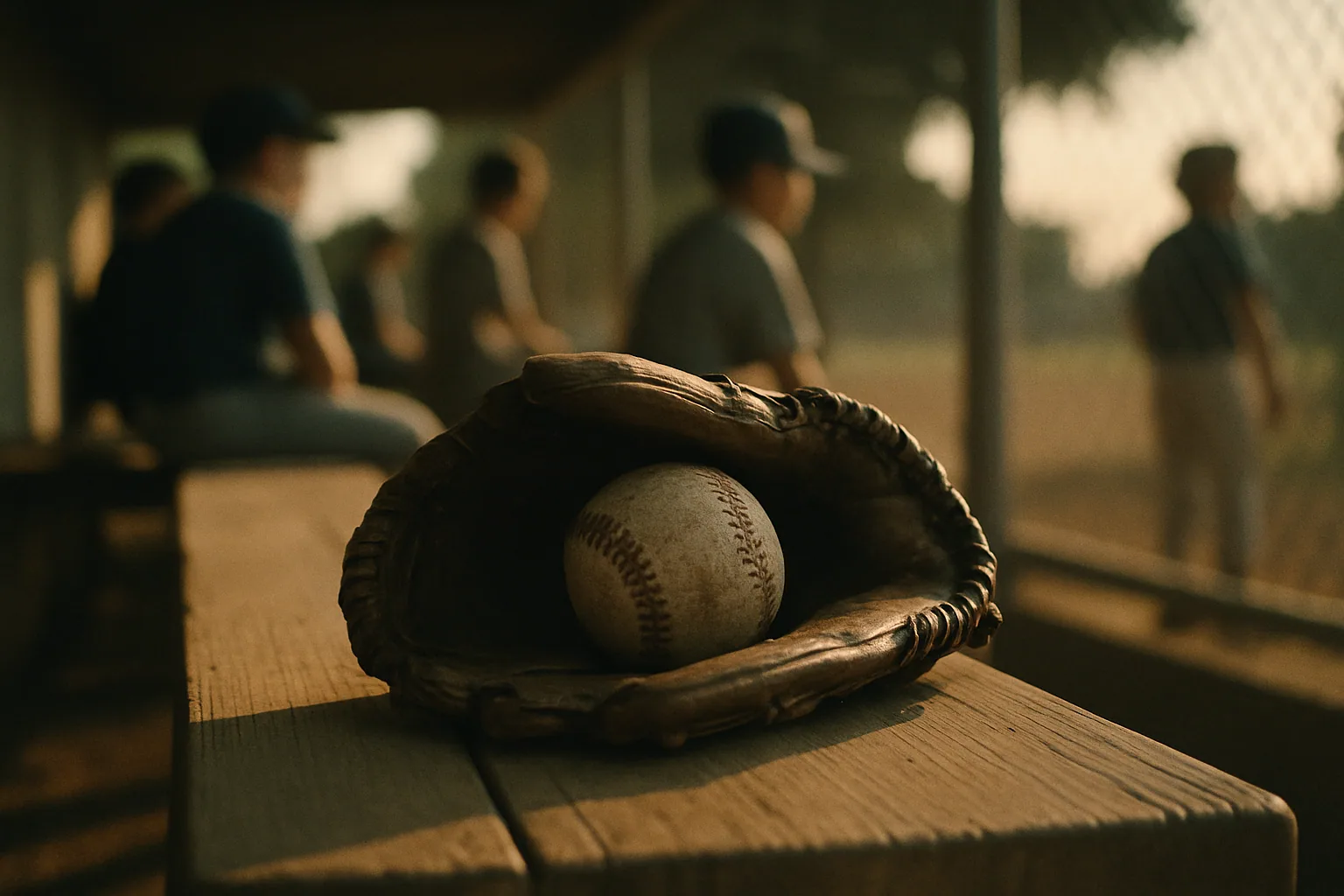
The number stamped on a glove measures the glove, not the child’s hand. Two gloves with the same number can have different wrist openings, finger stalls, and stiffness.
Use age charts to choose what to try. Buy only after the child wears and closes the glove.
Start with the maker’s range
Rawlings lists 8.5 to 10 inches for tee-ball players ages 3 to 6. Wilson lists 9 to 10 inches for tee ball at age 5 and under.
Those manufacturer ranges overlap at 9 to 10 inches, so that is a reasonable shelf to try first for many 5-year-olds. It is not a rule that overrides the child’s hand, the product’s fit, or a coach’s league-specific request.
Position-specific gloves are usually unnecessary for a first tee-ball fitting. Confirm the program’s equipment list before shopping through the first-season baseball equipment guide.
Test the glove on the child
Have the child put every finger into its stall and settle the hand fully into the glove. With the arm relaxed at the side, the glove should not feel ready to slide off.
Then ask the child to open and close it several times without an adult squeezing the glove for them. Wilson advises trying a smaller glove when a player struggles to close the candidate, and says a glove that slides off with the arm down is too large or has too large a hand opening.
Check for rubbing, pinching, or a wrist adjustment that cannot hold its setting. Compare another model within the same size before assuming the stamped number is wrong.
Stop when one usable glove fits
A 5-year-old does not need a premium material, position collection, or promised number of seasons. They need one glove that fits today and complies with any program instruction.
The baseball buying guide by age can help compare construction and shopping choices without turning this fit check into a second general equipment list. The baseball pathway covers later age bands when team rules or roles change.
Keep the receipt until the child has tried the glove with a ball and the coach has confirmed it is appropriate for the program. Fit is a check you can repeat as the child’s hand grows.