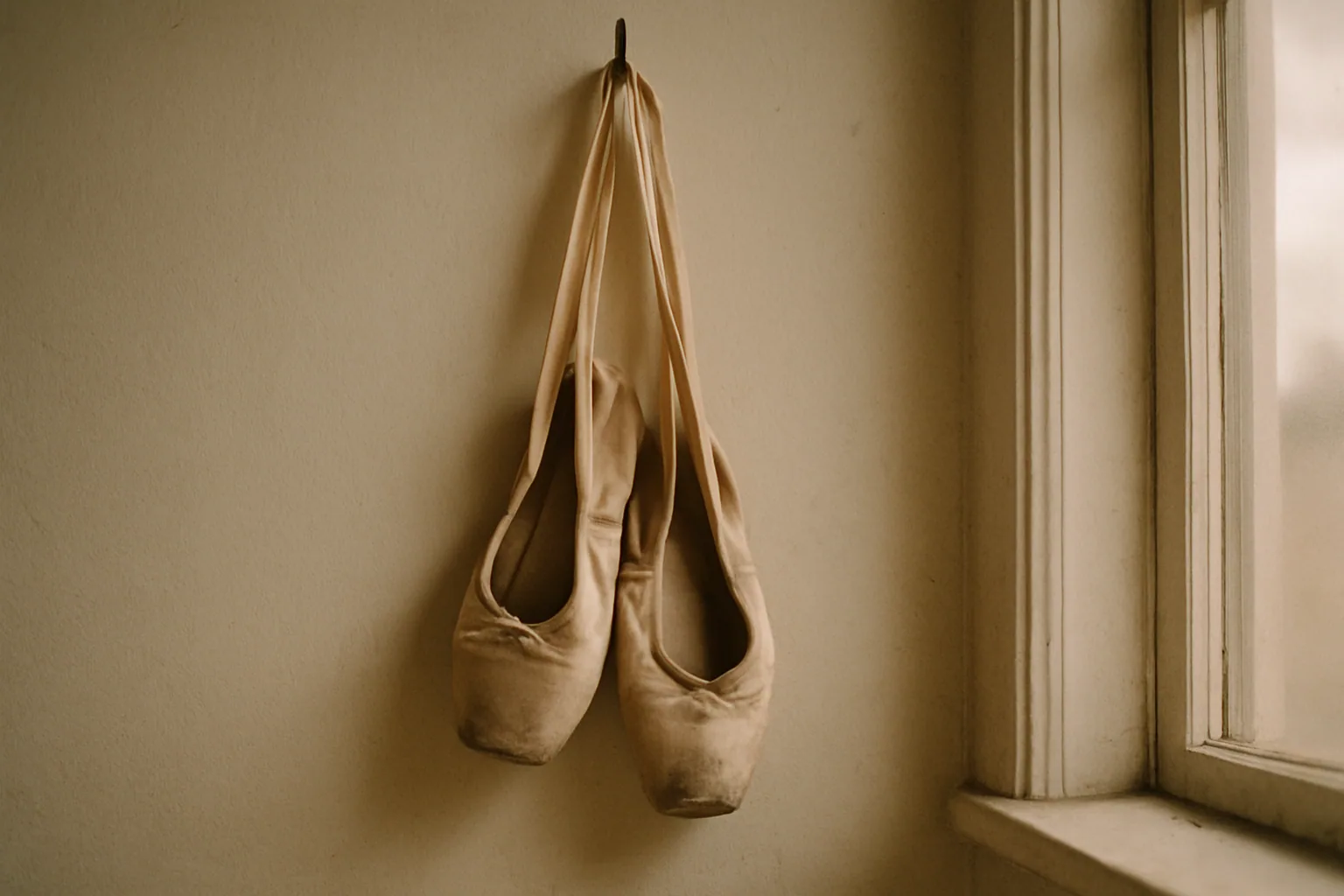
She is in her fourth year of serious ballet. She is 11. The studio just added a “pre-pointe” class to her schedule starting in September.
You did not know what pre-pointe meant until tonight, when she came home from class with a Theraband and a sheet of foot exercises printed on cardstock.
Here is what is about to happen to her feet over the next twelve months.
What pre-pointe is
Pre-pointe is a class that prepares a dancer’s feet, ankles, and core for the demands of pointe shoes.
Pointe is dancing on the tips of the toes inside specially constructed shoes with a hard block in the toe and a stiff shank under the foot. It is one of the hardest physical things a dance body can do. It requires real strength.
Pre-pointe class focuses on the supporting muscles. Foot articulation, ankle strengthening, core engagement, alignment. Theraband exercises. Calf raises. Towel scrunches. Demi-pointe work.
The goal is to prepare the body so that when pointe shoes arrive, the muscles are ready to support the weight that is about to be on the toes.
When pointe starts
Most studios start considering pointe somewhere between ages 10 and 13.
The age range matters because the bones of the foot are still ossifying through this period. Younger feet are less able to handle pointe stress safely. Most pediatric orthopedists and dance medicine specialists recommend waiting until at least age 10 or 11 for any pointe work, and many recommend waiting until 12 or 13.
The decision is not purely about age. It is about a combination of factors.
Foot strength. Can the dancer do 16 to 32 relevé combinations without losing form. Can she hold a passé balance on demi-pointe for at least 8 counts.
Ankle stability. Are the ankles strong enough to support the body weight without rolling.
Core strength. Can the dancer maintain a stable torso through technique without tucking or arching to compensate.
Years of training. Most teachers recommend at least three years of consistent ballet training before pointe.
Technique. Is the dancer’s technique clean enough to handle the added complexity of pointe.
Physical maturity. The skeletal system needs to be far enough along.
The teacher assesses all of this. The decision is not made by parents.
The teacher’s role
A good teacher will tell you specifically when your daughter is ready or not.
Some teachers do a formal pre-pointe assessment. The kid demonstrates strength and alignment. The teacher evaluates against a checklist. A pass means pointe shoes can be ordered.
Some teachers do it less formally but with the same content. They watch the kid in class for months. They know when the kid is ready.
If your studio does not have a clear pointe readiness assessment, ask the director. The good answer is specific. The bad answer is “she will be ready when she is twelve.” Age alone is not a sufficient criterion.
What can go wrong if pointe starts too early
A few real risks.
Bone deformity. The bones of the foot can deform under stress if they are not yet developed. The most common problem is called bunions or hammertoes that get worse with early pointe.
Stress fractures. The metatarsal bones can crack from repetitive impact.
Long-term joint damage. Repeated pressure on incompletely formed joints can cause chronic problems that show up years later.
Tendon injuries. Achilles tendinitis. Posterior tibialis tendinitis. Both common in early pointe.
These are not abstract. They are real injuries that real dancers carry for life. A studio that puts kids on pointe at 8 because the parents want a glamour photo is doing damage.
Picking the first pointe shoe
When the time comes, the first pointe shoe fitting is a separate event. It is not done at the studio. It is done at a specialty dance store with a trained fitter.
The fitting process takes about 45 minutes to an hour. The fitter looks at the foot, measures the arch and the toes, has the dancer demi-relevé and rise to pointe in various trial shoes.
The right pointe shoe fits like a glove on the foot. It supports the arch without crushing it. It allows full mobility of the toes for balance. It encourages correct alignment.
A poor fitting damages the foot. A good fitting is worth driving across town for.
Most studios have a list of recommended fitters in the area. Use that list.
What pointe shoes cost
A first pair of pointe shoes is not cheap. Then add accessories: toe pads, spacers, ribbons, elastic. Plus pointe tights if the dancer does not have them. The ballet gear guide covers what those accessories actually do before you buy a full set at the fitting.
First pointe shoes last 8 to 30 hours of dancing. So depending on how much pointe work the dancer is doing, they might go through 3 to 12 pairs in their first year.
This is a real expense. Budget for it.
The first time on pointe
The first class with pointe shoes is a milestone moment. The kid will be excited. She will also be wobbly.
A few things to know.
Pointe shoes feel different from anything she has worn. The first time she goes up, she will need help.
The first few classes are short. Most studios start with 10 to 15 minutes of pointe at the end of regular class. Slowly extending over weeks.
Soreness is normal. Blisters happen. Bruised toenails are common. None of these are reasons to stop unless they are severe.
Pain that lasts more than a day is not normal. Sharp pain is not normal. If your daughter says her foot hurts in a way that is different from the soreness of new training, listen.
The pre-pointe year at home
A few things you can do during the pre-pointe year.
Encourage daily foot exercises. Theraband resistance work. Marble pick-ups with the toes. Towel scrunches. The kid can do these while watching TV.
Encourage cross-training. Strong glutes and hamstrings support pointe work. Strong core supports pointe work. Pilates is excellent.
Get her good shoes. Even for non-dance daily life. Supportive footwear during the growing years protects the feet.
Watch her gait. If she is walking with her feet turned out (the “ballerina walk”) all day, this is bad for her hips and knees. Help her walk parallel in everyday life. Save the turnout for class.
The long view
Pointe is a milestone but it is not the end goal. The end goal is years of safe, strong dancing. Some kids start pointe at 11 and have wonderful careers. Some start at 13 and have wonderful careers. Some never go on pointe and have wonderful careers in jazz, contemporary, or modern.
The hurry to get on pointe is usually parent-driven, not kid-driven. Resist the hurry. Trust the teacher’s pace.
The dancer who starts pointe later but with strong preparation is the dancer who is still dancing at 25. The dancer who started pointe early with bad preparation is the dancer who has chronic foot problems at 25.
Take the long view. Pre-pointe is not a holding pattern. It is the foundation. Build it well.